First UK Evacuation Flight Leaves Oman as Urgent Middle East Airlift Expands
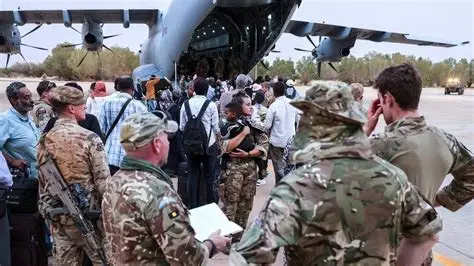
First UK evacuation flight operations from Oman have become a defining moment in Britain’s response to the Middle East travel crisis, after a delayed charter finally left Muscat carrying British nationals stranded by airspace closures, missile attacks and commercial flight disruption.
The flight had been scheduled to depart from Oman on a Wednesday evening, but it was held up after operational problems during boarding. By the following day, Prime Minister Keir Starmer confirmed that the aircraft had taken off, calling the wider effort to bring British people home one of the biggest operations of its kind.
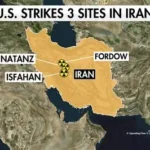
The delay was frustrating for passengers, embarrassing for ministers and alarming for families still stuck across the region. But the first UK evacuation flight also showed the scale of the problem facing the Foreign Office: hundreds of thousands of British citizens, residents, tourists, workers and transit passengers were caught in a fast-moving crisis after US and Israeli strikes on Iran triggered Iranian retaliation across the Gulf.
By March 5, more than 140,000 people in the region had registered their presence with the UK government. More than 4,000 had already returned to Britain on commercial flights from the UAE, including vulnerable British nationals identified by consular teams. Seven further flights from the UAE were due to leave for the UK that day, while British Airways was preparing daily flights from Oman to increase capacity.
For the latest travel-disruption background, The News Ink has already covered why UK Middle East flights were cancelled as Dubai and Doha routes were hit and how an intercepted missile fell into a residential area in Doha.
Why the first UK evacuation flight mattered
First UK evacuation flight coverage mattered because it marked the moment Britain moved beyond advice and commercial rebooking into a direct government-organised airlift. Until then, ministers had emphasised that commercial flights were the fastest route home for most people. That remained true, but the scale of disruption made charters necessary for vulnerable people and those unable to find safe routes out.
Oman became central because Muscat still offered a workable exit point when other hubs were affected by airspace restrictions. The UK government said the first Muscat charter would prioritise vulnerable British nationals and eligible immediate family members. It also warned people not to travel to Muscat International Airport unless contacted directly.
That warning was important. In a crisis, desperate travellers often move toward airports hoping to board anything available. But evacuation flights require eligibility checks, passenger lists, documents, security clearance and coordination with local authorities. If thousands arrive uninvited, the operation can become slower and more dangerous.
The first UK evacuation flight therefore represented both relief and limitation. It helped some people leave, but it could not solve the crisis for everyone at once.
What caused the evacuation crisis
First UK evacuation flight planning began after the Middle East aviation network was shaken by US and Israeli strikes on Iran and Iranian counterattacks on targets across the Gulf. The disruption spread quickly because the Gulf is one of the world’s busiest aviation corridors.
Dubai, Doha, Abu Dhabi, Bahrain and other regional hubs are not only destinations. They are transit centres for people travelling between Britain, South Asia, Australia, Africa and Southeast Asia. When those hubs face airspace restrictions or airline suspensions, the effect is global.
Reuters reported that British Airways was unable to fly from Dubai, Doha, Abu Dhabi, Bahrain, Amman and Tel Aviv at the start of the crisis. The UK government then worked with airlines and regional governments to increase capacity from safer or more reliable departure points, including Oman.
The conflict also affected ordinary travellers who had no direct link to Iran. Families on holiday in Dubai, business travellers in the Gulf, people visiting relatives and passengers transiting through airports suddenly found themselves unable to get home.
First UK evacuation flight operations emerged because a normal travel problem had become a consular emergency.
Key figures from the UK evacuation effort
| Date or stage | Development | Why it mattered |
|---|---|---|
| 3 March 2026 | Reuters reported a UK charter from Muscat was planned | Oman became a key exit route for vulnerable British nationals |
| 5 March 2026 | Starmer said over 140,000 people had registered in the region | Showed the scale of the crisis |
| 5 March 2026 | First UK evacuation flight from Oman took off after delay | Marked the start of direct UK charter operations from Muscat |
| 5 March 2026 | More than 4,000 people had returned via UAE commercial flights | Commercial routes remained the main route home |
| 5 March 2026 | Seven more UAE-UK flights were due that day | The government relied heavily on airline capacity |
| 12 March 2026 | UK said more than 63,000 British people had returned | Showed the evacuation had expanded beyond the first charter |
| 17 March 2026 | Foreign Secretary said returns would reach about 100,000 | Confirmed the operation had become a major repatriation effort |
This timeline shows why first UK evacuation flight reporting should not end with one delayed aircraft. The Oman charter was the beginning of a larger airlift that grew over the following days.
The delay in Muscat
The first UK evacuation flight was supposed to leave Muscat on Wednesday evening, but passengers were kept waiting after boarding problems. The Guardian reported that Home Office minister Alex Norris said the delay was caused by problems “getting passengers on board.”
Passengers described confusion, long check-in times and limited communication. One traveller said the process felt chaotic, with people waiting on buses near the aircraft and struggling to get clear updates. Such accounts added political pressure because stranded families were already frightened by the conflict and frustrated by the lack of commercial options.
First UK evacuation flight delays can happen for many reasons: eligibility checks, passport issues, passenger lists, aircraft handling, crew limits, security clearance or coordination with local authorities. But for people trying to escape a regional missile crisis, administrative explanations are rarely comforting.
The government’s challenge was to move quickly without losing control of the process. If it relaxed checks too far, vulnerable people might be missed or ineligible passengers might board. If checks were too rigid, legitimate British nationals could be left behind.
Who was prioritised?
First UK evacuation flight seats were not treated as a normal ticket sale. The Foreign Office said vulnerable people would be prioritised. That usually means people with medical needs, elderly travellers, children, disabled people, pregnant women, or those with limited ability to find alternative routes.
The government also said British nationals should not travel to the airport unless directly contacted. That advice was designed to prevent crowds, confusion and unsafe movement toward Muscat.
This is where public expectations and operational reality collided. Many stranded Britons wanted the government to provide seats quickly. Ministers insisted that commercial flights remained the fastest route for most people. Vulnerable individuals were pushed to the front of the queue, while others were encouraged to keep trying airlines, travel agents and alternative routes.
First UK evacuation flight planning therefore raised a difficult fairness question: who gets help first when thousands of people are frightened, flights are disrupted and capacity is limited?
There is no perfect answer. But clear communication matters. If people do not understand whether they qualify, where they should go or what documents they need, panic increases.
Political pressure in Westminster
The first UK evacuation flight quickly became a political issue. Starmer defended the operation by saying it was enormous, complex and many times larger than the Afghanistan evacuation. He said it would not happen overnight but insisted the government would not stop until British people were safe.
Foreign Office minister Hamish Falconer described the situation as a consular challenge on a scale not seen since the COVID-19 pandemic. That comparison mattered because the pandemic repatriation effort also involved disrupted airlines, changing border rules, stranded travellers and intense pressure on government helplines.
Conservative politicians criticised the pace and clarity of the response. Shadow Foreign Secretary Priti Patel demanded more detail on how ministers planned to bring people home and whether the government had prepared properly for the conflict. MPs also raised concerns from constituents who said consular staff were hard to identify at Muscat airport.
First UK evacuation flight controversy was therefore about more than one delay. It became a test of whether the government could manage a modern consular crisis in a region where many British nationals live, work or travel.
Why commercial flights still mattered most
First UK evacuation flight operations were important, but ministers repeatedly said commercial flights remained the quickest way home for most people. That was not an attempt to minimise the crisis. It reflected the numbers.
A government charter can carry only a few hundred passengers at a time. Commercial airlines can carry thousands if routes are open. The government’s strategy was therefore mixed: charter flights for vulnerable or stranded people, plus pressure on airlines to restore or add commercial capacity where possible.
The UAE became especially important because some commercial flights resumed sooner there than in other locations. Starmer said more than 4,000 people had already returned to the UK on UAE commercial flights by March 5, and further flights were due.
First UK evacuation flight headlines understandably focused on Oman, but the wider return effort depended just as much on Dubai, Abu Dhabi and other commercial routes.
The News Ink has also explained how Dubai’s safety reputation was tested as regional conflict reached UAE skies, which helps explain why even major Gulf hubs could not be treated as immune from disruption.
The human cost of confusion
The first UK evacuation flight also exposed the human cost of administrative mistakes. The Guardian reported the case of a British family that drove from Dubai to Oman, paid for tickets and tried to board an evacuation flight, only to be told that only the toddler and elderly grandmother had been cleared. The family said all members held British passports and later received apologies, but still struggled to get help.
That case matters because evacuation systems are built around lists, eligibility checks and documents. When those systems fail, real families can be left in worse positions than before. Travellers may spend money they cannot recover, move from one country to another, run out of medication, or miss other routes because they trusted official instructions.
First UK evacuation flight reporting should include that human side. A government may be managing a huge operation, but for each stranded person the crisis is personal: a missed seat, a child in distress, an elderly relative without medicine, a hotel bill rising every night.
This is why consular communication is not a small detail. In a crisis, unclear instructions can become a safety risk.
Current travel advice after the airlift
First UK evacuation flight coverage now needs current context because the immediate March airlift has passed, but the region remains unstable. The UK’s Oman travel advice, updated on 18 June and current on 12 July 2026, says the US and Iran have announced a memorandum of understanding connected to the Middle East conflict, but the situation remains unpredictable and attacks could resume at short notice.
The Foreign Office advises British nationals to monitor local and international media, follow local authorities, sign up for travel alerts, stay away from security or military facilities, keep departure plans under review and ensure travel documents are up to date. It also warns that if people are told to shelter, they should stay indoors or use a secure interior space because the greatest risk may come from falling debris caused by interceptions.
That guidance is important for anyone still in the region or planning travel through the Gulf. The evacuation may have brought many people home, but it did not remove the underlying risk.
First UK evacuation flight is therefore both a March event and a continuing lesson in crisis travel planning.
What stranded Britons were told to do
During the crisis, British nationals were told to register their presence with the UK government, follow local advice and avoid travelling to airports unless contacted. That instruction frustrated some people, but it was meant to prevent unsafe crowding and keep vulnerable passengers moving through the system.
Travellers were also told to keep in contact with airlines. Many routes changed quickly. Flights were cancelled, restored, delayed or rerouted depending on airspace and security assessments.
First UK evacuation flight passengers had to navigate a difficult mix of government messaging, airline updates, airport instructions and local rules. That complexity is why some travellers managed to return through commercial routes while others remained stranded.
For practical travel-safety advice in unstable situations, The News Ink’s smart travel section offers wider guidance on planning around risk, documentation and disruption.
Practical checklist for future travel crises
| Step | Why it matters |
|---|---|
| Register with official government systems | Helps authorities send direct updates |
| Keep passports and visas current | Emergency flights still require eligibility checks |
| Save documents offline | Internet and mobile networks may be unreliable |
| Check airline apps frequently | Flight status can change before airport boards update |
| Avoid airports unless instructed | Crowding can slow emergency operations |
| Carry essential medication | Delays can last longer than expected |
| Keep cash and cards available | Hotels, taxis and rebooking may be expensive |
| Follow local shelter advice | Missile interceptions can create falling-debris risk |
| Track official travel advice | Insurance and route decisions may depend on it |
First UK evacuation flight lessons are useful beyond Oman. Any traveller passing through a volatile region should prepare for disruption before a crisis begins.
Why Oman became an evacuation hub
Oman’s role in the first UK evacuation flight was not accidental. Muscat offered a more workable departure point than some affected hubs, and Oman has long played a diplomatic and logistical role in regional crises. Its position on the Arabian Peninsula made it a practical route for some travellers leaving the UAE and other Gulf locations.
But Oman was not a magic solution. Travelling to Muscat could involve long journeys, border issues, hotel costs and uncertainty. The government specifically said British nationals should not make their own way to the airport unless called, because evacuation flights were not open boarding.
First UK evacuation flight planning from Oman also required coordination with Omani authorities, airlines, airport teams, British consular officials and local transport networks. Every additional step increased the chance of delay.
The lesson is clear: evacuation hubs help only when passengers receive accurate instructions and safe routes to reach them.
The wider aviation disruption
The first UK evacuation flight was one part of a wider aviation shock. Reuters reported in July that British Airways was still delaying or pausing several Middle East services, with Doha flights delayed until August 1, Riyadh until August 8, and Dubai, Tel Aviv, Bahrain and Amman paused until the end of the summer season.
That continuing disruption shows why the March airlift should not be treated as a closed story. Airlines may restore routes gradually, but they remain cautious when airspace restrictions, missile risks and insurance questions remain unresolved.
First UK evacuation flight coverage therefore connects directly to ongoing flight cancellations. Travellers who assume the region has returned to normal may still face sudden changes.
The News Ink’s report on why the US and Israel attacked Iran and how long the conflict could last explains the wider security backdrop behind these travel decisions.
How the operation changed after the first flight
After the first UK evacuation flight left Oman, the operation expanded. By March 12, the government said more than 63,000 British people had returned from the region and that five UK charter flights had departed from the UAE and Oman. By March 17, Foreign Secretary Yvette Cooper said the number of British nationals flying back since the start of the war was expected to reach 100,000.
Those figures show that the first flight was not enough on its own, but it did mark the start of a larger repatriation phase. The government used a mix of charters, commercial airline capacity and regional partnerships.
First UK evacuation flight reporting should therefore avoid suggesting that one aircraft solved the problem. It was a visible first step in a much larger process.
The numbers also show why the operation was compared with COVID-era consular work. A crisis involving tens of thousands of people across several countries cannot be solved through a normal embassy helpline.
What the government got right and wrong
The first UK evacuation flight showed both strengths and weaknesses in the UK response.
The government was right to prioritise vulnerable people, work with airlines, use Oman as an exit route and tell travellers not to flood airports without instructions. It was also right to expand commercial capacity rather than rely only on charters.
But the criticism was not baseless. Passenger accounts described poor communication, confusion at Muscat, long waits and uncertainty. The reported case of a British family blocked from boarding after travelling from Dubai to Oman showed how administrative problems can undermine confidence.
First UK evacuation flight operations should therefore be judged as a difficult but imperfect response. The scale was large. The pressure was real. The dangers were genuine. But communication and passenger handling still mattered, especially for vulnerable families.
What happens next?
First UK evacuation flight is now part of a longer story about how Britain handles crises in the Gulf. The immediate airlift brought many people home, but the region remains strategically important and unstable. Thousands of British nationals live, work or travel there regularly. Future disruption could happen quickly if conflict resumes.
The government will likely face pressure to improve registration systems, airport communication, passenger eligibility checks and coordination with airlines. Travellers may also need to rethink how they plan trips through major transit hubs during conflict.
Aviation is built on confidence. When airspace becomes risky, that confidence can disappear in hours. The Oman flight showed how fast a normal travel network can turn into an evacuation system.
First UK evacuation flight therefore matters because it revealed both the value and limits of consular protection. Governments can help, but they cannot instantly move everyone. Airlines can restore routes, but only when safety allows. Travellers can prepare, but they cannot control airspace.
FAQ: first UK evacuation flight
What was the first UK evacuation flight?
The first UK evacuation flight was a government-organised charter from Muscat, Oman, carrying stranded British nationals home after Middle East airspace disruption caused by the US-Iran conflict.
Why was the first UK evacuation flight delayed?
The flight was delayed because of operational problems during boarding. Home Office minister Alex Norris said the delay involved problems getting passengers on board.
Who was prioritised for the Oman evacuation flight?
The Foreign Office said vulnerable British nationals and eligible immediate family members were prioritised. People were told not to go to Muscat International Airport unless contacted.
How many British nationals registered in the region?
Reuters reported around 130,000 registrations by March 3. By March 5, Keir Starmer said more than 140,000 people had registered their presence in the region.
Did the evacuation continue after the first flight?
Yes. The UK later said five charter flights had departed from the UAE and Oman by March 12, and that about 100,000 British nationals were expected to have flown back from the region by March 17.
The bottom line
First UK evacuation flight operations from Oman showed how quickly a regional war can become a British consular crisis. A conflict centred on Iran and the Gulf disrupted commercial aviation, stranded thousands of travellers and forced ministers to arrange charter flights while urging most people to use commercial routes where possible.
The delayed Muscat flight brought relief to those who boarded, but it also exposed the pressure on the UK government: unclear communication, vulnerable passengers, eligibility checks, airline disruption and criticism from families still stuck abroad.
The later figures show the operation grew rapidly. More than 63,000 British people had returned by March 12, and the total was expected to reach about 100,000 by March 17. But the lesson remains relevant in July 2026 because the Foreign Office still warns that regional tensions are unpredictable and attacks could resume at short notice.
First UK evacuation flight is therefore more than a one-day story. It is a reminder that in a connected world, a missile crisis in the Gulf can strand families, reroute airlines, overwhelm consular systems and force governments to choose who gets help first.
For more travel disruption and global crisis updates, follow The News Ink on Instagram.