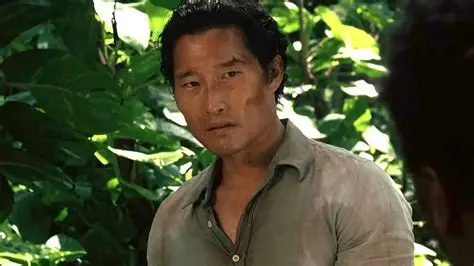
The Daniel Dae Kim Lost finale 2026 moment fans have been waiting sixteen years for has finally arrived. The actor who played beloved fan-favourite Jin in ABC’s landmark drama addressed the show’s polarising series finale when speaking at the Gold Gala in Los Angeles — and his verdict was clear, warm, and entirely in keeping with the character he brought to life across six seasons of one of television’s most discussed dramas.
“I found that really satisfying,” Kim said of the finale that aired on May 23, 2010 — a conclusion that divided audiences immediately and has continued to generate passionate debate in the sixteen years since. His reasoning was rooted not in the mythology or the unanswered questions that frustrated so many viewers, but in something more personal and more human — the characters, the relationships, and the experience of saying goodbye.
Sixteen years after Lost ended, the conversation about what it meant, what it got right, and what it left unresolved continues with remarkable intensity. Daniel Dae Kim’s 2026 comments add a significant and long-awaited voice to that ongoing discussion.
Daniel Dae Kim Lost Finale 2026: What He Actually Said
The Daniel Dae Kim Lost finale 2026 comments came with a clarity and warmth that cut through the complexity of the debate surrounding the show’s ending. Kim did not hedge, qualify, or carefully distance himself from a polarising creative decision. He embraced it — and explained why in terms that resonate with anyone who watched the show primarily for its characters rather than its mythology.
“I cared most about the characters, and the fact that the characters were all together at the end of the series was the thing that mattered most to me,” Kim explained.
That statement goes to the heart of what divided Lost’s audience about its finale. Viewers who engaged most deeply with the show’s elaborate mythology — the numbers, the Dharma Initiative, the smoke monster, the island’s mysterious properties — left the finale feeling that too many questions went unanswered. Viewers who engaged most deeply with the characters — their relationships, their redemption arcs, their journey toward whatever waited beyond the island — found the finale’s emotional resolution deeply moving.
Kim clearly belongs to the second group. And from his perspective as an actor — someone who lived inside those character relationships across six years of production — his response makes complete and understandable sense.
“And so I found that really satisfying because, as actors, we could say goodbye to each other in those final scenes,” he added — a detail that shifts the finale’s meaning from a narrative conclusion into a genuine human farewell between people who had worked together intensely for years.
Key points from Daniel Dae Kim’s Lost finale comments:
- He described finding the finale “really satisfying” — unambiguous and positive
- He prioritised character over mythology — the gathering of all characters at the end was what mattered most to him
- He highlighted the actor’s perspective — the finale gave the cast a genuine opportunity to say goodbye to each other
- He spoke at the Gold Gala in Los Angeles in 2026 — sixteen years after the finale aired
- His comments represent one of the most direct and personal assessments of the finale from any major cast member
Daniel Dae Kim Lost Finale 2026: His Complicated Love for the Show
The Daniel Dae Kim Lost finale 2026 comments arrived alongside a broader and more nuanced reflection on what the show meant to him — acknowledging both its difficulties and its profound personal and professional significance.
Kim did not pretend the show’s history was uncomplicated. A 2023 Vanity Fair exposé had revealed allegations of sexism, racism, and toxicity on the set — allegations that placed Lost alongside other early-2000s productions including Buffy the Vampire Slayer and One Tree Hill as shows whose behind-the-scenes environments did not match the community their casts projected publicly.
Kim addressed that history with honesty. “I think there were difficulties on the show — as we’ve learned — most of which I didn’t know at the time,” he said. The acknowledgement was genuine — neither defensive nor performatively self-flagellating. He knew things had happened that he had not been aware of. He said so directly.
But alongside that honesty, he held equally genuine appreciation for what the show gave him. “At the same time, I’ve made lifelong friends through that show. It helped my career in a way that no other job has.”
What Kim said about Lost’s broader legacy for him:
- Acknowledged difficulties on the show — including those revealed in the 2023 Vanity Fair exposé
- Said most of those difficulties were unknown to him at the time
- Credited Lost with lifelong friendships that continue to this day
- Described the show as career-defining — giving him opportunities no other job had
- Said directly: “I don’t think I’d be here today without it”
- Has not done a full rewatch — but described it as something in his “near future”
- Remains in regular contact with former castmates including Harold Perrineau, Ian Cusick, and Josh Holloway
The honesty of that dual acknowledgement — the difficulties and the love existing simultaneously — reflects a mature and thoughtful relationship with a formative experience. Lost clearly made Daniel Dae Kim who he is professionally. That does not require pretending everything about it was perfect.
Daniel Dae Kim Lost Finale 2026: The Castmate Bonds That Endured
One of the most heartwarming elements of the Daniel Dae Kim Lost finale 2026 conversation was Kim’s description of the friendships that survived and thrived in the sixteen years since the show ended. The bonds formed during Lost’s production — particularly among the actors who shared specific storylines — have clearly endured well beyond the show’s conclusion.
Kim specifically named several former castmates with whom he maintains regular contact. Harold Perrineau — who played Michael — is someone Kim speaks to regularly. Ian Cusick — who played Desmond — also stays in regular touch. Josh Holloway — who played Sawyer — remains a connection. And Kim spoke warmly about “the raft boys from Season 1” — referring to the group of characters who attempted to escape the island on a handmade raft at the end of the first season, a storyline that clearly forged particular bonds between the actors involved.
The Lost friendships that endured:
- Harold Perrineau (Michael): Kim described staying in regular contact
- Ian Cusick (Desmond): Also in regular contact with Kim sixteen years later
- Josh Holloway (Sawyer): An ongoing connection maintained since the show ended
- The Season 1 raft boys: Kim described the shared experience of that storyline as creating a specific bond
- The friendships reflect how deeply the Lost experience bonded its cast during production
- Kim’s warmth in describing these relationships underlines what the finale meant to him personally
The detail about the raft boys is particularly evocative. Season 1’s raft storyline — in which Michael, Walt, Sawyer, and Jin attempt a desperate escape from the island — was one of the show’s most emotionally charged early sequences. The actors who shared that experience clearly found something in it that transcended the professional.
Daniel Dae Kim Lost Finale 2026: Why the Debate Still Rages
The Daniel Dae Kim Lost finale 2026 comments arrive sixteen years after the ending precisely because the debate has never fully resolved. Lost occupies a unique position in television history — a show that almost everyone agrees was extraordinary in its prime and that almost no one agrees about in its conclusion.
Lost debuted on ABC in September 2004 with what is widely regarded as one of the finest pilot episodes in television history. The opening sequence — survivors of Oceanic Flight 815 scattered across a tropical beach, engines burning, chaos everywhere — remains one of the most immediately arresting moments in television drama. From that beginning, the show built an audience of dedicated viewers who invested deeply in both its characters and its elaborate mythology.
Lost by the numbers:
- Debuted on ABC in September 2004
- Ran for six seasons until the series finale on May 23, 2010
- Won ten Primetime Emmy Awards across its run
- Rotten Tomatoes score — critics: 86% across all six seasons
- Rotten Tomatoes score — audience: 89% across all six seasons
- Season 6 — the finale season — scored 68% from critics and 80% from audience
- Consistently strong ratings throughout its run — a genuine mass audience phenomenon
- The finale received mixed reactions that have never fully resolved into consensus
The gap between the audience score — 80% even for the divisive final season — and the critical score of 68% for the same season reflects a division that has characterised Lost’s finale legacy ever since. Critics, writing with analytical distance, found the finale’s resolution of its mythology inadequate. Audiences, writing from emotional investment, were more forgiving — more willing to accept the emotional payoff even when the plot left questions open.
Daniel Dae Kim Lost Finale 2026: The Ongoing Mythology Debate
The Daniel Dae Kim Lost finale 2026 comments inevitably reopen the question that has defined the show’s legacy for sixteen years — what did the finale actually mean, and did it satisfy the promises the show made to its audience?
The Lost finale — titled The End — revealed that the flash-sideways sequences of the final season represented a kind of purgatory where the show’s characters waited to move on together after death. The island events were real. The characters lived, struggled, and died. And in death, they found each other again in a place outside of time before moving on together.
For viewers who had spent years theorising about the numbers, the Dharma Initiative, the smoke monster’s origins, and the island’s precise metaphysical nature, the finale offered emotional resolution without answering the questions they most wanted answered. That gap — between what was resolved and what was left open — is where the debate has lived ever since.
The central debate about the Lost finale:
- The flash-sideways of Season 6 were revealed as a form of post-death purgatory
- The island events were confirmed as real — not a dream or illusion
- Character arcs were resolved emotionally — many plot questions were not
- Viewers who prioritised character found the finale deeply moving and satisfying
- Viewers who prioritised mythology felt cheated by unanswered questions
- The debate about what actually happened — and what it meant — has continued for sixteen years
- Daniel Dae Kim’s 2026 comments firmly place him in the character-satisfaction camp
Kim’s position — that the characters being together at the end was what mattered most — represents one of the most eloquent defences of the finale’s approach. It is a defence rooted not in plot mechanics but in the fundamental question of what Lost was actually about.
Daniel Dae Kim Lost Finale 2026: What Jin Meant to the Show
Any Daniel Dae Kim Lost finale 2026 discussion requires acknowledgement of what Jin represented within the show’s ensemble and why his character’s journey resonated so powerfully with audiences across six seasons.
Jin arrived in Lost’s pilot as a character who initially appeared controlling and harsh — a Korean man whose relationship with his wife Sun seemed defined by dominance and emotional distance. Over the course of the series, Jin was revealed as a deeply loving, deeply wounded man whose tough exterior masked profound vulnerability and genuine devotion.
His relationship with Sun — played by Yunjin Kim — became one of the show’s central love stories, and their shared journey across six seasons delivered some of Lost’s most emotionally devastating and uplifting moments simultaneously.
Jin’s journey in Lost:
- Introduced in the pilot as a seemingly cold and controlling husband
- Gradually revealed as a complex, loving, and deeply human character
- His marriage to Sun became one of Lost’s central emotional relationships
- Played by Daniel Dae Kim across all six seasons
- His arc — from apparent villain to beloved fan favourite — remains one of the show’s greatest character achievements
- His presence in the finale’s reunion scenes was among its most emotionally resonant moments
The fact that Kim describes the finale’s gathering of characters as what mattered most takes on additional weight when you consider what Jin’s journey to that gathering involved — and what it cost.
Final Word on Daniel Dae Kim Lost Finale 2026
The Daniel Dae Kim Lost finale 2026 moment is a reminder that great television does not end when the credits roll. It continues in the conversations, the debates, the rewatches, and the memories of the people who made it and the people who watched it — for years, for decades, perhaps forever.
Sixteen years after the finale aired, Daniel Dae Kim sat at a gala in Los Angeles and said he found it really satisfying. He talked about saying goodbye to his castmates in those final scenes. He talked about lifelong friends and career-defining opportunities and a show that made him who he is.
The mythology questions remain unanswered. The debate about what it all meant continues. And somewhere on a beach that no longer exists except in the memories of millions of viewers, Jin and Sun are together again.
For Daniel Dae Kim, that was always enough. And listening to him explain why, it is very easy to understand.