



Cloud Concentration Risk Explained: Why Dependence on AWS, Azure and Google Could Disrupt the Internet
The internet appears to be a vast network of independent websites, applications and digital services. Millions of businesses operate online, billions of people use connected devices, and countless organizations depend on cloud computing to deliver everything from financial transactions to artificial intelligence.
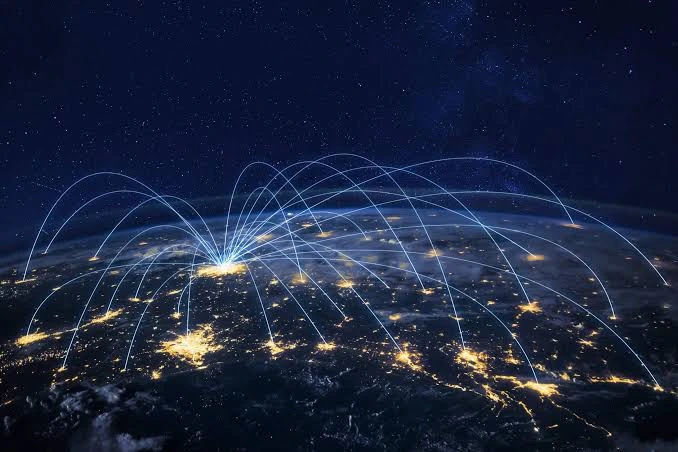
Yet behind this apparent diversity lies a growing concentration of infrastructure.
A relatively small number of technology companies provide the computing systems, databases, storage platforms and networking services that support much of the modern digital economy. Amazon Web Services (AWS), Microsoft Azure and Google Cloud are particularly influential.
This creates a challenge known as cloud concentration risk.
When thousands of businesses depend on the same infrastructure providers, a technical failure can have consequences far beyond the company experiencing the original problem. Online stores may stop accepting payments, business applications may become inaccessible, and services that appear unrelated can experience simultaneous disruptions.
The scale of this dependence is significant. According to TechInsights, citing Synergy Research Group, global spending on cloud infrastructure services reached approximately $167.7 billion during the third quarter of 2026, representing annual growth of 55%.
Amazon, Microsoft and Google together accounted for approximately 61% of that market.
These companies invest enormous resources in reliability and security. However, concentrating essential services among a few providers creates risks that even well-designed infrastructure cannot entirely eliminate.
Understanding cloud concentration risk is therefore becoming important for businesses, governments, financial institutions and anyone relying on digital services.
What Is Cloud Concentration Risk?
Cloud concentration risk refers to the possibility that excessive dependence on a limited number of cloud service providers, infrastructure systems or shared technologies could create widespread operational, financial or security problems.
The concept is straightforward.
Imagine a city where hundreds of businesses receive electricity from one power station. Even if those businesses operate independently, a major failure at the station could interrupt them simultaneously.
Cloud computing can create a similar relationship.
Different organizations may operate separate websites, databases and applications while relying on the same underlying technology provider.
A disruption affecting that shared provider can interrupt multiple businesses at once.
Cloud concentration risk is not limited to the number of companies dominating the market. It can also occur when multiple services depend on the same cloud region, identity system, database, networking provider or software component.
For example, a business might operate its website, payment-processing system, inventory database and customer-support platform using separate software products.
Those products may nevertheless depend on the same infrastructure.
The business appears diversified at the application level, but its underlying technical dependencies remain concentrated.
Our cloud computing guide explains how cloud platforms provide the servers, storage, databases and services supporting modern applications.
The fundamental issue is not that cloud computing is inherently unreliable. It is that dependence becomes dangerous when organizations fail to understand where their critical systems ultimately connect.
How Concentrated Is the Global Cloud Market?
The cloud infrastructure industry has expanded rapidly, particularly as businesses invest in artificial intelligence and large-scale data processing.
However, much of that growth continues to flow through a relatively small group of providers.
Synergy Research Group’s third-quarter 2026 estimates illustrate the structure of the market.
| Cloud provider | Global market share, Q3 2026 |
|---|---|
| Amazon Web Services | 26% |
| Microsoft | 19% |
| Google Cloud | 16% |
| Other providers combined | 39% |
Source: Synergy Research Group, published through TechInsights. Figures are estimates covering cloud infrastructure services, including IaaS, PaaS and hosted private cloud.
Together, the three largest providers account for approximately 61% of global spending in the measured market.
The remaining 39% is divided among numerous companies, including Oracle, specialized infrastructure providers and rapidly expanding AI-focused cloud businesses.
This concentration matters because cloud infrastructure requires enormous investment.
Providers must construct data centers, purchase servers, develop software platforms, operate global networks and maintain specialist engineering teams.
The result is an industry where a small number of companies can provide services at extraordinary scale.
But market share alone does not measure the full risk.
Two businesses using different providers may still depend on the same networking service, software library or external authentication platform.
Similarly, one cloud company may operate many independent regions, meaning a regional outage does not automatically affect its entire global infrastructure.
Cloud concentration risk must therefore be evaluated through both market structure and technical dependencies.
Why So Many Businesses Depend on the Same Cloud Providers
Cloud computing became popular partly because it removed the need for businesses to build and maintain their own expensive computing infrastructure.
Instead of purchasing servers, organizations can rent computing resources and increase capacity when demand grows.
Large cloud providers offer considerable advantages.
They operate extensive data-center networks, provide sophisticated security tools, maintain specialized engineering teams and offer hundreds of services for building applications.
These platforms can support everything from a small online shop to a multinational financial institution.
For many businesses, using a major cloud platform is more practical than operating an independent data center.
The difficulty appears as organizations become increasingly dependent on services that are difficult to replace.
A company might initially use cloud storage and virtual servers.
Over time, it may adopt proprietary databases, serverless computing services, artificial intelligence platforms, monitoring systems and identity-management tools from the same provider.
Each additional service can make the platform more useful.
It can also make leaving more complicated.
The result is a dependency that develops gradually rather than through a single decision.
Seven Major Dangers of Cloud Concentration Risk
Cloud concentration risk involves several interconnected threats. The most important extend beyond ordinary downtime and affect business continuity, cybersecurity, competition and economic stability.
1. A Single Cloud Outage Can Affect Thousands of Services
The most visible danger is the possibility of a large outage affecting many organizations simultaneously.
Cloud providers operate complex systems containing servers, databases, storage platforms, networking equipment and software-based control systems.
Individual component failures are expected.
Modern infrastructure is designed to tolerate many of them without interrupting customers.
However, problems become more serious when failures involve shared services or cause unexpected consequences across connected systems.
The October 2025 AWS Outage
A major example occurred on October 19–20, 2025, when AWS experienced significant disruptions in its Northern Virginia region, known as US-EAST-1.
According to AWS’s incident report, the initial problem involved a DNS management failure affecting Amazon DynamoDB.
DNS helps applications locate the systems they need to communicate with.
When DynamoDB’s regional endpoint became difficult to resolve, dependent services experienced errors.
The consequences extended into other AWS systems, including some EC2 instance launches and network load-balancing operations.
Recovery also proved complicated.
Although engineers addressed the original DNS problem, additional failures and delayed recovery processes continued affecting services.
The incident lasted approximately 15 hours across its broader period of impact, although different services experienced different disruption windows.
Importantly, this was not a complete worldwide shutdown of AWS.
It was a major regional incident with wider consequences for services depending on affected systems.
That distinction illustrates cloud concentration risk particularly well.
A failure does not need to disable an entire provider to affect businesses across multiple industries.
Our article on cloud outages examines how technical failures can cascade through otherwise sophisticated infrastructure.
Why Outages Spread Beyond the Original Problem
Modern applications frequently rely on multiple interconnected services.
A website may use one database for customer information, another service for authentication and a separate platform for processing background tasks.
If a critical shared component fails, several functions can stop working together.
Even services with healthy servers may become unusable if they cannot access essential authentication, networking or database systems.
The result is known as a cascading failure.
Cloud concentration risk becomes especially serious when numerous companies share the same vulnerable dependency.
2. Hidden Dependencies Create Unexpected Single Points of Failure
Many organizations underestimate how dependent they are on external infrastructure.
A company might believe its digital operations are distributed across multiple platforms because it purchases services from several software vendors.
However, those vendors may use the same cloud provider.
Consider a hypothetical retail business.
Its website runs on one hosting service, customer support uses a separate software platform, and inventory management is handled by another company.
At first glance, the business appears to have diversified its technology.
But suppose all three vendors depend on infrastructure located in the same cloud region.
A regional outage could disrupt all three services simultaneously.
The retailer may have no direct relationship with the cloud company experiencing the failure.
Nevertheless, its operations remain exposed.
This is sometimes described as a fourth-party risk: dependence on a supplier used by one of an organization’s direct service providers.
The problem can extend through several layers of suppliers.
A financial institution may purchase software from a vendor that depends on a cloud platform, which itself uses external components or interconnected services.
Identifying these relationships requires examining the technology supply chain rather than merely reviewing the names on purchase contracts.
The NIST supply-chain guidance emphasizes understanding supplier relationships and managing risks across multiple levels of technology dependence.
Cloud concentration risk often remains invisible until an incident exposes the shared connection.
3. Financial Institutions Face Systemic Technology Risks
Cloud concentration risk is particularly important in financial services.
Banks, payment processors, insurance companies and investment platforms increasingly use cloud infrastructure for important business functions.
These can include customer authentication, transaction processing, fraud detection, data analytics and operational systems.
A disruption affecting one institution may inconvenience its customers.
A disruption affecting several major institutions simultaneously could create a broader financial stability concern.
The issue resembles concentration risk in traditional finance.
If many financial organizations depend on one critical technology provider, that provider can become an important source of shared operational risk.
This does not mean a cloud outage automatically causes a banking crisis.
Financial institutions use different systems, maintain contingency arrangements and operate under regulatory requirements.
However, simultaneous technological failures can reduce access to essential services.
Payment delays, inaccessible accounts and failures in supporting systems may create additional pressure during an already difficult event.
The European Union has responded through the Digital Operational Resilience Act, commonly known as DORA.
Under the DORA oversight framework, European financial supervisors can designate certain technology providers as critical and subject them to coordinated oversight.
In November 2025, European authorities published their first list of designated critical ICT third-party providers.
The system recognizes that operational resilience cannot be assessed only at the level of individual banks.
Regulators must also consider the technology companies serving large portions of the financial sector.
4. Cybersecurity Incidents Can Have Wider Consequences
Concentration also creates cybersecurity concerns.
Large cloud platforms generally invest heavily in security systems, threat detection, physical protection and incident response.
These capabilities can make them considerably more secure than many organizations could achieve independently.
However, no infrastructure provider is completely immune to security vulnerabilities, unauthorized access or operational mistakes.
The consequences of a serious incident may become more significant when large numbers of customers depend on the affected service.
For example, a vulnerability affecting a widely used identity platform could potentially interfere with authentication across numerous applications.
A compromised management system could expose important infrastructure controls.
Similarly, an improperly configured shared component might create risks for multiple customers.
These scenarios should not be confused with ordinary customer-level security incidents.
Most cloud security problems do not compromise an entire provider.
Organizations remain responsible for protecting their own identities, applications, permissions and information under the shared-responsibility model.
Our cybersecurity guide explains how access controls, monitoring, configuration and incident response contribute to digital protection.
The central concern is that cloud concentration risk can magnify the potential consequences of a genuinely shared infrastructure vulnerability.
5. Vendor Lock-In Makes Switching Difficult and Expensive
Another major problem is vendor lock-in.
Vendor lock-in occurs when a business becomes so dependent on a particular provider’s services, software or technical architecture that moving elsewhere becomes expensive or difficult.
A company may build applications around proprietary database services, specialized APIs, cloud management tools and provider-specific automation.
Those systems can work extremely well.
The challenge appears when the organization wants to switch.
Moving may require rewriting applications, transferring large quantities of data, retraining employees and testing replacement infrastructure.
This can involve substantial financial and operational costs.
Why Data Transfer Fees Matter
Cloud providers may charge for transferring data out of their infrastructure, although fees vary by provider, service and customer arrangement.
Such charges are known as data egress fees.
For organizations storing large datasets, transferring information between platforms can be costly.
Switching may also require temporary duplication of infrastructure while the migration takes place.
The UK’s Competition and Markets Authority examined these issues during its cloud market investigation, which concluded in July 2025.
The investigation identified competition concerns involving market concentration, technical barriers, switching difficulties and software licensing practices.
In March 2026, the regulator announced further cloud competition measures.
These included steps by Amazon and Microsoft intended to improve interoperability and reduce certain egress-related barriers for UK customers.
Those actions do not eliminate every switching cost.
Organizations may still face complex software dependencies and operational challenges.
Cloud concentration risk becomes particularly difficult to manage when businesses cannot realistically move critical workloads within an acceptable period.
6. Geopolitical and Regulatory Dependence Can Limit Flexibility
Cloud infrastructure is global, but laws and political decisions remain national or regional.
Governments may impose requirements involving data protection, national security, technology procurement, cross-border transfers or local data storage.
Organizations operating internationally must consider how these requirements affect their cloud architecture.
A company may need customer information to remain within a particular jurisdiction.
A financial institution may require regulators to have access to certain records.
Government agencies may also have restrictions on the providers or locations they can use.
These requirements can reduce the number of suitable infrastructure options.
Geopolitical tensions may introduce further uncertainty through trade restrictions, sanctions or changes to technology policies.
However, using a foreign-owned cloud company does not automatically mean that data is transferred abroad or that local regulations are being violated.
Cloud providers operate geographically distributed infrastructure and offer region-specific controls.
The relevant risks depend on contracts, technical architecture, legal requirements and the location of data and supporting services.
Cloud concentration risk becomes a concern when regulatory changes or international disputes reduce an organization’s ability to use infrastructure on which it has become heavily dependent.
7. Artificial Intelligence Is Increasing Dependence on Hyperscale Infrastructure
Artificial intelligence is creating a new dimension of cloud concentration risk.
Advanced AI systems require powerful processors, high-speed networking, enormous datasets and substantial electricity supplies.
Building this infrastructure is extremely expensive.
As a result, many AI developers depend on major cloud platforms or specialized AI infrastructure companies for computing capacity.
The rapid expansion of AI spending is reinforcing the importance of cloud computing.
Synergy Research Group estimated that AI-specific cloud services represented approximately one-third of the global cloud infrastructure market by the third quarter of 2026.
This matters because modern AI applications often depend on multiple interconnected services.
An AI assistant may rely on a hosted model, cloud storage, a database, authentication systems and external software tools.
If the model provider or underlying infrastructure becomes unavailable, the entire application may stop functioning.
This is particularly significant for organizations integrating AI into customer support, software development, financial analysis and operational decision-making.
Our AI chips and data centers guide explains why advanced computing infrastructure requires immense capital investment.
The growing use of AI may increase cloud concentration risk when organizations depend on the same model providers, infrastructure platforms and supporting APIs.
At the same time, specialized AI cloud companies are entering the market, creating additional alternatives.
Whether this development meaningfully reduces concentration will depend on how independent their infrastructure and supply chains become.
Cloud Concentration Risk vs Cloud Outage Risk
These two concepts are closely related, but they are not identical.
An outage is a disruption affecting the availability or operation of a service.
Concentration risk concerns the extent to which multiple organizations or essential functions depend on the same provider or infrastructure.
A cloud provider can experience a minor outage without creating widespread consequences.
Conversely, a highly concentrated infrastructure market can create substantial shared risk even when major outages are relatively rare.
| Risk category | Main concern | Example |
|---|---|---|
| Cloud outage risk | A service temporarily stops functioning | A database becomes unavailable |
| Cloud concentration risk | Many organizations share the same critical dependency | Multiple businesses depend on one region |
| Vendor lock-in | Switching providers becomes difficult | Applications rely on proprietary APIs |
| Cybersecurity risk | Systems or information are exposed to attack | Compromised credentials |
| Disaster-recovery risk | An organization cannot restore operations quickly | Backups cannot be recovered |
These risks overlap.
An outage may expose concentration problems, while vendor lock-in can make recovery or migration more difficult.
Understanding the differences helps organizations identify the actual cause of their vulnerability.
Does Using Multiple Cloud Providers Solve the Problem?
Multicloud computing involves using services from more than one cloud provider.
In principle, distributing workloads between AWS, Azure, Google Cloud or other providers can reduce dependence on a single company.
However, multicloud does not automatically eliminate cloud concentration risk.
The effectiveness depends on how applications are designed.
A business might use AWS for hosting and Google Cloud for data analysis while keeping its critical customer database entirely within AWS.
If that database becomes unavailable, the business may still lose access to essential functions.
Likewise, two cloud deployments may depend on the same external identity provider or DNS service.
A failure in that shared component could affect both environments.
Multicloud vs Multiregion vs Hybrid Cloud
These approaches address different kinds of risk.
| Strategy | How it works | Main advantage |
|---|---|---|
| Multizone | Deploys services across separate availability zones | Reduces exposure to localized infrastructure failures |
| Multiregion | Uses multiple geographic regions | Can reduce dependence on one cloud region |
| Multicloud | Uses more than one cloud provider | Can reduce provider-specific dependencies |
| Hybrid cloud | Combines cloud and privately operated infrastructure | Offers additional architectural and operational flexibility |
The best option depends on business requirements.
For some applications, deploying across multiple availability zones within one region provides adequate protection.
Others may justify geographically separated infrastructure.
A small business does not necessarily need to duplicate its entire application across three major providers.
Doing so can introduce considerable complexity and expense.
The goal should be proportional resilience rather than pursuing architectural complexity for its own sake.
How Businesses Can Reduce Cloud Concentration Risk
Reducing cloud concentration risk begins with identifying which services are essential and what happens when they become unavailable.
A useful risk-management strategy involves several practical steps.
Identify Critical Dependencies
Organizations should create an inventory of important applications, cloud providers, software vendors and supporting services.
This should include dependencies that are not immediately visible, such as identity systems, DNS, external APIs and suppliers’ infrastructure.
The NIST assessment guide provides a framework for evaluating technology suppliers, including their resilience and supply-chain dependencies.
The objective is to identify services whose simultaneous failure could cause serious operational disruption.
Define Acceptable Recovery Times
Not every system requires immediate restoration.
A customer-facing payment application may need rapid recovery, while an internal reporting tool might tolerate several hours of downtime.
Organizations commonly use two measures:
-
Recovery Time Objective (RTO): The maximum targeted period for restoring a service after a disruption.
-
Recovery Point Objective (RPO): The maximum targeted amount of recent data loss, expressed in time.
These requirements help determine whether additional infrastructure is worth its cost.
Use Independent Failure Domains
Cloud providers offer different availability zones and regions.
Distributing important workloads can help protect against failures affecting individual facilities.
The AWS reliability guidance recommends selecting appropriate locations and avoiding single points of failure.
However, applications must be designed to operate independently during disruptions.
Simply storing copies of data in two regions is not enough if both environments depend on one unavailable control system.
Maintain Reliable Backups
Backups remain essential even when applications operate on highly resilient cloud platforms.
Organizations should protect important data against accidental deletion, ransomware, corruption and service disruptions.
Backup systems should be tested regularly.
A backup that cannot be restored within the required period provides limited operational protection.
For particularly critical information, maintaining appropriately isolated backup copies can reduce dependence on one service.
Test Disaster-Recovery Procedures
Written plans are useful, but they do not prove that recovery will work.
Teams need practical exercises involving simulated service failures, database restoration and application failover.
The Google Cloud recovery guide explains how organizations can plan recovery around business requirements and different disruption scenarios.
Testing may uncover dependencies that are not visible during normal operations.
For example, an application might successfully switch servers but fail because its authentication service remains unavailable.
Avoid Unnecessary Platform Dependence
Businesses should evaluate whether proprietary cloud services provide enough benefit to justify the additional migration difficulty.
Open standards, portable software and carefully managed data formats can improve flexibility.
However, avoiding every provider-specific feature is not always sensible.
Specialized services can reduce development costs and improve performance.
The right approach is to understand the trade-off rather than assuming complete portability is always the best choice.
Why Disaster Recovery Can Be Expensive
Reducing cloud concentration risk often involves additional spending.
Organizations may need duplicate servers, replicated databases, additional networking capacity and specialist engineering teams.
A fully operational secondary environment can be particularly expensive because resources must remain available even when the primary system is functioning normally.
There are also technical costs.
Keeping information synchronized across multiple regions or providers can introduce latency and operational complexity.
Failover procedures must account for partially completed transactions, data consistency and the possibility of restoring outdated information.
The Microsoft redundancy guidance emphasizes that multiregion architecture offers additional protection but increases cost and management requirements.
For many workloads, carefully designed zone redundancy may provide the best balance between reliability and expense.
The important question is not whether a company can build the most elaborate disaster-recovery system.
It is whether the financial and operational cost of that system is justified by the consequences of an outage.
Why Regulators Are Paying More Attention
Cloud concentration risk is no longer only a technical concern for IT departments.
Financial regulators and competition authorities increasingly recognize that dependence on shared infrastructure can create wider economic risks.
The European Union’s DORA framework addresses operational resilience and establishes oversight arrangements for critical technology providers serving financial institutions.
The UK’s Competition and Markets Authority has also examined barriers preventing businesses from switching between cloud providers.
These initiatives approach the problem from different directions.
Financial regulators focus on maintaining important services during disruptions.
Competition authorities examine whether customers have meaningful choices and whether market practices restrict switching.
Both perspectives are relevant.
A competitive cloud market can provide businesses with more options, but competition alone does not guarantee that every alternative has independent infrastructure.
Likewise, regulatory supervision cannot completely prevent technical incidents.
Effective resilience requires cooperation between technology companies, customers and public authorities.
What Cloud Concentration Risk Means for Small Businesses
Smaller organizations may assume the problem primarily affects banks or multinational corporations.
In reality, small businesses often have fewer resources to withstand technology disruptions.
An online retailer may depend on one e-commerce platform.
A professional-services company may use cloud email, online document storage and hosted accounting software.
A startup may run its entire application on one managed cloud platform.
These arrangements are convenient and often economically sensible.
However, a prolonged disruption can stop sales, delay communication or prevent employees from accessing important information.
Small businesses can improve resilience without building expensive multicloud infrastructure.
Maintaining accessible backups, documenting critical suppliers, preparing alternative customer communication channels and understanding restoration procedures can substantially reduce the consequences of an outage.
The objective is business continuity, not complete technological independence.
The Future of Cloud Concentration Risk
The next several years are likely to bring further investment in cloud infrastructure, particularly as artificial intelligence expands.
Large providers will continue constructing data centers and developing sophisticated computing services.
Specialized infrastructure companies may also gain market share by serving customers with particular AI or high-performance computing requirements.
These changes could create additional options for businesses.
However, the appearance of more cloud providers does not automatically mean the underlying infrastructure becomes fully independent.
Companies may share semiconductor suppliers, networking technologies, identity systems or physical data-center facilities.
Future risk assessments will therefore need to examine not only which company provides a service, but also how its technology is constructed and what other systems it depends upon.
Businesses may also place greater emphasis on contractual flexibility, operational testing and visibility into technology supply chains.
For regulators, the challenge will be encouraging innovation and competition without imposing requirements that make infrastructure unnecessarily expensive.
Cloud concentration risk is unlikely to disappear.
The more realistic goal is to prevent concentrated dependencies from becoming uncontrolled points of failure.
Frequently Asked Questions About Cloud Concentration Risk
What is cloud concentration risk in simple terms?
Cloud concentration risk occurs when many businesses or important digital services rely on the same limited group of cloud providers or underlying technologies. A failure affecting a shared dependency can disrupt multiple organizations simultaneously.
Why are AWS, Azure and Google Cloud so important?
These companies operate some of the world’s largest cloud infrastructure platforms, providing computing, storage, databases, networking and artificial intelligence services to businesses and public institutions.
Can one cloud outage shut down the entire internet?
A single outage is unlikely to disable the entire internet. However, a major disruption involving widely used infrastructure can make numerous websites, applications and digital services unavailable at the same time.
Is multicloud always safer?
No. Multicloud can reduce certain provider-specific risks, but only when systems are designed with genuinely independent dependencies and reliable recovery procedures. Poorly implemented multicloud architecture can increase complexity.
How can companies reduce cloud concentration risk?
Organizations can identify critical dependencies, maintain tested backups, use appropriate regional redundancy, prepare disaster-recovery plans and avoid unnecessary dependence on services that are difficult to replace.
Why Cloud Concentration Risk Matters for the Digital Future
The cloud has transformed how organizations build and operate technology.
Businesses can launch applications without purchasing enormous amounts of hardware. Researchers can access powerful computing systems, while startups can develop products using infrastructure that once required substantial financial investment.
These advantages have made cloud computing one of the foundations of the modern digital economy.
However, convenience and efficiency have created a new form of dependence.
Thousands of organizations may compete in different industries while relying on a small group of infrastructure providers.
A disruption affecting those shared systems can spread across businesses that appear completely unrelated.
That is the central concern behind cloud concentration risk.
The challenge is not to abandon major cloud platforms or assume that smaller providers are automatically safer.
Large cloud companies offer important reliability, security and performance advantages.
Instead, organizations must understand the limits of that reliability and identify where common dependencies could cause widespread failures.
For businesses, this means investing in appropriate backups, disaster recovery, supplier assessments and operational testing.
For governments and regulators, it means understanding how shared infrastructure affects financial stability, competition and national digital resilience.
And for the technology industry, it means building systems that can continue functioning when individual components, services or providers fail.
The future of cloud computing will not depend solely on how much processing power companies can deliver.
It will also depend on whether the digital economy can remain dependable when its most important infrastructure experiences problems.
Cloud concentration risk is therefore more than a concern about a few large technology companies.
It is a question about how resilient the increasingly interconnected world has become—and how much disruption society is prepared to tolerate when essential digital systems fail.
For more research-driven explainers, science coverage and global stories, follow The News Ink on X, Instagram, Threads, Medium, Substack, Bluesky, Pinterest, TikTok, Quora and Mastodon.