Military Cargo Plane Crash in Bolivia: What We Know About the Shocking El Alto Disaster
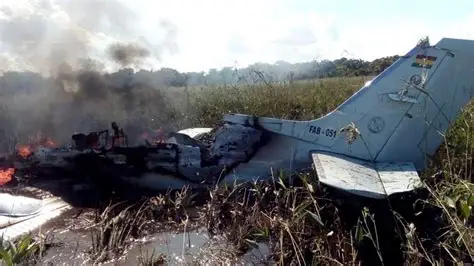
Military cargo plane tragedy struck Bolivia when a C-130 Hercules carrying newly printed banknote material veered off the runway at El Alto International Airport, crashed into vehicles near La Paz and left 22 people dead, according to later figures given by Bolivia’s Defence Ministry.
The aircraft, operated by the Bolivian Air Force’s Transportes Aéreos Bolivianos, was arriving from Santa Cruz when the crash happened on 27 February 2026. Early reports put the death toll at 15, then at least 20, before authorities and international agencies reported 22 deaths and dozens of injuries. Bolivia’s Defence Ministry later said 32 people were injured.
The military cargo plane was carrying printed material linked to the country’s central bank. Officials stressed that the scattered notes had not yet entered legal circulation and therefore had no purchasing value. That did not stop crowds from rushing toward the wreckage, where banknotes had been thrown across the crash area. Police and soldiers had to secure the site while firefighters, medical teams and investigators worked around damaged vehicles, debris and bodies.
The disaster is now being examined not only as an aviation accident, but also as a public-safety failure, a high-altitude landing incident, a cash-security crisis and a national tragedy for families in El Alto.
For readers following aviation and travel safety, The News Ink’s smart travel coverage explains why airport disruption, emergency planning and transport risks matter far beyond the passengers on board.
How the military cargo plane crash unfolded
The military cargo plane was a Lockheed C-130 Hercules, a large four-engine transport aircraft widely used by air forces around the world for cargo, troop movement and emergency logistics. In Bolivia, the aircraft was being used for a sensitive domestic mission: transporting newly printed banknote material connected to the Banco Central de Bolivia.
According to AP reporting, the aircraft was carrying about 18 tons of newly printed currency from Santa Cruz when it veered off the runway while landing at El Alto airport. The plane then struck vehicles in a populated area, causing heavy casualties on the ground.
The crash site quickly became chaotic. Local footage and international reports described burning vehicles, scattered wreckage and banknotes spread across the area. Some residents tried to collect the money despite warnings, forcing authorities to send large numbers of soldiers and police to protect the site and support rescue work.
The military cargo plane did not simply come down in an empty field. It hit an area where vehicles and civilians were present, which explains why the death toll was so high even though most crew members survived.
Key facts at a glance
| Detail | Confirmed or reported information |
|---|---|
| Aircraft | Lockheed C-130 Hercules |
| Operator | Bolivian Air Force / Transportes Aéreos Bolivianos |
| Date | 27 February 2026 |
| Route | Santa Cruz to El Alto / La Paz area |
| Crash location | Near El Alto International Airport |
| Later official death toll | 22 dead |
| Later official injury figure | 32 injured, according to Bolivia’s Defence Ministry |
| Cargo | Newly printed banknote material linked to the central bank |
| Main accident type | Runway excursion after landing |
| Investigation status | Authorities examined weather, operational and human factors |
This table shows why the military cargo plane crash became a major national story. It involved deaths, injuries, cash cargo, airport disruption, crowds at the crash site and questions about how the aircraft was operating in difficult conditions.
Why El Alto airport is a difficult place to land
The military cargo plane crashed at one of the world’s highest major airports. El Alto International Airport sits at more than 4,000 metres above sea level. That altitude matters because aircraft performance changes in thinner air.
At high altitude, aircraft may need more runway distance, engines produce less effective power, and pilots must manage landing and braking with less margin than at sea-level airports. Weather can add another layer of risk. Witnesses and reports described severe conditions around the time of the accident, including hail and lightning.
Bolivian Defence Minister Marcelo Salinas later said the technical investigation pointed to a combination of climatic, operational and human factors. He also said pilots had closed fuel valves before impact, which helped prevent the aircraft from burning completely after the crash.
That detail matters because the disaster could have been even worse. A fully developed fuel fire near vehicles, rescue teams and scattered banknote cargo could have raised the casualty count further.
The military cargo plane accident therefore raises a serious aviation question: whether the aircraft, its load, the weather and the high-altitude runway environment created a dangerous combination during landing.
The death toll and injury figures changed over time
The first hours after a disaster often produce conflicting numbers. That happened in El Alto. Firefighters initially reported a lower death toll. Later reports put the number at at least 20. AP later reported 22 deaths and 29 injuries. Bolivia’s Defence Ministry later said the accident left 22 people dead and 32 injured.
Some local reports and later summaries gave higher figures, but the strongest official figure available from Bolivia’s Defence Ministry is 22 deaths and 32 injuries. That is the figure used in this updated article.
The military cargo plane carried eight people on board, according to official and media accounts. Most casualties were people on the ground, including people in vehicles hit by the aircraft after it left the runway area.
That distinction is important. This was not only an aircrew accident. It was also a ground-casualty disaster. Families on roads near the airport became victims of an aviation crash they had no connection to.
For a related aviation-safety story, The News Ink has also covered South Korean police raids linked to the Jeju Air crash investigation, another example of how aviation disasters often become legal, technical and public-accountability cases.
The banknotes caused a second crisis
The military cargo plane was transporting banknote material, and the crash scattered notes across the area. That created a disturbing second scene: while emergency crews were working around dead and injured people, some bystanders tried to collect the banknotes.
Authorities warned that the notes had no legal value because they had not entered circulation. Bolivia’s Defence Ministry later stressed that the cargo was not “money” in the legal sense, but printed material that would only gain monetary value after formal issuance by the Banco Central de Bolivia.
The Bolivian Defence Ministry said the material was “simply printed material,” not valid money at the time of the accident. AP also reported that officials burned recovered banknotes under central bank supervision to prevent illegal circulation.
The military cargo plane crash therefore became not only a rescue emergency but also a currency-control emergency. The scattered banknotes attracted crowds, complicated the scene and forced the authorities to treat the crash site as both a disaster zone and a restricted financial-security area.
Why people rushed toward the wreckage
The scenes of people trying to collect notes shocked many observers. But they also reveal the social pressure around disasters in poorer urban areas.
El Alto is a large, working-class city where economic hardship is real. When banknotes were scattered across the crash site, some people saw opportunity before they saw legal risk. That does not excuse interfering with rescue work, but it helps explain why police had to act quickly.
AP reported that more than 500 soldiers and 100 police officers were deployed to control the scene. Other reports described tear gas, cordons and arrests. Local and international media said people were detained after allegedly taking banknotes from the crash area.
The military cargo plane crash shows how a disaster can become more dangerous when crowds enter the scene. Rescue teams need space. Investigators need evidence preserved. Fire crews need access. Ambulances need clear routes. A crowd rushing toward banknotes can delay all of that.
This is why authorities repeatedly told residents not to approach the site and not to use or keep the notes.
What happened to the cash after the crash?
The military cargo plane was carrying newly printed banknote material, but officials said the notes had not been issued into circulation. That meant they could be cancelled, invalidated or destroyed.
AP reported that Central Bank President David Espinoza supervised the burning of recovered banknotes and said the notes had no legal value. Later reporting said law enforcement raided homes searching for banknotes that had allegedly been taken from the crash site, while authorities warned that possession or attempted use of the material could lead to criminal consequences.
This part of the story matters because it corrects a common misunderstanding. The crash was not a scene where valid money suddenly became free to whoever picked it up. The banknotes were controlled central bank material. They were not lawfully in circulation.
The military cargo plane disaster therefore left three separate trails: the human tragedy, the aviation investigation and the recovery or cancellation of scattered banknote material.
The investigation: what authorities are examining
The investigation into the military cargo plane crash has focused on why the C-130 left the runway area after landing and how weather, operations and human factors may have contributed.
Bolivia’s Defence Minister said the technical commission found no disciplinary or administrative responsibility against military personnel at that stage, and that the accident was attributed to a combination of climatic, operational and human factors. That does not mean every technical question is closed. Aviation investigations often take time, and the final explanation may involve several linked causes rather than a single error.
Investigators would normally examine:
- landing speed and runway condition;
- aircraft weight and balance;
- braking and reverse-thrust performance;
- weather and visibility;
- crew decisions during approach and landing;
- mechanical condition of the aircraft;
- runway safety areas and airport emergency response;
- air traffic and operational procedures.
The military cargo plane was carrying a heavy and sensitive load. That makes weight, altitude and weather especially important questions.
Why the C-130 matters
The Lockheed C-130 Hercules has a long history as one of the world’s most important military transport aircraft. It is known for rugged operations, heavy cargo capacity and use in difficult environments. Many countries have used the C-130 for decades because it can carry people, equipment, humanitarian aid and cargo into places where ordinary commercial aircraft may not operate.
But age, maintenance, load, altitude and weather all matter. A proven aircraft type can still be involved in a serious accident if the operating environment becomes too demanding.
The military cargo plane in Bolivia was part of a transport system that officials said had carried this kind of load for decades. Salinas said Transportes Aéreos Bolivianos had been created 47 years earlier with authority to perform such missions.
That point may answer one public question — whether the military had experience moving sensitive cargo — but it does not remove the need to examine the specific flight, aircraft condition, cargo load, runway conditions and weather at El Alto.
The News Ink has also covered another military-aircraft tragedy in Iraq after four US crew members were killed in a refuelling aircraft crash, showing how transport and support aircraft can carry serious risks even outside combat.
The human impact in El Alto
The military cargo plane crash left families grieving in El Alto and La Paz. Many victims were not passengers. They were people in vehicles, on roads, or near the crash path when the aircraft left the runway area.
That makes the tragedy especially painful. People killed on the ground had no control over the aircraft, the cargo, the landing or the weather. They were caught in the path of a disaster unfolding from the airport into the city.
Health authorities called for blood donations as hospitals treated the injured. Emergency teams worked through damaged vehicles and debris. Journalists covering the crash were reportedly attacked by people at the scene, adding another layer of disorder to the rescue environment.
The National Association of Journalists of Bolivia said reporters were targeted while documenting the crash, according to the original report. Where confirmed, attacks on journalists make disaster reporting harder and can limit reliable information at exactly the moment the public needs it most.
Airport operations and public safety
El Alto International Airport was temporarily closed after the military cargo plane crash. That was necessary because the accident affected airport operations and required emergency teams to secure the area.
Airport closures after a crash are common. Investigators need access to runway areas. Wreckage may block operational zones. Fire crews and police may need to control roads and perimeters. Other aircraft may be delayed or diverted until the airport is safe again.
The crash also raises questions about airport perimeter safety. When an aircraft leaves the runway environment and reaches nearby roads or vehicles, investigators normally examine runway safety areas, barriers, road placement and emergency access.
The military cargo plane crash is therefore not only about the aircraft. It is also about how airports and cities interact. El Alto is dense, busy and high-altitude. When aviation infrastructure sits close to roads and neighbourhoods, an accident can quickly become a mass-casualty event on the ground.
For general transport and travel-risk planning, The News Ink’s smart travel section remains relevant because even experienced travellers can be affected by sudden airport closures and emergency restrictions.
Timeline of the Bolivia plane disaster
| Timeframe | Development |
|---|---|
| 27 February 2026 | C-130 Hercules travels from Santa Cruz toward El Alto / La Paz area |
| Landing phase | Aircraft veers off the runway at El Alto International Airport |
| Immediately after impact | Plane strikes vehicles near the airport and scatters banknote material |
| First reports | Firefighters and local officials report at least 15 deaths |
| Later reports | Death toll rises to at least 20, then 22 |
| Emergency response | Police, soldiers, firefighters and medical teams secure the crash site |
| Aftermath | Authorities warn scattered notes have no legal value and cannot be used |
| Later official update | Defence Ministry says 22 dead, 32 injured, and cites climatic, operational and human factors |
This timeline shows how quickly the military cargo plane crash evolved from an aviation incident into a wider emergency involving casualties, crowds, cash security and investigation.
Why the wording around “cash” matters
Many headlines described the aircraft as carrying cash. That is understandable because banknotes were scattered across the crash site. But the legal detail matters.
Bolivian officials said the notes were not yet legal money because they had not entered circulation through the central bank system. That means “cash-laden plane” is visually accurate in a broad sense, but “valid money” is legally wrong.
The military cargo plane was carrying printed banknote material. Officials said those notes had no purchasing power. Anyone trying to use or keep them could face legal consequences.
This distinction is important for accuracy and for public safety. When people believe banknotes are usable, they may risk entering a dangerous crash site. When they understand the notes are invalid and traceable, the incentive to interfere with rescue work should fall.
What remains unclear
Even with official updates, several points require caution.
The exact sequence of landing, runway excursion and vehicle impacts still belongs to the technical investigation. Some reports described severe weather, while officials later spoke of climatic, operational and human factors. That does not mean one witness description alone explains the crash.
The final accounting of all injured people also varied across reports. AP reported 29 injuries; Bolivia’s Defence Ministry later said 32. Local reports gave additional numbers at different stages. In a mass-casualty event, figures often change as hospitals update records.
The amount and legal status of the banknote material also generated confusion. AP said the exact value of the shipment was not disclosed, while other reports gave estimates. This article avoids presenting one monetary total as final unless an official source confirms it.
The military cargo plane crash should therefore be reported with clear attribution, not speculation.
What Bolivia must answer next
The tragedy leaves several public questions for Bolivian authorities.
First, was the aircraft load appropriate for the conditions at El Alto? Second, did weather make landing unsafe? Third, were runway safety systems and surrounding road protections adequate? Fourth, did the central bank and transport authorities have sufficient security plans for moving newly printed banknote material? Fifth, were rescue efforts hindered by crowd control problems that could have been anticipated?
These questions matter because families of victims deserve more than condolences. They deserve a transparent explanation of how the crash happened and what will change.
The military cargo plane crash also raises broader questions for countries that use military transport aircraft for sensitive civilian cargo. Such missions may be routine, but when they go wrong, the consequences can be public, financial and deadly.
FAQ: military cargo plane crash in Bolivia
What happened in the military cargo plane crash in Bolivia?
A Bolivian C-130 Hercules veered off the runway while landing at El Alto International Airport and struck vehicles near the airport. Later official figures said 22 people died and 32 were injured.
What was the military cargo plane carrying?
The aircraft was carrying newly printed banknote material linked to the Banco Central de Bolivia. Officials said the notes had not entered legal circulation and had no purchasing value.
Why did people try to collect the banknotes?
Banknotes were scattered across the crash site after impact. Some bystanders tried to collect them, but authorities warned that the notes had no legal value and that taking or using them could be a crime.
What caused the crash?
The final technical findings remain tied to the investigation. Bolivia’s Defence Ministry later said the accident involved a combination of climatic, operational and human factors.
Was El Alto airport closed?
Yes. Airport operations were temporarily suspended after the crash while emergency crews, police and investigators secured the area.
The bottom line
The military cargo plane crash in Bolivia was a national tragedy that killed 22 people, injured dozens and exposed a chain of risks around aviation safety, high-altitude landing conditions, sensitive cargo and crowd control.
The most shocking images may show scattered banknotes and people rushing toward the wreckage, but the human story is more important. Families lost relatives. People in vehicles were caught in the path of an aircraft leaving the runway. Emergency workers had to rescue the injured while also protecting the scene from crowds.
Officials say the printed notes were not legal money and had no purchasing power. Investigators have pointed to climatic, operational and human factors, while the full lessons of the disaster will depend on transparent technical findings and public accountability.
The military cargo plane was built for difficult missions, but even rugged aircraft operate within limits. El Alto’s altitude, weather, heavy cargo, surrounding roads and emergency response all now deserve close examination.
For more world news, aviation safety and crisis coverage, follow The News Ink on X.