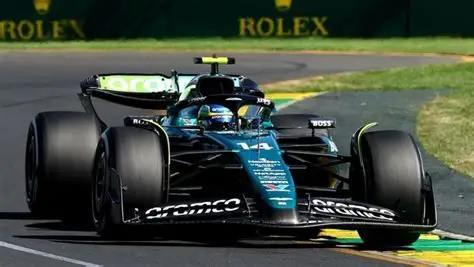
Aston Martin: Why an Alarming 2026 F1 Disaster Left Alonso Fighting Frustration
Aston Martin arrived at the 2026 Australian Grand Prix carrying one of the most exciting stories in Formula One. Adrian Newey was in charge. Honda had returned as a works power-unit partner. Fernando Alonso was still hungry. Lance Stroll had another chance to prove himself. Lawrence Stroll’s long investment in facilities, people and ambition was supposed to move the team closer to the front.
Instead, Melbourne exposed one of the worst starts any ambitious Formula One project could have imagined.
The original report focused on a brutal practice day at Albert Park. That was the right place to begin. Aston Martin were not simply slow. They were barely able to run. Honda power-unit problems and severe vibration concerns limited the team’s mileage, damaged confidence and raised genuine questions about whether Alonso and Stroll could safely complete a full race distance.
Sky Sports reported that the team completed only three laps in opening practice and 31 in second practice. Alonso did not run in FP1, then managed 18 laps in FP2, but his best time was 4.9 seconds slower than Oscar Piastri’s pace-setting McLaren. Stroll managed only a limited programme and remained stuck in the same technical nightmare.
By Sunday, the picture had improved only slightly. Both cars started the race, which already felt like a small victory. Alonso made a sharp launch and climbed to 10th by the end of the opening lap, but the car soon fell backwards. He retired after 21 laps. Stroll completed 43 laps, but because he finished less than 90% of the race distance, he was not classified.
The deeper issue is that Australia was not an isolated bad weekend. It became the first public warning that Aston Martin’s entire 2026 project had started in crisis.
For readers following The News Ink’s wider Formula 1 coverage, Aston Martin’s Melbourne disaster was a reminder that in F1, reputation, money and star names do not matter if the car cannot run properly.
Why the Aston Martin crisis shocked Formula One
Aston Martin were not expected to dominate the first race of 2026. The new regulations were always going to create uncertainty. Every team had to master a new power-unit generation, greater electrical energy use, active aerodynamics, revised chassis rules and different race-management demands.
But Aston Martin were expected to be serious. They had spent years preparing for this reset. They had built new facilities at Silverstone, secured Honda as a works partner, recruited Adrian Newey from Red Bull and kept Alonso as the lead driver. The 2026 rules were supposed to be their opportunity.
That is why Melbourne was so damaging. This was not a small team arriving underprepared. This was a heavily funded, works-backed organisation with one of F1’s greatest designers leading the technical direction.
Aston Martin’s problem was not only lap time. It was credibility. When a team with that profile is nearly five seconds off the pace in practice and worried about whether its drivers can complete a race distance, the story becomes bigger than one Grand Prix.
It becomes a question of planning, integration and whether the partnership between chassis team and engine supplier was truly ready.
The vibration problem was more than performance
The most alarming part of the Aston Martin story was the vibration issue. This was not a normal complaint about balance, bouncing, tyre temperature or engine drivability. The concern was physical.
The Guardian reported before the Australian Grand Prix that Alonso and Stroll might not be able to complete even half the race because vibrations from the Honda power unit were being transmitted through the chassis and into the drivers’ hands. Adrian Newey said Alonso felt he could not complete more than 25 laps consecutively before risking permanent nerve damage, while Stroll, who has had wrist issues, believed his threshold was closer to 15 laps.
That is a major red flag in any motorsport category. Formula One drivers accept risk, but they should not be expected to drive through vibration levels that create possible nerve damage. Performance matters, but driver health comes first.
The vibration also created reliability concerns. The Guardian reported Newey describing mirrors and tail lights falling off because of vibration through the chassis. Sky Sports later reported that the issue had contributed to battery trouble in the hybrid system, leaving the team short of operational batteries in Melbourne.
This is what made the crisis so serious. Aston Martin did not just need more downforce or better tyre use. It needed the car to stop hurting itself and its drivers.
Honda’s return started on the back foot
Honda’s return as a full works partner was supposed to be a major advantage. Formula 1 confirmed in 2023 that Honda would make a full-scale return in 2026 as Aston Martin’s power-unit supplier. On paper, that gave Aston Martin something it had long lacked: a dedicated engine partner rather than a customer supply.
But the reality proved painful. Sky Sports reported Newey saying Aston Martin had not fully understood until late how much experience Honda had lost during its stop-start F1 involvement. Newey said many of the original group had not returned and that Honda had restarted with only about 30% of its original team.
That matters because 2026 was not an easy year to return. The power-unit rules changed dramatically. Formula 1’s own explainer says the electrical contribution was targeted to rise toward around 50%, with the MGU-K output increasing to 350kW, almost three times the previous 120kW level. That made battery reliability, energy deployment and power-unit integration more important than ever.
Aston Martin and Honda were trying to solve one of the hardest technical puzzles in modern F1. In Melbourne, they looked nowhere near ready.
Alonso’s frustration was understandable
Fernando Alonso has lived through this kind of story before. His McLaren-Honda years from 2015 to 2017 remain one of the most painful periods of his career. He knows what it feels like to have elite talent trapped inside an unreliable and underpowered package.
That history made the Aston Martin situation emotionally heavier. Alonso had signed onto a project built around ambition, facilities, Honda power and Newey’s arrival. At 44, he does not have unlimited seasons left. Every wasted year matters more.
At Albert Park, he missed FP1, ran limited laps in FP2, qualified 17th and retired after 21 race laps. Honda’s report said he had made an excellent start and climbed to 10th by the end of lap one, but the car soon fell back and eventually had to be retired after checks and adjustments.
That sequence tells the story of Alonso’s weekend perfectly. The driver was still there. The instincts were still sharp. The first lap was still alive. But the car was not good enough to support him.
By June, Reuters reported that Alonso described himself as “exhausted” by Aston Martin’s continuing problems. That word matters. It suggests not only anger, but fatigue from repeatedly explaining the same technical failure.
Stroll’s weekend showed the same problem
Lance Stroll’s Australian Grand Prix was not much better. He missed major running because of an internal combustion engine issue, did not take part in qualifying, and had to start from 22nd after being given permission to race.
In the race, Stroll used the Grand Prix almost like an extended test session. Aston Martin brought him into the garage for checks, sent him back out, and collected what data they could. He completed 43 laps but was not classified.
That may sound like failure, and in competitive terms it was. But given the pre-race concern that Stroll might only manage 15 laps before the vibration threshold became too risky, completing 43 laps still gave the team useful data.
Stroll later said the laps would give the team more direction heading to China. That was the most optimistic reading available. Aston Martin could not fight for points, but it could at least learn something.
In modern F1, that is sometimes the only salvage from a disaster weekend.
Newey’s challenge became bigger than design
Adrian Newey’s arrival raised expectations because his record is extraordinary. He has been central to championship-winning cars at Williams, McLaren and Red Bull. Reuters reported in 2024 that he would join Aston Martin in March 2025 as managing technical partner and take a shareholding in the team.
By 2026, his role had grown even more important. But Melbourne showed that Newey’s challenge was not simply drawing a fast car. It was integrating a complex new power unit, solving vibration problems, aligning with Honda, managing a team under pressure and keeping drivers convinced that the project remained worth believing in.
That is a much harder task than designing clever aerodynamics.
The new 2026 regulations made the chassis-power unit relationship more sensitive. Packaging, cooling, battery placement, energy recovery, vibration, weight distribution and software all became connected. A great aerodynamicist can help enormously, but he cannot solve a power-unit vibration issue alone.
Newey’s authority may still help Aston Martin recover. But Australia proved that even the best designer in F1 cannot instantly rescue a project if the foundations are unstable.
The Australian race became a data mission
The race itself was effectively a test session for Aston Martin. Honda’s report said Newey described the day as primarily an opportunity to learn more about the AMR26. Once it became clear the cars could not compete for points, the team chose to pit, check the cars and gather data.
That is a brutal position for a team that wanted to join the front. The Australian Grand Prix was the first race of a new era, and Mercedes immediately showed what a successful reset looked like by taking a one-two finish. Aston Martin were using the same race to understand whether their car could operate reliably.
The contrast could not have been sharper. Mercedes were fighting for victory. Ferrari were chasing podiums. McLaren were still competitive. Red Bull were recovering from their own problems. Aston Martin were counting laps.
There is no shame in learning during a new rules cycle. Every team learns. But the best teams learn while scoring points. Aston Martin were learning because they had no choice.
The season did not quickly recover
The most worrying part is that Australia was not followed by a rapid turnaround. Honda said after Melbourne that battery vibrations had decreased and that the partnership was on the right trajectory. That was encouraging technically, but the championship table tells the wider story.
Formula 1’s current 2026 constructors’ standings list Aston Martin 10th with only one point, ahead of Cadillac alone. That is a shocking position for a team with Alonso, Stroll, Newey, Honda and major investment.
Reuters reported in June that Aston Martin had still not scored a point at that stage and that Pedro de la Rosa, working with the team, said there was no quick fix. He added that vibration issues and seat discomfort had been addressed, but the car remained very difficult to drive.
That distinction matters. Fixing the worst vibration problem did not automatically make the car fast. Reliability was only the first layer. Performance was another. Drivability, energy deployment, gearbox behaviour and aerodynamic balance still had to be solved.
Aston Martin’s 2026 crisis therefore moved from “can the car run?” to “can the car compete?” The answer has remained uncomfortable.
Why the 2026 rules punished weak integration
The 2026 rules were designed to reshape Formula One. The power units rely far more heavily on electrical energy. The MGU-H was removed. The MGU-K became much more powerful. Drivers and teams now have to manage deployment, recharge and overtaking energy in ways that change race craft.
This creates an enormous integration challenge. The engine, battery, software, gearbox, cooling, chassis and aerodynamics cannot be treated as separate projects. They must work together from day one.
Aston Martin’s Melbourne weekend suggested that this integration was not mature enough. The power unit created vibration. The vibration affected batteries and components. Limited mileage stopped the team from improving setup. Poor setup made the car slower. The lack of running increased pressure. The pressure made every new issue more damaging.
That is how an F1 project spirals. One technical issue becomes several sporting issues.
For more on how elite performance now depends on data, simulation and preparation, The News Ink’s sports training and technology guide explains why modern sport rewards integrated systems, not isolated talent.
The mental strain on Alonso matters
The phrase “hard mental place” around Alonso may have sounded dramatic, but the idea behind it is real. Drivers do not only suffer from slow cars. They suffer from wasted potential.
Alonso remains one of the sharpest starters and most intelligent racers on the grid. Aston Martin’s own Australian weekend page quoted him saying there was potential in the car, but that the team needed more mileage. That is the frustration. A driver can feel possibilities inside a car, but without reliability and repeatable running, those possibilities stay theoretical.
For Alonso, that is exhausting. He has the experience to understand long projects, but he also understands time. A 24-year-old driver can wait for a multi-year rebuild. A 44-year-old champion has to ask harder questions.
Aston Martin therefore face two battles. They must fix the car, and they must keep Alonso emotionally invested. The first task is technical. The second is psychological.
If the team cannot show visible progress, the driver’s patience will keep shrinking.
Why the project is not dead yet
Aston Martin’s season has been disastrous, but it is not automatically hopeless. There are reasons to believe recovery is possible.
First, the facilities remain strong. The Silverstone factory and wind tunnel investment still matter. Second, Newey’s influence should grow with time. A car concept can be improved more effectively once the team understands its underlying weaknesses. Third, Honda’s report after Australia suggested the battery vibration problem was decreasing. Fourth, a works partnership gives Aston Martin and Honda a shared incentive to fix the issue quickly.
But recovery requires honesty. The team cannot hide behind “potential” forever. Formula One rewards lap time, not promise. A tenth-place constructors’ position after such a major reset is unacceptable for Aston Martin’s ambition.
The next test is whether upgrades bring measurable performance, not just better quotes. If the car becomes reliable but stays slow, the project remains in trouble. If the car becomes faster but still fragile, the team remains trapped. Aston Martin need both.
Key facts at a glance
| Detail | Figure |
|---|---|
| Event | 2026 Australian Grand Prix |
| Team | Aston Martin |
| Car | AMR26 |
| Power unit | Honda |
| FP1 team laps | 3 |
| FP2 team laps | 31 |
| Alonso FP2 gap | 4.9 seconds off fastest time |
| Alonso qualifying | 17th |
| Stroll qualifying | No time |
| Alonso race | DNF after 21 laps |
| Stroll race | 43 laps, not classified |
| Current constructors’ position | 10th |
| Current points | 1 |
| Main issue | Honda vibration, reliability and performance |
What Aston Martin must fix first
Aston Martin’s priority list should be clear.
First, the car must be safe and reliable. Any remaining vibration issue must stay under control. No performance gain is worth risking driver health.
Second, Honda and Aston Martin must improve energy deployment. The new 2026 cars live and die by electrical efficiency. Poor deployment can make a car look slow even if the chassis has potential.
Third, the team needs mileage. Every lost practice session delays setup work, tyre understanding, aero correlation and driver confidence.
Fourth, Aston Martin must give Alonso and Stroll a car they can trust. A driver cannot attack properly if he expects the car to break, vibrate or behave unpredictably.
Fifth, the team must communicate progress honestly. Fans, sponsors and drivers have heard years of ambition. They now need evidence.
That evidence must come on track.
The careful takeaway
Aston Martin’s Australian Grand Prix weekend was not just a bad start. It was a warning about the danger of ambition without full technical readiness.
The team entered 2026 with Adrian Newey, Honda works status, Fernando Alonso, Lance Stroll, major investment and championship language. Melbourne exposed a car that could barely run on Friday, was nearly five seconds off the pace in FP2, and entered Sunday with questions over whether its drivers could safely complete the race distance.
Alonso still produced a sharp first lap. Stroll still gathered valuable data. Honda later said battery vibration had reduced. Those were small positives. But they cannot hide the bigger truth: Aston Martin started the new era miles behind where it wanted to be.
The season since then has confirmed the depth of the crisis. A team built to climb toward the front sits near the bottom with only one point. The vibration problem may have eased, but performance remains the real measure.
Aston Martin can still recover. Formula One seasons are long, and Newey’s influence may yet reshape the project. But Melbourne showed that names alone do not make a car fast, and investment alone does not guarantee integration.
For Alonso, the frustration is obvious. For Aston Martin, the challenge is urgent. The team does not need more hype. It needs laps, reliability, speed and proof.
For more Formula One analysis, race-weekend updates and sports features, follow The News Ink on Medium.