The Dark History of Famous Landmarks: What Lies Beneath the Beauty
Travelers often admire iconic landmarks for their beauty, architecture, and cultural significance. However, the dark history of famous landmarks reveals that many of these places carry stories of tragedy, conflict, and hidden secrets. While tourists capture stunning photos, they rarely realize the deeper narratives that shaped these sites.
Today, curiosity about the past has grown significantly. Moreover, travelers increasingly want to understand the full story behind the places they visit. Therefore, exploring the darker side of well-known landmarks provides a more complete and meaningful travel experience.
Exploring the Dark History of Famous Landmarks Worldwide
Many landmarks that attract millions of visitors each year have histories tied to war, suffering, or controversial events. Although these sites now symbolize culture and progress, their origins often tell a different story.
For instance, construction projects in the past frequently involved harsh labor conditions. Additionally, political conflicts and power struggles shaped many of these iconic structures. As a result, understanding their history allows visitors to see beyond the surface.
To explore how historical narratives shape global landmarks, you can visit History.com. Consequently, awareness adds depth to every travel experience.
Colosseum: Entertainment Built on Violence
The Colosseum in Rome stands as one of the most famous landmarks in the world. However, its history reflects a brutal form of entertainment during ancient Roman times.
Gladiators fought to the death, and wild animals were used in violent spectacles for public amusement. Moreover, thousands of people lost their lives within its walls. Although today it represents architectural brilliance, its past reveals a society that normalized violence.
Visitors now walk through the ruins with a sense of awe; however, the stories behind it remain haunting.
Taj Mahal: A Symbol of Love with Hidden Stories
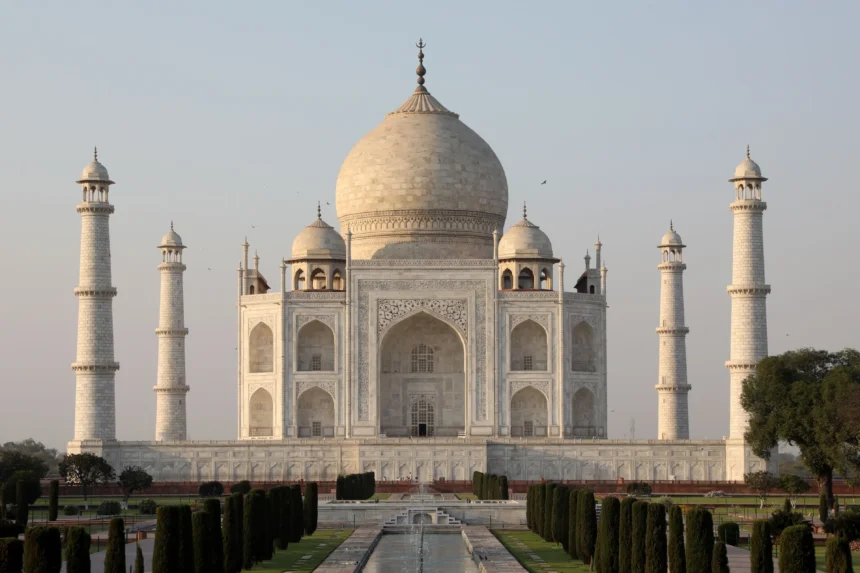
The Taj Mahal in Agra is often described as a symbol of eternal love. Built by Emperor Shah Jahan, it honors his wife Mumtaz Mahal.
However, the construction involved thousands of workers who labored for years under difficult conditions. Additionally, some historical accounts suggest that artisans faced severe restrictions after completing the monument.
Although the Taj Mahal remains a masterpiece, its creation reflects the immense human effort and sacrifice behind its beauty.
Eiffel Tower: From Controversy to Icon
The Eiffel Tower in Paris is now a global symbol of romance and tourism. However, when it was first built, many artists and intellectuals strongly opposed it.
Critics described it as an eyesore that damaged the city’s aesthetic appeal. Moreover, it was originally intended as a temporary structure for the 1889 World’s Fair.
Despite its popularity today, the tower’s early history reflects resistance to change and modern innovation. For more insights into architectural history, visit Britannica.
Great Wall of China: Built Through Sacrifice
The Great Wall of China stretches across vast landscapes and represents one of humanity’s greatest engineering achievements. However, its construction involved immense hardship.
Workers faced harsh conditions, and many lost their lives during the process. Moreover, some accounts suggest that laborers were buried within the wall itself.
Although the structure symbolizes strength and protection, its history highlights the human cost of monumental projects.
Machu Picchu: Mystery and Colonial Impact
Machu Picchu in Cusco is one of the most breathtaking archaeological sites in the world. However, its history connects to the decline of the Inca Empire.
Following Spanish colonization, many indigenous communities faced destruction and cultural loss. Although Machu Picchu remained hidden for centuries, its rediscovery brought global attention to Inca heritage.
Today, the site stands as both a cultural treasure and a reminder of historical disruption.
Statue of Liberty: A Complex Symbol of Freedom
The Statue of Liberty in New York City represents freedom and hope. However, its history includes complex narratives about immigration and inequality.
While millions viewed it as a symbol of opportunity, many immigrants faced harsh realities upon arrival. Additionally, marginalized communities often struggled to achieve the freedom the statue represented.
Therefore, the monument reflects both aspiration and contradiction within society.
Tower of London: Power and Punishment
The Tower of London in London has served as a royal palace, fortress, and prison. Throughout history, it witnessed executions, imprisonment, and political intrigue.
Many high-profile prisoners, including nobles and political figures, met tragic ends within its walls. Consequently, the tower became a symbol of authority and control.
Today, visitors explore its history through exhibits and guided tours. For more travel updates and global stories, visit The News Ink.
Why Understanding the Dark History of Famous Landmarks Matters
The dark history of famous landmarks adds depth to travel experiences. Instead of seeing these sites as mere attractions, visitors gain insight into the events that shaped them.
Moreover, understanding history encourages empathy and awareness. Travelers learn to appreciate cultural heritage while recognizing past struggles.
Additionally, these stories remind us that progress often comes with challenges. As a result, historical awareness enhances both education and travel.
Final Thoughts on the Dark History of Famous Landmarks
The dark history of famous landmarks reveals that beauty and tragedy often coexist. While these sites attract millions of visitors, their pasts tell stories that deserve attention.
Ultimately, exploring these histories allows travelers to connect more deeply with the places they visit. Therefore, looking beyond the surface transforms travel into a meaningful and educational journey.