

Hanoi Train Street: The Dangerous Tourist Attraction Everyone Wants to See
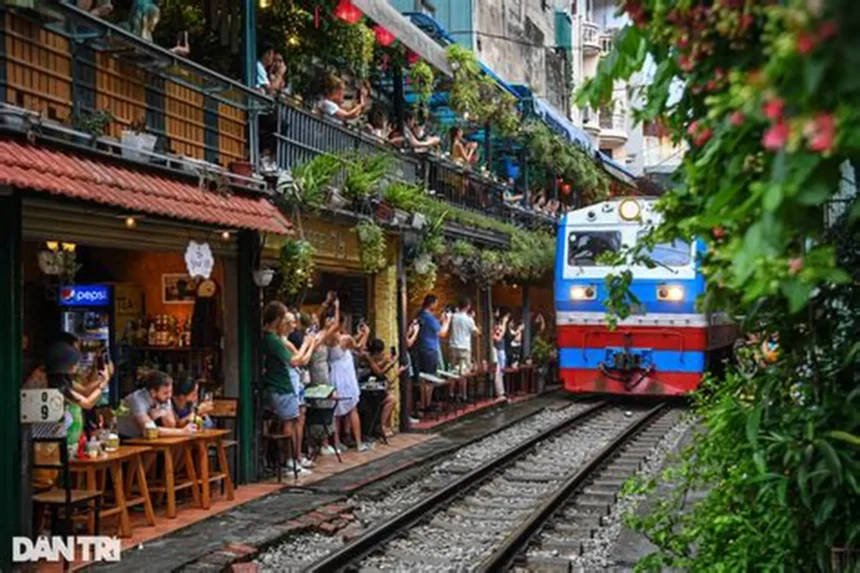
Hanoi Train Street has become one of Vietnam’s most recognisable travel images: a narrow railway corridor, rows of small cafés, lanterns above the tracks and visitors lifting phones as a train squeezes through the alley. The scene looks cinematic online. In person, it is more complicated, because the same active railway that makes the place famous also makes it dangerous.
The original story captured the basic appeal of Hanoi Train Street, but the situation has changed enough that the article needs a stronger, updated angle. Authorities have not simply warned visitors once or twice. Hanoi has repeatedly tried to control access, ban organised tours, remove cafés from the railway safety corridor and guide tourists away from the tracks. In 2026, the city even proposed halting passenger trains through the central “railway café street” section between Hanoi Station and Long Biên Station as part of a wider safety and urban-renewal plan.
That makes Hanoi Train Street more than an unusual photo spot. It is a case study in modern overtourism, where social media attention turns an ordinary residential area into a global attraction faster than authorities, residents and businesses can manage it.
For travellers, the right question is no longer only “Can I visit?” It is “Can I visit safely, legally and respectfully?” The answer depends on current restrictions, local enforcement, train schedules and whether visitors are willing to treat the place as a working railway rather than a stage for risky photographs.
Hanoi Train Street at a Glance
| Detail | What travellers should know |
|---|---|
| Location | Mainly around Phùng Hưng, Trần Phú, Lê Duẩn and nearby Old Quarter railway corridors |
| Main appeal | Trains passing close to homes, cafés and visitors |
| Safety status | Restricted, monitored and repeatedly targeted by enforcement campaigns |
| Best approach | Follow local rules, do not enter blocked areas and avoid standing on tracks |
| Main risk | Crowds, selfies, café seating and objects inside the railway safety corridor |
| Travel lesson | Viral attractions can be visually exciting but ethically and physically risky |
Why Hanoi Train Street Became So Famous
Hanoi Train Street was not designed as a tourist attraction. For decades, it was simply a railway corridor running through dense neighbourhoods. Residents lived close to the line, pulled belongings away when trains approached and treated the passing trains as part of daily life.
That ordinary rhythm changed when travel photography, Instagram videos and café culture collided. The image was irresistible: a train moving through a space so narrow that it appeared to brush past houses and coffee tables. Tourists could sit with an iced coffee, wait for the horn and capture a dramatic clip as the train passed.
The Vietnam Airlines travel guide describes the famous street as the narrow railway running through residential neighbourhoods around Trần Phú and Phùng Hưng streets, where trains pass extremely close to homes and cafés. The guide also notes that access has become restricted because of safety concerns and that unauthorised entry is prohibited.
Social media made the scene feel easy to consume. A ten-second video did not show the residents adjusting daily life around the railway. It did not show the police inspections, the safety corridor or the danger of stepping onto active tracks. It showed a thrill.
That is why Hanoi Train Street became a classic example of the “Instagram effect” in travel. A place becomes famous because it photographs well, then struggles because too many visitors arrive trying to recreate the same shot.
The News Ink’s smart travel guide is useful here because Hanoi Train Street shows exactly why travellers need more than a viral recommendation before visiting a place.
The Railway History Behind the Attraction
The railway running through Hanoi has deep roots in Vietnam’s colonial and transport history. Vietnam Airlines notes that the tracks belong to a rail system developed during the French colonial era, when railways were built to connect Hanoi with other parts of Vietnam. The wider north-south railway project was constructed in stages over several decades, linking the country through a long rail spine.
This history matters because Hanoi Train Street is not a theme park. It is part of a real transport landscape. The buildings, cafés and trackside homes sit around infrastructure that still carries trains and still creates safety obligations.
That is part of the tension. Travellers may see a charming alley. Railway authorities see an active safety corridor. Residents see home, business opportunity and disruption all at once. City officials see a crowded area where one careless step could become a serious accident.
Hanoi Train Street therefore belongs in the same conversation as heritage tourism and urban change. The place has history, texture and local life, but tourism has altered the way that history is experienced. The News Ink’s historical travel coverage is a helpful companion for readers who want to understand how old infrastructure, culture and tourism often overlap in fragile ways.
Authorities Have Tried to Shut It Down More Than Once
The safety dispute around Hanoi Train Street is not new. In 2022, Việt Nam News reported that the Việt Nam Railway Authority said cafés operating next to the tracks in Hanoi’s Old Quarter had to stop to protect tourists and residents. Authorities agreed the business model along the railway posed a high risk of serious traffic accidents, and barriers were erected to block entrances to trackside cafés.
The issue returned in 2025. Hanoi’s Department of Tourism asked travel agencies not to organise tours to train street areas in Cửa Nam, Hàng Bông and Cửa Đông wards. The department also told agencies to raise awareness among staff about traffic-accident risks around train street cafés. Việt Nam News reported that both locals and tourists were crowding the railway corridor and tracks, creating safety hazards.
In July 2025, Hanoi traffic police inspected the corridor running through Phùng Hưng, Trần Phú and Lê Duẩn streets. Officers reminded tourists and residents to leave the area, warned people not to gather, take photos or drink coffee near the tracks, and said inspections would continue before train operating times during peak tourist periods.
By January 2026, the issue had become even bigger. Hanoi proposed suspending passenger trains through the café-lined railway section. Under the plan, southbound passenger trains would terminate at Hanoi Station and northbound services would stop at Gia Lâm, meaning no passenger trains would pass through the stretch between Hanoi Station and Long Biên Station if the proposal were implemented.
This timeline shows why Hanoi Train Street cannot be treated as a simple tourist tip. Access changes. Enforcement changes. Café operations change. A video posted online may not reflect the current rules on the ground.
Why the Danger Is Not Exaggerated
Some visitors look at Hanoi Train Street and assume the danger is controlled because cafés still appear to operate and crowds still gather. That is a mistake. The danger comes from the basic geometry of the place. The railway corridor is narrow, the trains are large and many visitors are distracted by phones.
The risk increases when people step onto the tracks for selfies, place cameras or tripods in the railway path, sit too close to the line, ignore staff instructions or wait until the last second to move. A slow-moving train is still a train. It cannot stop quickly because someone wants a better photo.
Vietnam Airlines advises visitors not to use drones without permission, to follow safety instructions from railway staff and café owners, and to avoid placing cameras or tripods on the tracks. It also notes that Train Street was closed to the public in 2019 and again later because of overcrowding and tourists standing too close to active tracks.
Hanoi Train Street is dangerous because it compresses too many behaviours into too little space: drinking, filming, walking, posing, waiting, shouting, moving chairs, clearing tables and watching trains. Even if one person follows the rules, another visitor’s mistake can create chaos.
That is why authorities keep returning to enforcement. The issue is not that every visitor behaves recklessly. The issue is that one reckless visitor can turn a crowded railway moment into a disaster.
What Locals Gained and Lost From the Boom
The rise of Hanoi Train Street brought income to some residents. Cafés, drinks, souvenirs and guide services gave households a way to benefit from tourism. In a city where visitors are eager for memorable experiences, a railway-side coffee became an easy sell.
But the boom also changed local life. Streets that once carried neighbourhood routines became crowded with outsiders. Residents had to manage tourists, warnings, train times, authorities and online expectations. A place that had once been ordinary became a stage.
This is one reason the debate is difficult. It is not simply tourists versus authorities. Some local businesses want the income. Some residents may prefer less disruption. Authorities want safety and order. Visitors want the thrill. Railway operators need the corridor clear. The interests are real, and they conflict.
Hanoi Train Street shows how tourism can create opportunity and pressure at the same time. A café may earn money from train watchers, but the street can also lose privacy, safety and normal rhythm. The best travel writing should hold both truths together rather than romanticising the scene.
For readers interested in unusual places shaped by curiosity and risk, The News Ink’s strange places feature offers a broader look at destinations that attract attention because they feel unexpected.
Social Media Turned a Neighbourhood Into a Performance
Hanoi Train Street is now famous partly because it fits the logic of social media perfectly. It has suspense, colour, motion and danger. The viewer knows a train is coming. The camera waits. The horn sounds. The train fills the frame. The clip ends quickly, and the viewer wants to see it again.
That format rewards risk. A person who stays safely inside a café may get a good video. A person who steps onto the tracks may get a more dramatic video. Platforms do not always distinguish between responsible and irresponsible behaviour when they reward attention.
The result is copycat tourism. One visitor sees a clip, travels to the same spot and tries to recreate it. Then another does the same. The location becomes less about place and more about proof: proof that the traveller was there, proof that they stood close, proof that they captured the shot.
This is the darker side of viral travel. A destination becomes flattened into a backdrop. Locals become part of the frame. Safety becomes secondary to the image. The story of Hanoi Train Street is therefore not only about railway rules. It is about how online attention changes human behaviour in real spaces.
Should Travellers Still Visit Hanoi Train Street?
This is the difficult question. Hanoi Train Street is visually fascinating, historically interesting and culturally layered. It is also restricted, risky and often crowded. Travellers should not treat it as a guaranteed stop or ignore barriers because a café owner, guide or online post suggests they can get in.
A responsible visitor should begin with current rules. If access is blocked, do not force entry. If police or railway staff ask people to leave, leave. If a café operates in a restricted safety corridor, think carefully before supporting it. If a local guide suggests behaviour that feels unsafe, refuse.
There are safer ways to understand the area. Travellers can view nearby streets, learn the history of Hanoi’s railway, visit Long Biên Bridge, explore the Old Quarter and enjoy Hanoi’s coffee culture away from active tracks. The city offers enough depth that no visitor needs to risk safety for one photo.
If access is legally permitted through a controlled café or guided setting, visitors should still behave conservatively. Stay seated or stand where instructed. Keep bags, feet, phones, cameras and tripods off the tracks. Do not cross barriers. Do not bring children close to the line. Do not drink alcohol before waiting for a train. Do not chase the perfect shot.
The question should not be “How close can I get?” It should be “How safely and respectfully can I experience this?”
A Safer Visitor Checklist
Hanoi Train Street can only be approached responsibly if travellers accept that railway safety comes first. The following checklist is simple but important:
- Check current restrictions before going.
- Do not enter if barricades or police controls are in place.
- Never stand, sit or pose on the tracks.
- Keep cameras, tripods and bags away from the railway.
- Follow instructions immediately when a train is approaching.
- Stay sober and alert.
- Avoid peak crowds if visiting a legal viewing area.
- Do not pressure café owners or guides to bend rules.
- Respect residents’ homes and privacy.
- Leave if the area feels crowded, chaotic or unsafe.
For digital travellers, the same caution applies online. Do not geotag restricted access points, encourage rule-breaking or post risky poses as if they are harmless. The News Ink’s guide to public Wi-Fi safety focuses on digital travel risks, but Hanoi Train Street shows that safety habits matter offline as much as online.
What Hanoi’s 2026 Proposal Could Mean
The 2026 proposal to halt passenger trains through the central railway café street could change the future of Hanoi Train Street. If passenger trains no longer pass through the most photographed section, the attraction would lose its defining moment. Cafés might remain, but the viral experience would not be the same.
The proposal also reflects a broader urban question. Hanoi is not only trying to stop tourists from standing too close to trains. The city is thinking about the railway corridor as part of heritage conservation, urban renewal and future transport planning. Việt Nam News reported that the city wants management of the Gia Lâm-Hanoi rail section transferred so it can carry out renewal and conservation projects around the western edge of the Old Quarter and the area near the Imperial Citadel of Thăng Long.
That means the future of Hanoi Train Street may not be simple closure or reopening. It could become a redesigned heritage corridor, a controlled tourism zone, a safer pedestrian-cultural space or something else entirely. The exact result depends on infrastructure decisions, legal authority, business interests and public pressure.
For now, travellers should assume uncertainty. Any guide that promises easy access may be outdated quickly.
Better Ways to Experience Hanoi’s Railway Culture
If the goal is to understand Hanoi rather than collect a risky photo, there are better and safer ways to explore the city’s railway culture.
Long Biên Bridge is one option. Built during the French colonial period and still central to Hanoi’s visual identity, it offers a wider view of the city’s relationship with rail, river and history. Hanoi Railway Station is another. It shows the city’s continuing rail connection to the rest of Vietnam without forcing visitors into a narrow safety corridor.
Travellers can also explore the Old Quarter on foot, visit street cafés away from the tracks, learn about Vietnamese coffee traditions or take a legal train journey from Hanoi to another destination. These experiences may be less dramatic on video, but they are richer and safer.
The best travel memories are not always the most viral ones. Sometimes they come from slowing down enough to understand where you are.
Why Hanoi Train Street Still Fascinates People
Despite all the warnings, Hanoi Train Street remains fascinating because it brings several travel emotions together at once. It feels intimate, risky, beautiful, local and surreal. It compresses old infrastructure, dense urban life and modern tourism into one narrow frame.
That is why people keep wanting to see it. They are not only chasing danger. Many are drawn to the strange closeness of daily life and machinery, the contrast between small cafés and heavy trains, the feeling that the city has folded around the railway rather than pushed it away.
The fascination is understandable. But fascination should not cancel judgement. A place can be compelling and unsafe at the same time. It can be photogenic and problematic. It can be worth writing about without being worth reckless behaviour.
This is the mature way to understand Hanoi Train Street. It is not just a “must-see” attraction. It is a warning about what happens when tourism, infrastructure and viral media occupy the same narrow space.
The Bottom Line
Hanoi Train Street remains one of Vietnam’s most unusual urban scenes, but the danger is real and the rules continue to change. The same trains that make the street famous are the reason authorities keep trying to control access. The same cafés that attract visitors sit inside a corridor that railway officials have repeatedly described as unsafe. The same photos that made the place viral have encouraged behaviour that police and tourism officials are trying to stop.
For travellers, the responsible approach is clear. Do not ignore barricades. Do not step onto active tracks. Do not treat residents’ homes as props. Do not assume an old blog, viral reel or café invitation reflects current law. If a safe and legal viewing option exists, follow instructions carefully. If it does not, choose another way to experience Hanoi.
Hanoi Train Street is powerful because it shows the beauty and risk of modern travel in one place. It is a reminder that not every famous photo spot was built for tourists, and not every viral experience deserves to be repeated.
For more travel stories and destination guides, readers can follow The News Ink on Instagram.