




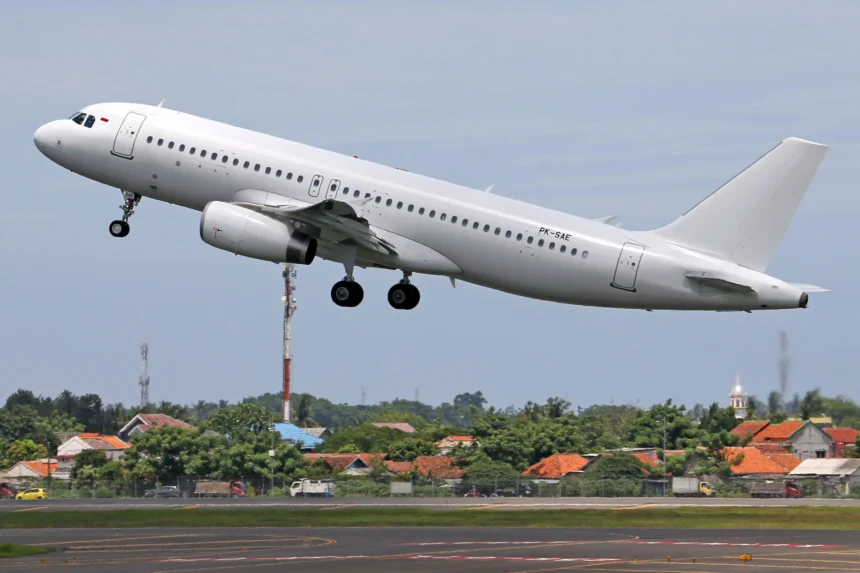
Why Are Most Airplanes Painted White?
Stand beside the windows of almost any international airport.
Look across the gates.
Different airlines.
Different aircraft manufacturers.
Different countries.
Different tail logos.
Yet one color appears again and again:
white.
Some aircraft have blue tails.
Others use red engines.
A few have enormous logos or colorful graphics covering part of the fuselage.
But commercial airplanes painted white are overwhelmingly common.
Why?
At first, the explanation seems obvious.
Maybe white paint is cheaper.
Maybe it weighs less.
Maybe aviation regulations require it.
Or perhaps airlines simply copy each other because passengers are accustomed to white aircraft.
The real answer is much more interesting.
There is no general rule saying passenger aircraft must be white.
Airlines can—and do—use almost any approved livery they want.
But airplanes painted white offer a combination of advantages that is difficult to beat.
White surfaces reflect more solar energy than dark surfaces.
That can reduce heat absorbed while an aircraft spends hours sitting on a sun-baked airport apron.
Aircraft coatings also have important protective jobs beyond appearance.
A mostly white fuselage provides a simple neutral background for airline branding.
Relatively simple liveries can avoid some of the extra paint layers and weight associated with complex designs.
And in an industry where aircraft frequently move between airlines and leasing companies, a white fuselage is much easier to repaint and rebrand.
The result is not one dramatic reason.
It is several smaller engineering and economic advantages all pointing in the same direction.
Airplanes Painted White at a Glance
| Reason | Why White Helps |
|---|---|
| Sunlight | White reflects more solar radiation than dark colors |
| Surface temperature | Less absorbed sunlight can reduce heating |
| Composite structures | Light colors help limit damaging heat buildup |
| Protective coatings | Paint protects metal and composite surfaces |
| Livery weight | Simpler schemes can reduce unnecessary paint layers |
| Branding | Logos and colors stand out clearly on white |
| Leasing | White is a practical neutral finish between operators |
| Repainting | New airline branding is easier to apply over a neutral base |
| Maintenance | Stains and some surface abnormalities can be easier to notice |
| Fleet consistency | The same white base works across many aircraft types |
None of these means white is mandatory.
But together they explain why airplanes painted white remain the default across much of commercial aviation.
1. Airplanes Painted White Reflect More Sunlight
The simplest reason begins with physics.
White surfaces generally reflect a larger fraction of incoming visible sunlight than dark surfaces.
Dark materials absorb more of that energy.
The absorbed energy becomes heat.
NASA has spent decades studying exactly this principle for spacecraft thermal-control coatings. Its research describes white thermal-control coatings as useful because of their low solar absorptance—in other words, they absorb relatively little incoming solar radiation.
NASA — White Thermal-Control Coatings
The same basic physics matters on Earth.
Imagine two identical aircraft parked side by side in strong summer sunlight.
One has a highly reflective white fuselage.
The other is covered in a dark color.
The darker aircraft surface will normally absorb more solar energy.
That makes heat reflection one of the strongest technical explanations for airplanes painted white.
And an airliner spends a surprising amount of time exposed to the sun.
Aircraft can sit:
at gates;
on remote stands;
waiting for passengers;
during maintenance;
between flights;
in long-term storage.
In airports such as Dubai, Doha, Phoenix, Delhi or Singapore, that exposure can be intense.
2. White Can Significantly Reduce Surface Heating
The difference is not merely theoretical.
The FAA’s current pilot training material explains that dark paint on composite structures can produce much higher temperatures than light paint.
Its Pilot’s Handbook gives a striking example: a composite wing surface painted black and exposed over hot black asphalt may reach approximately 220°F, while the same structure painted white may remain below roughly 140°F under comparable conditions.
FAA — Pilot’s Handbook of Aeronautical Knowledge
That is an enormous temperature difference.
Modern aircraft increasingly use advanced composite materials.
Carbon-fiber-reinforced structures are strong and lightweight, but the resins used in composites have temperature limits.
The FAA specifically notes that many composite aircraft have restrictions or recommendations regarding allowable exterior colors because excessive heat can weaken resin systems.
This makes the color of airplanes painted white more than a cosmetic choice.
On some structures, thermal behavior is an engineering requirement.
Commercial transport aircraft are far more carefully designed than the general-aviation examples used in the FAA handbook, but the physical principle remains the same:
lighter surfaces usually absorb less solar energy.
3. Does White Make the Cabin Cooler?
Yes—but this claim should not be exaggerated.
A white fuselage can absorb less solar energy than a dark one.
That reduces some heat entering the aircraft structure while the plane is parked.
But the paint color is only one part of cabin temperature.
A parked aircraft can still become extremely hot because of:
outside temperature;
sunlight through windows;
heat radiating from pavement;
passengers;
electronic equipment;
limited ventilation while parked.
Airlines may connect aircraft to ground-based air-conditioning systems while passengers board.
So airplanes painted white do not have magically cool cabins.
The better statement is:
white reduces one source of heat gain.
Every reduction matters when an aircraft needs to cool hundreds of seats before departure.
Passengers interested in the surprisingly complex engineering hidden inside ordinary air travel can also read The News Ink’s guide to NASA aeronautics and the future of flight.
Modern aviation involves thousands of apparently small design decisions like this.
4. Concorde Demonstrated Why Aircraft Color Can Matter
No passenger aircraft demonstrated the thermal importance of color quite like Concorde.
Concorde flew at more than twice the speed of sound.
At those speeds, aerodynamic heating significantly increased the temperature of the airframe.
Its famous white exterior therefore had a particularly important thermal role.
Heritage Concorde explains that the aircraft used a highly reflective white finish to manage the heat generated during supersonic flight.
Heritage Concorde — Concorde Airframe Materials
Then something unusual happened in 1996.
Air France temporarily painted Concorde blue as part of a Pepsi promotional campaign.
The wings remained white.
And because the darker fuselage absorbed more heat, the aircraft received restrictions on how long it could remain at its maximum cruising speed.
Heritage Concorde — Pepsi Blue Concorde
A normal Boeing 737 or Airbus A320 does not experience Concorde’s extreme aerodynamic heating.
But the story provides a dramatic demonstration of the basic science behind airplanes painted white.
Color changes how much heat a surface absorbs.
5. Aircraft Paint Does Much More Than Make the Plane Look Good
People often think of aircraft paint as decoration.
Airbus says that is only part of the story.
When Airbus described painting its new A350F freighter in 2026, it explained that aircraft coating systems protect:
composite structures from ultraviolet radiation;
metal structures from corrosion;
surfaces from jet fuel;
surfaces from deicing fluids;
and the airframe from other environmental exposure.
Airbus — How the A350F Is Painted
The visible color is therefore just one layer in a sophisticated protective system.
A modern aircraft coating can include:
primer;
intermediate coatings;
colored base coats;
clear coats;
decorative films.
Airbus specifically emphasizes the importance of primer for:
adhesion;
durability;
thermal stress;
future paint stripping;
future repainting.
So airplanes painted white are not simply wearing white decoration.
They are covered by an engineered protective system whose final visible color happens to offer additional advantages.
6. White Paint Helps Protect Composite Aircraft From Excessive Heat
This is increasingly important because modern airliners contain large amounts of composite material.
The Boeing 787 and Airbus A350, for example, use carbon-fiber composites extensively.
Composite structures offer major benefits:
lower weight;
high strength;
corrosion resistance in many applications;
greater design flexibility.
But composite materials interact with heat differently from traditional aluminum aircraft skins.
The FAA warns specifically that excessive temperatures can damage composite resin systems and explains why aircraft manufacturers may restrict allowable exterior paint colors.
That makes airplanes painted white particularly sensible in areas containing heat-sensitive composite structures.
The aircraft manufacturer can use approved darker colors where engineering analysis allows them.
But white provides a safe, predictable thermal baseline.
That does not mean dark aircraft are unsafe.
They simply require the aircraft manufacturer and operator to ensure that the coating system stays within the approved thermal limits of the structure underneath it.
7. White Creates an Excellent Background for Airline Branding
Airline liveries have two jobs.
Engineering.
And marketing.
An airline needs customers to recognize its aircraft immediately.
Think about famous visual identities.
Emirates uses red branding.
KLM uses blue.
Qatar Airways uses burgundy.
Lufthansa uses dark blue and yellow.
British Airways uses red and blue.
Turkish Airlines uses red.
Yet all of those brand colors can stand out strongly against white.
That makes a white fuselage function almost like a blank sheet of paper.
An airline can place its:
name;
logo;
tail design;
colored stripe;
national symbol;
sponsor;
special artwork
over a neutral background.
This is one of the least complicated but most practical reasons for airplanes painted white.
An airline does not have to cover the entire fuselage in its corporate color to create a distinctive identity.
A relatively small amount of branding can achieve the same visual recognition.
8. Complex Paint Schemes Can Add Extra Weight
Aircraft weight matters.
A lot.
Every additional kilogram has to be carried:
during takeoff;
during climb;
across thousands of kilometers;
during landing.
The fuel impact of one kilogram is tiny on one flight.
Multiply that across:
thousands of flights;
hundreds of aircraft;
many years,
and small weight differences become economically meaningful.
Airbus says the dry paint film alone on an A350 can weigh around 400 to 500 kilograms.
Airbus — A350F Painting and Livery Weight
That is the weight of several passengers.
This does not mean white paint itself is automatically hundreds of kilograms lighter than blue, red or black paint.
That common claim is too simplistic.
The more important issue is the number and complexity of layers.
A detailed multicolor livery may require:
extra paint coats;
multiple masking stages;
additional clear coats;
decorative films.
Boeing has researched new inkjet-printing technology partly because replacing multiple conventional paint layers with a single thinner printed layer could reduce livery weight by as much as 100 pounds, or about 45 kilograms, in some applications.
Boeing — Sustainability Report and Inkjet Aircraft Liveries
This helps explain why simple airplanes painted white can make economic sense.
The advantage is not magical white pigment.
It is simplicity.
9. Even Small Weight Savings Matter Over Time
ICAO specifically includes aircraft weight management among operational methods for reducing fuel consumption and carbon emissions.
ICAO — Operational Improvements to Reduce Fuel Burn
Again, nobody should interpret this as:
white aircraft use dramatically less fuel than colored aircraft.
That would be misleading.
Aerodynamics.
Aircraft type.
Engines.
Payload.
Weather.
Altitude.
Routing.
Speed.
All have much larger effects.
But aviation economics operates at enormous scale.
Reducing unnecessary paint or decorative material is one of many small efficiencies airlines can pursue.
That makes relatively simple airplanes painted white attractive to operators managing large fleets.
The same network economics explain other apparently strange airline decisions. The News Ink’s article on why airlines sometimes fly empty planes shows how decisions that seem wasteful on one flight can make sense across an entire airline network.
10. White Can Make Some Exterior Problems Easier to Notice
There is another frequently repeated claim:
white makes damage easier to see.
There is some truth here, but it needs careful wording.
A light, relatively uniform aircraft surface can make certain abnormalities more visually obvious.
Maintenance teams may notice:
fluid streaks;
oil contamination;
paint blistering;
surface discoloration;
corrosion staining;
impact marks;
cracks in coatings.
The FAA’s active corrosion-control guidance discusses the importance of examining aircraft structures for visible evidence of corrosion and deterioration.
FAA — Corrosion Control for Aircraft
Its broader aircraft-maintenance guidance also discusses paint deterioration and external inspection.
FAA — Acceptable Aircraft Inspection and Repair Practices
But airplanes painted white are not safer simply because they are white.
Commercial aircraft maintenance relies on sophisticated inspection programs.
Technicians may use:
visual inspections;
ultrasonic testing;
eddy-current inspection;
dye penetrants;
X-rays;
other nondestructive techniques.
White simply provides a useful background for some visual clues.
It does not replace engineering inspection.
11. Leasing May Be One of the Most Important Hidden Reasons
Many passengers assume airlines own every airplane they operate.
They do not.
A large portion of the world’s airline fleet is leased.
Aircraft regularly move between:
airlines;
leasing companies;
countries;
subsidiaries.
This matters enormously when discussing airplanes painted white.
IATA’s aircraft leasing guidance says that, in many lease arrangements, an aircraft is delivered with a freshly painted white fuselage unless the parties agree on another livery arrangement.
IATA — Guidance Material and Best Practices for Aircraft Leases
Why white?
Because white is neutral.
Imagine a jet that spent six years operating for an airline with a huge dark-purple design covering its entire fuselage.
The aircraft is returned to the leasing company.
A completely different airline now wants to operate it.
The old branding has to be removed.
Now imagine the same aircraft is predominantly white with only:
a colored tail;
airline lettering;
several accent graphics.
Rebranding becomes much simpler.
That is one of the strongest economic explanations for airplanes painted white.
12. White-Tail Aircraft Exist for Exactly This Reason
Aviation even has an informal expression connected with this idea:
white tails.
These are aircraft that may be sitting temporarily without full operator branding or awaiting a new airline customer.
A neutral exterior makes a commercial aircraft easier to remarket.
And this matters because an airliner is an extremely expensive asset.
A leasing company does not want a perfectly serviceable jet sitting on the ground for months simply because repainting it is unnecessarily complicated.
This connects directly with aircraft repositioning.
As The News Ink’s article on empty airline flights explains, airplanes may travel without passengers when being:
delivered;
returned from leases;
moved to storage;
sent to maintenance;
transferred between operators.
The paint scheme becomes part of that commercial life cycle.
13. Repainting an Airliner Is a Major Industrial Job
Painting an airplane is nothing like repainting a car.
Airbus’s 2026 account of painting the A350F shows just how complicated the process can become.
Engineers had to consider:
surface preparation;
primer chemistry;
composite materials;
temperature;
humidity;
paint thickness;
masking;
worker access;
drying time;
aircraft weight;
regulatory requirements.
Even infrastructure inside the paint shop had to be specially adapted to the aircraft.
Every extra color can potentially add:
masking work;
drying time;
labor;
materials;
complexity.
Airbus has also documented how removing special liveries from military aircraft can turn into a substantial maintenance project.
Airbus — Removing and Repainting a Special Aircraft Livery
That does not mean airlines avoid creative paint schemes.
They clearly do not.
But it helps explain why a simple white foundation remains economically attractive.
14. Airplanes Painted White Are Easier to Standardize Across a Fleet
An airline may operate several aircraft families.
For example:
small regional jets;
Airbus A320-family aircraft;
Boeing 737s;
Airbus A350s;
Boeing 787s.
Each fuselage has:
different dimensions;
different windows;
different doors;
different wing positions;
different tail geometry.
A highly complicated full-body design must be adapted carefully to every airframe.
A white fuselage with consistent logos and accent colors is easier to reproduce.
That helps airlines maintain a common visual identity across completely different aircraft.
For passengers, this creates familiarity.
A Boeing and Airbus can look obviously different in shape while still immediately looking like they belong to the same airline.
That flexibility is another reason airplanes painted white continue to dominate large fleets.
15. Why Aren’t All Airplanes Painted White?
Because airlines still care about branding.
Some operators deliberately choose bold designs.
Aircraft can appear in:
black;
dark blue;
yellow;
orange;
red;
multicolor advertising schemes.
Special liveries may celebrate:
sports teams;
national anniversaries;
movies;
tourism campaigns;
company milestones.
These aircraft remain safe because their paint schemes are engineered and approved for the specific airframe.
So airplanes painted white are common—not mandatory.
Airlines balance:
thermal performance;
structural limits;
maintenance;
weight;
branding;
leasing;
cost.
Sometimes branding justifies a more complicated solution.
16. What About Air New Zealand’s Black Aircraft?
Air New Zealand provides a useful reminder that dark-colored aircraft are entirely possible.
Its famous black liveries demonstrate that aircraft do not need to be white.
But darker designs are not simply applied without engineering consideration.
Manufacturers specify which surfaces and materials can carry which coatings.
This becomes particularly important around composite parts.
The FAA explicitly warns that aircraft manufacturers can impose limits on allowable paint colors for composite structures because of solar heating.
That is why comparing one approved black aircraft with an ordinary white jet does not prove color never matters.
The correct conclusion is:
the aircraft must be engineered for the chosen finish.
White simply makes that engineering easier in many situations.
17. Why Were Some Older Airplanes Bare Metal?
Aviation enthusiasts may remember older airliners with beautiful polished-metal fuselages.
American Airlines became especially famous for the appearance.
Why leave metal exposed if paint protects aircraft?
Older commercial airliners relied heavily on aluminum skin.
Polished metal could reduce paint mass and create a distinctive appearance.
But modern aircraft construction has changed.
The Airbus A350 uses very large amounts of composite material.
Boeing’s 787 does too.
Carbon-fiber surfaces cannot simply be polished like aluminum.
They require suitable protective coatings.
Airbus says the A350F exterior is more than 90% composite and explains that its primer and livery system protect the material from UV radiation and thermal stress.
That makes the era of huge polished-metal composite airliners unlikely.
Modern airplanes painted white are partly a reflection of modern material science.
18. Does White Paint Prevent Corrosion?
Not because it is white.
This distinction matters.
The coating system protects the aircraft.
Primer and approved exterior coatings help isolate metal from:
moisture;
salt;
industrial pollutants;
chemicals;
deicing fluids.
The FAA’s corrosion-control guidance emphasizes protective finishes as an important part of corrosion prevention.
But painting the aircraft red instead of white would not automatically eliminate that protection.
A properly engineered red coating system can protect the aircraft too.
So when explaining airplanes painted white, it is better to say:
aircraft are painted partly for protection; white is then chosen as the dominant visible color for several additional reasons.
That is more accurate than claiming white pigment itself prevents corrosion.
19. Does White Make an Aircraft Easier to Spot?
Sometimes.
A white aircraft can contrast strongly against:
blue sky;
dark ground;
green terrain;
ocean.
But this is not a convincing primary explanation.
Commercial aircraft safety does not depend on paint color alone.
Aircraft carry:
navigation lights;
strobes;
anti-collision beacons;
radar transponders;
ADS-B equipment.
Air traffic controllers track airplanes electronically.
Pilots also follow standardized separation rules.
So visibility may be a small secondary advantage in some conditions, but it does not explain the global dominance of airplanes painted white.
20. What About Bird Strikes?
A popular internet claim says:
aircraft are white because birds can see white more easily and avoid them.
There has been research into aircraft color contrast and bird behavior.
But the evidence is not strong enough to treat this as a major reason commercial airlines choose white.
Aircraft bird-strike reduction relies much more heavily on:
airport wildlife management;
habitat control;
bird detection;
operating procedures;
airport design.
So this claim should not be placed beside solar reflection, paint weight or leasing as though all are equally established.
A strong article about airplanes painted white should separate plausible secondary theories from well-supported aviation practice.
21. Does White Paint Actually Save Fuel?
White itself does not produce a dramatic fuel-saving effect in flight.
That is another exaggeration.
The more defensible argument concerns weight.
ICAO specifically identifies weight reduction as one method of improving aircraft fuel efficiency.
A very complex livery can add material compared with a simpler paint scheme.
Boeing’s experimental inkjet process demonstrated that removing several conventional paint layers could save up to about 45 kilograms.
Over thousands of flights, reducing unnecessary weight has economic value.
But the aircraft’s:
engines;
aerodynamics;
speed;
route;
payload;
weather
matter far more.
So white paint should not be marketed as an aviation fuel miracle.
It is one small efficiency within a machine containing thousands of other efficiency decisions.
22. Why White Works So Well for Airline Economics
Bring all the advantages together.
Suppose an airline needs a livery for 300 airplanes.
The color needs to:
work in hot climates;
protect modern materials;
look professional;
match several aircraft types;
be easy to reproduce;
accept branding clearly;
remain practical if aircraft are leased;
avoid unnecessary weight;
allow future repainting.
White performs extremely well across all of those requirements.
That is the real reason airplanes painted white dominate airports.
White is not necessarily perfect at every individual task.
It simply creates very few disadvantages.
In engineering and business, that can be more valuable than being spectacular at one thing.
The News Ink’s Smart Travel guide focuses on the passenger side of aviation, but behind every ordinary trip is an industry where small operational efficiencies can be multiplied across millions of flights.
Why Aircraft Design Is Full of Details Passengers Never Notice
Airplane paint is only one example.
Passengers see:
a white fuselage;
rounded windows;
winglets;
tiny window holes;
engine nacelles.
Engineers see:
thermal loads;
pressure;
aerodynamics;
fatigue;
corrosion;
fuel efficiency;
redundancy.
That is why apparently simple aviation questions often have surprisingly complicated answers.
Even something as ordinary as where traffic drives around the world has centuries of hidden history behind it, as The News Ink explains in why some countries drive on the left and others on the right.
And airports themselves contain similar hidden economics. The News Ink’s guide to why airport food costs so much shows how a simple sandwich becomes expensive once airport leases, security, logistics and labor are added.
Aviation rarely has only one reason for anything.
White aircraft are no exception.
Frequently Asked Questions
Why are most airplanes painted white?
Most airplanes painted white benefit from white’s high solar reflectivity, relatively low heat absorption, simple branding, practical repainting and usefulness in the aircraft-leasing market. White also works well as a neutral base across large mixed fleets.
Does white keep airplanes cooler?
Yes. White generally reflects more incoming solar radiation than dark colors, reducing surface heating when other conditions are similar.
How much difference can aircraft color make to temperature?
The exact difference depends on materials and conditions. FAA training material gives an example where a black composite surface over a hot ramp could reach about 220°F while a white-painted equivalent remained under roughly 140°F.
Are airplanes required to be white?
No. Airlines can use other approved colors and many do. Airplanes painted white are common because white is practical, not because international law requires the color.
Is white aircraft paint lighter?
Not inherently. The more relevant issue is livery complexity and the number of layers. Airbus says the total dry paint film on an A350 can weigh around 400–500 kilograms.
Does aircraft paint protect the airplane?
Yes. Airbus says modern coating systems protect composite materials against UV exposure and metal surfaces against corrosion, while also shielding the aircraft from fluids such as fuel and deicing chemicals.
Does white paint prevent corrosion?
White pigment itself does not prevent corrosion. The complete approved coating and primer system provides corrosion protection.
Why do aircraft leasing companies prefer white?
A white fuselage is neutral and easier to rebrand. IATA leasing guidance notes that aircraft are often delivered or redelivered with freshly painted white fuselages.
Why was Concorde painted white?
Concorde experienced substantial aerodynamic heating during supersonic flight. Its highly reflective white coating helped manage surface temperature.
Why did the blue Pepsi Concorde have restrictions?
Its darker blue finish absorbed more heat than Concorde’s normal reflective white coating, so operational restrictions were imposed on prolonged maximum-speed flight.
Do dark-colored airplanes use more fuel?
Not simply because they are dark. Fuel consumption depends mainly on aircraft design, engines, weight, route and operating conditions. A more complicated paint scheme can add some extra weight, however.
Are white airplanes easier to maintain?
A light surface can make some stains, leaks, coating damage and discoloration easier to notice, but professional maintenance uses detailed inspection procedures regardless of aircraft color.
Why don’t airlines leave planes unpainted?
Modern aircraft contain extensive composite structures that require protective coatings. Even traditional metal aircraft benefit from approved coating systems that protect surfaces from environmental damage.
Airplanes Painted White Because One Simple Color Solves Many Problems
Walk past a commercial jet and white can look almost boring.
That changes when you look at the engineering.
The color reflects more sunlight.
That limits unnecessary solar heating.
The effect can be particularly important for composite structures.
The paint system protects expensive aircraft materials from ultraviolet light, corrosion and aggressive fluids.
A white fuselage gives airline designers a clean background for logos and tail colors.
Relatively simple liveries can avoid unnecessary layers and weight.
Maintenance personnel gain a clean surface where some contamination and coating damage may stand out clearly.
Aircraft leasing companies gain a neutral airframe that can be transferred from one operator to another.
And airlines operating several different aircraft families can maintain the same visual identity without designing a completely different full-body paint scheme for every aircraft.
That combination explains airplanes painted white far better than any single viral fact.
White is not mandatory.
White paint is not weightless.
White does not magically prevent bird strikes.
It does not make an aircraft immune to corrosion.
And it does not eliminate the need for air conditioning.
The advantage is much simpler.
White works reasonably well at almost everything an airline needs its dominant exterior color to do.
That matters when the product being painted can cost well over $100 million and remain in service for decades.
Aircraft are not static objects.
They are:
flown;
heated;
cooled;
washed;
inspected;
repaired;
leased;
sold;
repainted;
transferred;
stored;
returned to service.
A paint scheme has to survive within that entire commercial life cycle.
That is why airplanes painted white remain the familiar sight passengers see through terminal windows around the world.
Behind the apparently simple color choice is an intersection of:
physics;
materials science;
maintenance;
branding;
fuel efficiency;
and aircraft finance.
The airplane could be another color.
But for most airlines, white simply makes too much practical sense.
Follow The News Ink
For more research-driven explainers, science coverage and global stories, follow The News Ink on X, Instagram, Threads, Medium, Substack, Bluesky, Pinterest, TikTok, Quora and Mastodon.