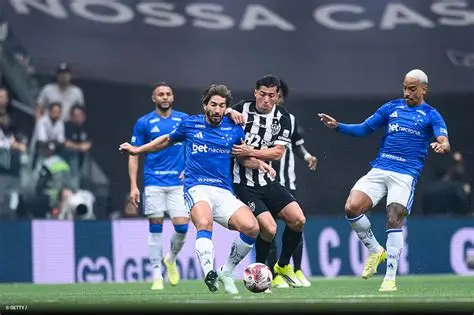
23 Players Sent Off After Mass Brawl in Cruzeiro vs Atlético Mineiro Final
23 players sent off after a Brazilian state final is the kind of number that sounds impossible until the referee’s report confirms it. Cruzeiro’s 1-0 win over Atlético Mineiro in the Campeonato Mineiro final should have been remembered as a title night, a Kaio Jorge winner and a symbolic end to Cruzeiro’s state-title wait. Instead, it became one of the most chaotic disciplinary episodes in Brazilian football history.
The match at Mineirão in Belo Horizonte was already loaded with rivalry. Cruzeiro and Atlético Mineiro do not need extra tension to make a final combustible. The two clubs share a city, history, supporters, pride and a long tradition of fierce meetings. Add a trophy, a late flashpoint, a goalkeeper losing control, players sprinting from both sides and security staff trying to restore order, and the final turned from celebration into a scene of punches, kicks and mass dismissal.
According to Reuters, referee Matheus Delgado Candançan retrospectively sent off 23 players after the match, with 12 red cards for Cruzeiro and 11 for Atlético Mineiro. Brazilian outlet ge reported that the total set a new Brazilian record for expulsions in a football match.
For Cruzeiro, the trophy still counted. For Atlético, the defeat still hurt. But the image that travelled around the world was not the goal, the medal ceremony or the tactical plan. It was the brawl.
The Final Before the Fight
Before 23 players sent off became the global headline, the Campeonato Mineiro final had a simpler football story. Cruzeiro beat Atlético Mineiro 1-0 in a one-off state final at Mineirão. Kaio Jorge scored the decisive goal in the second half, heading in after Gerson created the chance.
ESPN recorded the final score as Cruzeiro 1-0 Atlético Mineiro, while ge reported that Kaio Jorge was named player of the match and finished as the Campeonato Mineiro’s top scorer with seven goals in seven games. The goal also gave Cruzeiro their first Mineiro title in seven years, a major moment for a club that has spent recent years trying to rebuild status and stability.
That context matters because the match was not meaningless once the fight began. A trophy was on the line. Cruzeiro had something to protect. Atlético Mineiro had a painful defeat to process. The final seconds carried the emotional charge of a local rivalry, a title slipping away and players already at the edge of control.
Cruzeiro were managed by Tite, the former Brazil national team coach, which added another layer of attention. A state title under a coach of that profile should have been a strong sporting headline. Instead, Tite’s team became part of a disciplinary record.
The News Ink’s football guide often explains why rivalry matches carry emotional weight beyond league tables. Cruzeiro vs Atlético Mineiro was a perfect example: the result mattered, but pride made every late challenge feel bigger.
The Spark: Everson and Christian
The mass brawl began in the closing moments. Cruzeiro were attacking late when Atlético goalkeeper Everson and Cruzeiro midfielder Christian became involved in the decisive flashpoint. After a collision near the Atlético area, Everson reacted angrily, pushed Christian and placed his knees on the Cruzeiro player while he was down.
That image triggered the wider confrontation. Cruzeiro players immediately charged toward Everson. Atlético players responded. Substitutes and staff moved in. Within moments, the incident had spread beyond one player and one goalkeeper.
The referee later wrote that Everson and Christian were the two players whose actions began the wider disorder. ge reported that the official’s report described Everson as acting with brutality, while Christian was also recorded for excessive force in the same sequence. The referee said he could not show the red cards at the time because the brawl had erupted immediately.
This is an important detail. The cards were not all shown dramatically one by one in front of the players. The situation was too chaotic. Instead, the referee recorded the dismissals afterwards in the match report.
That is why 23 players sent off became the official outcome even though many viewers did not see 23 red cards displayed on the pitch.
How the Brawl Spread Across the Pitch
Once the first confrontation started, control disappeared quickly. Brazilian reports described players pushing, punching and kicking during a generalised fight. Security staff and military police moved onto the pitch to separate the teams.
The referee’s report grouped many of the dismissals under the same explanation: players were sent off for striking opponents with punches and kicks during the brawl, with the referee unable to present the cards because of the disorder. That language is important because it shows the official did not treat the fight as simple pushing or emotional shouting. It was recorded as physical aggression.
A derby final can always produce tension, but this crossed a line. The sight of players, substitutes and staff involved in violent scenes after the final whistle damaged the image of both clubs and the competition.
For readers following wider questions of discipline in sport, The News Ink’s report on Fred Kerley’s ban shows a different kind of sporting accountability. In both cases, the core issue is not only talent. It is whether elite competitors can respect the rules that make competition credible.
Who Was Sent Off?
The referee’s report listed 12 Cruzeiro players and 11 Atlético Mineiro players. That is how the number reached 23 players sent off.
| Club | Players sent off |
|---|---|
| Cruzeiro | Cássio, Fagner, Fabrício Bruno, João Marcelo, Lucas Villalba, Kauã Prates, Christian, Lucas Romero, Matheus Henrique, Walace, Gerson, Kaio Jorge |
| Atlético Mineiro | Everson, Gabriel Delfim, Ángelo Preciado, Lyanco, Ruan Tressoldi, Júnior Alonso, Renan Lodi, Alan Franco, Alan Minda, Mateo Cassierra, Hulk |
The list included major names. Kaio Jorge, the match-winner and top scorer of the state tournament, was among the Cruzeiro players sent off. Atlético’s list included Hulk, one of the most recognisable players in Brazilian football, and Renan Lodi, the former Atlético Madrid and Nottingham Forest full-back.
That spread of names made the incident even more damaging. This was not a few fringe players losing control away from the main action. Senior players, high-profile figures and decisive performers were all pulled into the disciplinary fallout.
The presence of Hulk mattered especially because he later addressed the incident publicly. He described the scenes as regrettable and said footballers could not set that kind of example for children and supporters watching around the world.
Why the Number Was So Unusual
23 players sent off in one match is extraordinary because football usually collapses before reaching anything close to that number. A team cannot continue if it falls below the minimum number of players during normal play. Here, the dismissals were recorded after the match because the final was effectively over when the brawl occurred.
That timing explains how the number could become so high. The referee did not need to restart the match with seven players, six players or fewer. Instead, he documented the misconduct after the disorder and completed the match record.
ge reported that the 23 red cards set a new record in Brazilian football, beating previous Brazilian marks of 22 expulsions. The global record remains higher: the infamous 2011 Argentine fifth-division match between Claypole and Victoriano Arenas ended with 36 expulsions after a mass fight.
That comparison is useful, but it should not reduce the seriousness of the Brazilian final. A professional title match involving two of Brazil’s biggest clubs should be held to a higher standard than chaotic lower-division incidents. That is why the global reaction was so strong.
The News Ink has previously covered how technology and officiating shape football debates in our analysis of VAR and football. This incident was different. No replay system can restore discipline if players and benches lose control after the whistle.
Why No One Was Shown All the Reds on the Pitch
Some viewers were confused because the broadcast did not show the referee presenting 23 red cards in real time. The reason is simple: he could not. The pitch was full of players, staff, security and police trying to calm a fight.
The match report became the official record. Referees can record dismissals after the incident if they identify players who committed sending-off offences and were unable to show the cards immediately due to safety or disorder. In this case, the report listed the players and explained why the cards were not presented during the chaos.
This distinction matters for accuracy. Saying “the referee showed 23 red cards on the pitch” would be misleading. Saying “23 players were sent off after the referee recorded the dismissals in his report” is more precise.
That precision is also better for SEO because it answers the question readers will search after seeing viral clips: how can 23 players be sent off if the match was already ending?
The Trophy Was Overshadowed
Cruzeiro still won the Campeonato Mineiro. The players still lifted the trophy. Supporters still celebrated a title after years of waiting. But the brawl shifted the emotional centre of the night.
Kaio Jorge should have been the obvious hero. He scored the winner, finished as the tournament’s top scorer and gave Cruzeiro a title moment. Instead, he also appeared on the red-card list. That contradiction summed up the final: achievement and embarrassment in the same frame.
For Tite, the trophy was valuable. It helped reinforce his work with Cruzeiro and gave the club a major local success. But coaches are judged not only by results. They are also judged by control, mentality and how their teams behave under pressure. A final ending with 23 players sent off inevitably raises questions about emotional discipline.
Atlético Mineiro had the worse night in sporting terms because they lost the final. But the disciplinary damage touched both sides. No club comes out looking composed after a brawl that requires police intervention and produces a national record.
What Happened After the Final
The fallout did not stop with the referee’s report. ge later reported that police opened an investigation into the brawl and that the public prosecutor’s office requested information, saying the conduct may have gone beyond sport and could potentially involve criminal offences.
The disciplinary path also moved through the Tribunal de Justiça Desportiva de Minas Gerais, the state sports tribunal. In May, ge reported that the clubs reached an agreement with prosecutors, with involved players receiving four-game suspensions to be served in the next edition of the Campeonato Mineiro. The clubs were also fined, according to ge’s later coverage of the teams’ next meeting.
This detail is important because many readers may assume the suspensions would carry into the Brazilian Série A. Brazilian reporting explained that the punishments were tied to the state competition structure rather than automatically transferring across national or continental competitions.
That means the biggest immediate consequence was reputational rather than purely sporting. The images travelled globally. The players’ names entered record lists. The derby’s next meeting carried the memory of the fight.
Could the Players Have Been Punished in the Brasileirão?
The short answer is that the main disciplinary path was through the Minas Gerais football authorities because the incident happened in the Campeonato Mineiro. ge explained that possible suspensions would generally be served in the same competition or under the same organising body.
That is why later reports focused on punishments in the next edition of the Mineiro rather than immediate Brazilian Série A bans. For supporters, that can feel strange. A player involved in a state-final brawl may still be available for national-league games. But football discipline often follows competition jurisdiction.
This is not unique to Brazil. Different competitions have different organisers, rules and disciplinary bodies. Domestic leagues, cups, continental tournaments and state competitions can each have their own mechanisms. Unless rules specifically allow sanctions to carry across, punishments may remain within one competition.
That legal structure does not remove the moral question. Fans and commentators can still ask whether a brawl of this size should have wider consequences. But the formal answer depends on jurisdiction.
Hulk’s Apology and the Image Problem
Hulk’s reaction was one of the most important post-match moments because he understood the global image problem immediately. A player with his profile knows that Brazilian football is watched beyond Brazil. Viral clips do not stay local. They appear on international sports pages, social platforms and football discussion shows within hours.
His message that the scenes were regrettable mattered because it did not try to pretend the incident was normal derby emotion. It acknowledged that players have a responsibility to the game’s image and to young supporters watching.
That does not erase his involvement. He was among the players sent off. But public accountability still matters, especially when a senior player speaks to supporters after a moment that clearly crossed the line.
For clubs, apology alone is not enough. They must also ask why benches emptied, why players ran toward confrontation and how staff can intervene faster in future. Big rivalries will always create heat. Professional environments need systems to prevent heat from becoming violence.
What the Referee Got Right and What Became Impossible
It is easy to criticise the referee when a match ends in chaos, but this incident exposed the limits of officiating once physical order disappears. A referee can manage fouls, dissent and isolated confrontations. A full brawl involving players and substitutes requires security intervention.
Matheus Delgado Candançan’s key role became documentation. He identified players, recorded dismissals and explained why cards could not be shown during the disorder. That report created the basis for disciplinary action.
Could earlier game management have reduced tension? Possibly. Derby finals often simmer through fouls, complaints and emotional reactions. But the decisive spark was a sudden late incident between Everson and Christian, followed by rapid escalation. Once players charged in, prevention became containment.
This is why clubs and coaching staffs also carry responsibility. Players must be trained to move away from flashpoints, not sprint toward them. Substitutes must remain controlled. Captains must calm teammates. Security plans must be ready for high-risk matches.
The News Ink’s sports training technology guide looks at performance systems, but emotional control is also part of elite preparation. A team can be tactically strong and still fail if discipline collapses.
Why Derby Finals Are So Volatile
Cruzeiro vs Atlético Mineiro is one of Brazil’s major city rivalries. Local derbies are different from ordinary fixtures because the emotional cost of defeat feels larger. Supporters see each other at work, in families, in schools and across the city. The result becomes part of daily conversation.
A final adds another layer. There is no next league game against a different opponent to quickly change the mood. The loser must watch the rival lift a trophy. The winner feels the pressure to defend the lead until the final whistle. Every decision feels loaded.
In that environment, one act of provocation can carry more weight than it would in a routine game. Everson’s reaction to Christian became the trigger because the match was already emotionally stretched. Cruzeiro players saw a teammate down and reacted. Atlético players saw their goalkeeper surrounded and reacted. The benches followed.
None of that excuses the brawl. It explains how quickly it spread.
The News Ink’s coverage of Iraq’s dramatic World Cup play-off shows a different kind of football pressure, where national emotion and sporting stakes collide. In Belo Horizonte, the pressure was local, but the emotional intensity was just as clear.
The Damage to Brazilian Football’s Image
Brazilian football is admired worldwide for talent, history, supporters and technical culture. But incidents like this feed the opposite image: chaos, poor control and indiscipline. That is why 23 players sent off became an international headline so quickly.
A single brawl does not define Brazilian football. But high-profile disorder can shape perception, especially when it happens in a final involving famous clubs and players. Sponsors, broadcasters, families and neutral viewers all react to what they see.
There is also a safety issue. When players fight, stands can react. Supporters may become more agitated. Police may use force. People around the stadium can be hurt. ge reported that separate offences were registered around the match, including allegations involving racial abuse, injury and theft, showing that the night had wider public-order concerns beyond the players’ fight.
Football authorities therefore have to treat the incident as more than bad optics. It is a risk-management issue.
For broader public-safety reading, The News Ink’s coverage of football match entry laws shows how authorities in other countries also respond when football security becomes a legal concern.
What Clubs Should Learn
The lesson from Cruzeiro vs Atlético Mineiro is not simply “players should behave better.” That is true, but too basic. Clubs need clearer flashpoint protocols.
Players should know who approaches the referee and who stays away. Substitutes should understand they cannot enter confrontations. Staff should be assigned to pull players back rather than join arguments. Captains should be trained to de-escalate. Security should be positioned for late-game derby risk.
Clubs should also review video internally. Not only to argue punishments, but to identify their own failures. Which players escalated? Which players tried to calm? Which staff members moved toward trouble? Which zones were poorly controlled?
A rivalry will always contain emotion. The professional standard is not removing emotion. It is preventing emotion from becoming violence.
The Bottom Line
23 players sent off after the Cruzeiro vs Atlético Mineiro final turned a title match into a global football controversy. Cruzeiro won 1-0 through Kaio Jorge and claimed the Campeonato Mineiro title, but the final seconds produced a mass brawl that overshadowed the celebration.
The fight began after a flashpoint between Atlético goalkeeper Everson and Cruzeiro midfielder Christian. Players from both sides joined in, security staff and military police intervened, and referee Matheus Delgado Candançan later recorded 23 dismissals in his official report. Cruzeiro had 12 players sent off. Atlético Mineiro had 11.
The incident set a Brazilian record for expulsions in a football match, though the world record remains the 36 dismissals from Claypole vs Victoriano Arenas in Argentina. Later disciplinary proceedings produced suspensions to be served in the next Campeonato Mineiro, while police and prosecutors also examined the wider disorder.
For Cruzeiro, the trophy still matters. For Atlético, the defeat still hurts. But the lasting image is not only the scoreline. It is the sight of a major Brazilian final losing control in front of the world.
23 players sent off should be remembered as a warning, not a spectacle. Rivalries can be fierce, finals can be emotional and players can feel injustice in the heat of the moment. But once a match becomes a brawl, football loses the very discipline that makes victory meaningful.
For more football and sports coverage, readers can follow The News Ink on X.