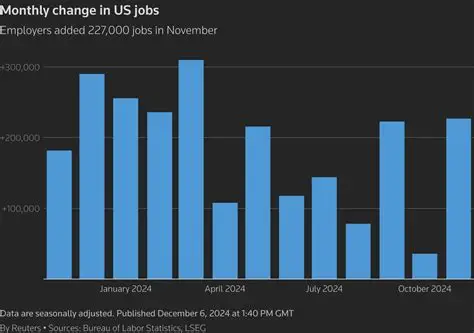
The US jobs report April 2026 delivered another positive surprise on Friday as the American economy added 115,000 jobs last month, beating economist forecasts for the second consecutive month. The data, published by the U.S. Bureau of Labor Statistics, confirmed that businesses continued hiring at a solid pace despite the significant economic pressures generated by the ongoing conflict and its impact on global energy markets. The unemployment rate held steady at 4.3%, offering further evidence that the American labour market retains genuine underlying strength.
The April total came in at nearly twice the level economists had forecast, making it one of the more significant positive surprises in recent jobs data. The figures provided a degree of reassurance to markets and policymakers at a time when global uncertainty continues to weigh on economic confidence.
US Jobs Report April 2026: The Headline Numbers
The US jobs report April 2026 produced a set of headline figures that broadly exceeded expectations across several key measures. The Bureau of Labor Statistics confirmed the following:
Key April 2026 employment figures:
- Jobs added in April: 115,000
- Economist forecast: Approximately 60,000 (April total nearly double expectations)
- Unemployment rate: 4.3% — unchanged from the previous month
- Non-farm payrolls in March: 185,000 (revised)
- Non-farm payrolls in February: -156,000 (revised — a fall)
- Average job creation over last three months: 48,000 per month
That three-month average of 48,000 carries particular significance. Economists refer to the so-called breakeven rate — the level of job creation at which new entrants to the workforce can be absorbed without pushing unemployment higher. April’s figures suggest the labour market is operating at or around that equilibrium point, keeping the unemployment rate stable even as broader economic conditions remain volatile.
US Jobs Report April 2026: Context — A Volatile Few Months
The US jobs report April 2026 figures arrive after a period of significant volatility in monthly employment data. The pattern of the last three months tells a turbulent story that makes April’s solid performance all the more notable.
February saw non-farm payrolls fall by 156,000 — a sharp contraction that raised immediate concerns about the direction of the labour market. March then delivered a dramatic reversal, with payrolls surging by 185,000 and beating expectations. April’s 115,000 figure maintains positive momentum heading into the summer months.
Recent US jobs data — month by month:
| Month | Jobs Added/Lost | vs Expectations |
|---|---|---|
| February 2026 | -156,000 | Below |
| March 2026 | +185,000 | Beat |
| April 2026 | +115,000 | Beat (nearly 2x forecast) |
The revisions to February and March figures are also worth noting. When those revised numbers are factored in alongside April’s total, the three-month average settles at approximately 48,000 — a figure economists broadly consider consistent with a stable labour market capable of absorbing new workforce entrants without a significant rise in unemployment.
US Jobs Report April 2026: Which Sectors Led the Hiring
The US jobs report April 2026 highlighted two sectors in particular as the standout contributors to April’s positive employment figures — retail and transportation and warehousing. Economists pointed to the performance of both sectors as an encouraging signal about the state of consumer spending in the United States.
Thomas Ryan, North America economist at Capital Economics, described both sectors as offering “relatively positive signals about the health of discretionary spending, despite the hit to consumers’ purchasing power from higher gasoline prices.”
That observation is significant. Energy prices have risen sharply in response to global disruption affecting oil supply routes, and higher gasoline costs directly reduce the spending power of American households. The fact that retail and transportation sectors continued to hire strongly despite those consumer pressures suggests underlying demand remains more resilient than feared.
Sectors showing the strongest hiring in April 2026:
- Retail: Strong performance signalling continued consumer spending activity
- Transportation and warehousing: Solid hiring reflecting supply chain activity and demand
- Both sectors offered positive signals about discretionary spending health
- Hiring strength persisted despite higher gasoline prices squeezing household budgets
- Other areas of the report showed more mixed results
Ryan did acknowledge that the overall picture was not uniformly positive. He pointed to “mixed signals” elsewhere in the report, including slow wage growth and an overall contraction in the jobs market, with fewer working-age people actively seeking employment. However, his overall assessment remained broadly optimistic.
US Jobs Report April 2026: Mixed Signals Beneath the Surface
While the US jobs report April 2026 headline numbers encouraged markets and policymakers, a closer reading of the data reveals areas of genuine concern that deserve attention alongside the positive employment total.
Slow wage growth stands out as a particular concern. When wages grow slowly, workers’ purchasing power increases only marginally — and when that slow wage growth coincides with rising consumer prices driven by energy costs, the real-terms impact on household finances can be significantly negative. Consumers spending more on gasoline and other energy-linked costs while seeing limited wage increases face a genuine squeeze on their living standards.
The decline in labour force participation — with fewer working-age people actively seeking employment — also raises questions about the true health of the labour market. A falling unemployment rate that partly reflects people leaving the workforce rather than finding jobs presents a more complicated picture than the headline figure alone suggests.
Areas of concern in the April 2026 jobs report:
- Slow wage growth limits real purchasing power improvement for workers
- Fewer working-age people actively seeking employment — labour force participation declining
- Higher gasoline prices continue to squeeze household budgets and consumer spending
- The three-month average of 48,000 reflects the impact of February’s sharp fall
- Mixed signals across different sectors suggest uneven labour market health
- External economic pressures remain a significant risk to future hiring
Despite these concerns, Ryan concluded that “this was ultimately a positive employment report that reinforces the view that the labour market is stable and potentially even accelerating.”
US Jobs Report April 2026: Federal Reserve Holds Steady
The US jobs report April 2026 figures carry direct implications for Federal Reserve policy in the months ahead. April’s solid employment numbers added to expectations that the Federal Reserve will keep interest rates on hold at its next meeting, as it continues its careful balancing act between supporting employment and keeping inflation under control.
The Fed faces a genuinely difficult challenge in the current environment. Energy price rises driven by global supply disruption push inflation higher, which would normally argue for keeping rates elevated or even raising them. At the same time, slowing wage growth and the risk of a broader economic slowdown argue for caution about maintaining rates at restrictive levels for too long.
April’s jobs data, beating expectations without triggering obvious inflationary pressure from wage growth, gives the Fed room to remain patient. Markets interpreted the figures as broadly supportive of a hold on rates — a reading reinforced by the positive but measured reaction across major US stock indexes.
Federal Reserve implications of April 2026 jobs data:
- Strong employment figures reduce pressure on the Fed to cut rates immediately
- Slow wage growth limits inflationary pressure from the labour market
- The Fed continues balancing inflation control against economic growth support
- Rate cuts remain possible later in 2026 if conditions change
- April’s figures support the case for a patient, data-dependent approach to policy
US Jobs Report April 2026: Will the Strength Last?
Not all economists share the optimistic interpretation of the US jobs report April 2026 figures. Samuel Tombs, chief US economist at Pantheon Macroeconomics, offered a notably more cautious assessment of what the data means for the months ahead.
Tombs argued that job growth is likely to start slowing in the coming months. He pointed to recent survey data suggesting a pullback in hiring intentions across multiple sectors — forward-looking indicators that tend to lead actual payroll figures by several weeks or months. If those surveys prove accurate, April’s solid performance may represent a near-term peak rather than the beginning of an acceleration.
His most specific forecast concerned the unemployment rate. Tombs projected that unemployment could rise from its current 4.3% to 4.7% by the end of 2026 — a meaningful increase that would likely prompt the Federal Reserve to begin cutting interest rates from December.
Samuel Tombs — Pantheon Macroeconomics forecast:
- Job growth likely to slow in the coming months
- Recent survey data points to a pullback in hiring intentions
- Unemployment rate could rise from 4.3% to 4.7% by end of 2026
- A rise to 4.7% would likely prompt Federal Reserve rate cuts from December
- April’s strong figures may not be sustained as external pressures intensify
That contrast between Ryan’s cautious optimism and Tombs’s more bearish outlook reflects the genuine uncertainty surrounding the US economic outlook at this point in 2026. April’s data was positive. Whether it marks the start of a sustained trend or a temporary bright spot in a more difficult period remains an open question.
Market Reaction to April 2026 Jobs Data
Financial markets responded positively to the US jobs report April 2026 figures, though the gains were measured rather than dramatic — reflecting the mixed signals within the overall report.
The S&P 500 rose by 0.8% following the release of the data. The Dow Jones Industrial Average closed broadly flat. The reaction suggested markets welcomed the better-than-expected headline figure without becoming overconfident about the broader economic outlook — a balanced response that mirrored the nuanced picture the data itself presented.
Market reaction to US jobs report April 2026:
- S&P 500: Rose 0.8% following the data release
- Dow Jones Industrial Average: Closed flat
- Markets welcomed the beat without pricing in an aggressive recovery
- Federal Reserve rate hold expectations remained broadly unchanged
- Bond markets reflected continued uncertainty about the pace of future cuts
Final Word on the US Jobs Report April 2026
The US jobs report April 2026 delivered a genuinely encouraging result at a time when encouraging economic news has been in short supply. Businesses added 115,000 jobs — nearly double what economists forecast — unemployment held at 4.3%, and two key consumer-facing sectors performed strongly enough to suggest household spending retains meaningful resilience.
But the report also carried warnings that responsible analysis cannot ignore. Slow wage growth, declining labour force participation, rising energy costs, and forward-looking survey data that points to a potential slowdown all serve as reminders that the American labour market operates within a broader global context that remains deeply uncertain.
For now, the April jobs figures represent a positive data point in a complicated picture. The Federal Reserve, employers, workers, and markets will watch May’s data with close attention — because the question of whether April’s strength marks a trend or a moment will only be answered in the months ahead.