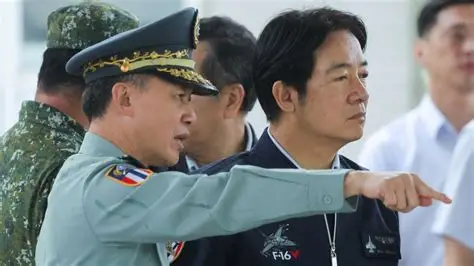
Taiwan’s president, Lai Ching-te, has cancelled his planned visit to Africa after several countries withdrew permission for his aircraft to pass through their airspace.
The trip included a visit to Eswatini, Taiwan’s only diplomatic ally on the African continent. However, authorities in Seychelles, Mauritius, and Madagascar revoked previously granted overflight permits.
Officials in Taiwan said these decisions followed strong pressure and economic influence from China. Beijing denied these claims and instead praised the three countries for respecting its diplomatic stance.
This marks the first known case where a Taiwanese leader has had to cancel an international trip due to restricted airspace access.
Taiwan currently maintains formal diplomatic relations with only a small number of countries worldwide, including Eswatini. Many nations avoid official ties with Taiwan due to China’s “one China” policy, which claims Taiwan as part of its territory.
Although Taiwan governs itself independently, Beijing considers it a breakaway province and has not ruled out using force to assert control. Tensions between the two sides remain high, especially under Lai’s leadership. Chinese officials have previously criticized him, labeling his policies as destabilizing.
In response, Lai spoke out against what he described as coercive actions. He warned that such moves highlight the risks authoritarian governments pose to global stability. He also stressed that Taiwan will continue to engage internationally despite growing pressure.
Eswatini expressed disappointment over the cancelled visit but confirmed that its long-standing relationship with Taiwan remains unchanged. Lai had planned to attend celebrations marking the anniversary of King Mswati III’s rule.
Meanwhile, Chinese officials reiterated their support for countries that follow the “one China” principle. They also dismissed Taiwan’s official status on the global stage.
The decision by these nations has drawn criticism from some US lawmakers. Members of Congress voiced support for Taiwan and condemned what they described as political pressure influencing international decisions.
Overall, the incident highlights rising geopolitical tensions and the challenges Taiwan faces in maintaining global engagement.