Russia at Winter Paralympics: Why the Controversial Flag Return Sparked a European Boycott
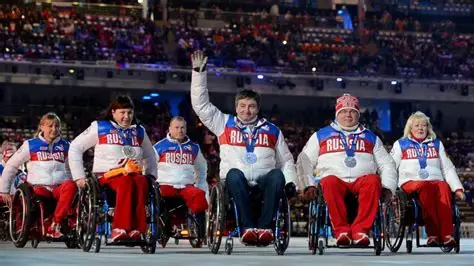
Russia at Winter Paralympics became one of the most disputed stories of the 2026 Milano Cortina Games after Russian and Belarusian athletes were allowed to compete under their national flags and anthems for the first time in years.
The decision marked a major break from the neutral-athlete model used at recent Olympic and Paralympic events. It also reopened one of sport’s hardest arguments: whether individual athletes should be punished for the actions of their governments, or whether national symbols from Russia and Belarus should remain banned while the war in Ukraine continues.
Only a small number of athletes were involved. Six Russian athletes and four Belarusian athletes received places at the Winter Paralympics. But the number was never the real issue. The controversy was about flags, anthems, symbolism and timing.
Ukraine called the decision deeply offensive. Its athletes still competed, but the Ukrainian team boycotted the opening ceremony in Verona. Several European countries and officials also refused to attend the ceremony in protest. For critics, Russia at Winter Paralympics was not simply a sporting return. It was the public reappearance of Russian state symbols while Ukrainian athletes, coaches and sports facilities continued to suffer from Russia’s invasion.
For wider sports context, The News Ink’s sports tournaments in 2026 guide explains how major events increasingly sit at the centre of politics, diplomacy and public pressure.
Why Russia at Winter Paralympics caused such anger
Russia at Winter Paralympics caused anger because the athletes were not competing as neutral individuals. They were allowed to use national flags and anthems, giving the return a symbolic weight that went beyond medals or qualification.
The International Paralympic Committee said the outcome followed decisions made by its members. In September 2025, the IPC General Assembly voted not to maintain the partial suspensions of the Russian and Belarusian National Paralympic Committees. That restored full IPC membership rights and meant the countries could compete at the Paralympic Games if their athletes qualified under the relevant sport rules.
At first, that did not guarantee participation. The federations responsible for winter Para sports had maintained their own restrictions, which made qualification difficult or impossible. Russia and Belarus then appealed to the Court of Arbitration for Sport against the International Ski and Snowboard Federation’s position and won. After that, the IPC awarded a small number of bipartite or wildcard slots.
That technical route created the political result. Russia at Winter Paralympics returned not through a large team qualification process, but through legal rulings, IPC membership votes and limited allocation spots.
To Ukraine and its supporters, that felt like a loophole. To the IPC, it reflected the rules and the will of its member organisations.
How many Russian and Belarusian athletes competed?
Russia at Winter Paralympics involved six Russian athletes, while Belarus received four places. The IPC said Russia was awarded two places in Para alpine skiing, two in Para cross-country skiing and two in Para snowboard. Belarus received four places in Para cross-country skiing, one for a male athlete and three for female athletes.
| Country | Athlete slots | Sports involved | National symbols allowed |
|---|---|---|---|
| Russia | 6 | Para alpine skiing, Para cross-country skiing, Para snowboard | Yes |
| Belarus | 4 | Para cross-country skiing | Yes |
| Total | 10 | Three Para winter disciplines | Yes |
The small team size did not reduce the political backlash. In fact, it sharpened the debate. Supporters of the decision argued that 10 athletes should not be turned into political weapons. Opponents argued that one flag is enough to make the Games part of a propaganda battle.
Russia at Winter Paralympics therefore became a symbolic test case. It was not about the size of the delegation. It was about whether the Russian flag should appear at all.
Why the national flag mattered more than the athletes
The difference between neutral participation and national participation is central to this story. Russian and Belarusian athletes had competed as neutrals in recent events, including the Paris Paralympics and the 2026 Winter Olympics. Under that model, they could compete only after vetting and could not display their flags, anthems or national colours.
Russia at Winter Paralympics changed that. The athletes were allowed to represent their countries openly. If they won gold, their national anthem could be played. Their official delegations could use the national flag.
For supporters of Ukraine, that crossed a line. Russia’s invasion of Ukraine began in February 2022, and Belarus was used as a staging ground. Since then, Ukrainian officials have repeatedly argued that Russian and Belarusian sport cannot be separated from state policy, especially when national symbols are restored.
The IPC argument is different. It says member organisations voted to restore rights and that athletes should not be automatically excluded because of their governments. IPC president Andrew Parsons also said the decision could not be overturned by the IPC board or by himself once the General Assembly had made it.
This is why Russia at Winter Paralympics became so divisive. The athletes were few, but the symbols were huge.
The timeline behind Russia’s Paralympic exile
Russia at Winter Paralympics did not happen suddenly. It followed years of bans, partial suspensions, neutral participation and legal challenges.
| Date | Event | Why it mattered |
|---|---|---|
| 2014 | Russia competed under its national flag at the Sochi Winter Paralympics | Last Winter Paralympics before years of restrictions |
| 2022 | Russia invaded Ukraine; Belarus supported Moscow’s military campaign | Sports bodies imposed wide bans and restrictions |
| 2023 | IPC partially suspended Russia and Belarus | Athletes could compete only as individuals and neutrals in some events |
| 2024 | Russian and Belarusian athletes competed as neutrals at the Paris Paralympics | No flags or anthems were permitted |
| September 2025 | IPC members voted not to maintain the partial suspensions | Russia and Belarus regained full IPC membership rights |
| December 2025 | CAS ruling affected FIS restrictions | Opened a route for limited Paralympic participation |
| February 2026 | IPC confirmed 10 combined slots for Russia and Belarus | National flags and anthems returned |
| March 2026 | Ukraine and several countries boycotted the opening ceremony | The flag decision became a diplomatic protest |
This timeline shows why Russia at Winter Paralympics was not a simple reinstatement. It was the result of overlapping decisions by the IPC, international federations and sport courts.
Ukraine’s response was immediate
Ukraine reacted strongly because the decision came while the war was still ongoing. Ukrainian officials argued that Russian and Belarusian national symbols should have no place at an event built around fairness, dignity and respect.
Ukraine’s team did not withdraw from competition, but it boycotted the opening ceremony. That distinction mattered. Ukrainian athletes still wanted to compete for their country. They also wanted to avoid appearing in a ceremony where Russian and Belarusian flags would be visible.
Ukrainian officials have said the war has killed hundreds of Ukrainian athletes and coaches and damaged or destroyed hundreds of sports facilities. Ukraine’s sports ministry and foreign ministry have repeatedly used those figures to argue that Russia’s return is not an abstract governance issue. It is personal for Ukrainian sport.
Russia at Winter Paralympics therefore placed Ukrainian athletes in a painful position. They had prepared for the Games under wartime conditions, with family members and communities living through attacks. Then they were asked to share a sporting stage with national symbols from the country attacking them.
The News Ink has covered the human side of the war in how four years of war transformed ordinary Ukrainians and Russia’s continuing attacks in record drone strikes on Ukraine.
The opening ceremony boycott grew across Europe
Russia at Winter Paralympics also triggered a wider European protest. Ukraine announced it would boycott the opening ceremony. The Czech Paralympic Committee made a similar move in solidarity. Reuters reported that some Polish officials would also stay away, and later reporting said more countries joined the ceremony boycott.
European Commissioner for Sport Glenn Micallef also said he would not attend. He argued that he could not support the reinstatement of Russian and Belarusian flags, anthems and uniforms while the war in Ukraine continued.
Italy, which hosted the Games, also urged the IPC to review the decision. The UK voiced opposition as well. These responses showed that the issue had moved beyond sport administrators into government and diplomacy.
The ceremony boycott did not stop the Games. It did, however, guarantee that Russia at Winter Paralympics would be remembered as a political flashpoint as much as a sporting decision.
The IPC’s position
The IPC’s position was built around governance. Its members had voted. Its constitution gave the General Assembly authority. Its president said the board could not simply reverse the result because governments objected.
The IPC also argued that Russia’s earlier partial suspension was tied to membership obligations and the use of Paralympic sport for political or military purposes, not only the invasion itself. By 2025, member organisations decided the suspension should not continue.
That does not mean the IPC was free from criticism. Opponents argued that the movement had underestimated the propaganda value of national symbols. Supporters argued that the IPC had followed due process and respected member democracy.
Russia at Winter Paralympics therefore raised a difficult question for every international sports body: when members vote for reintegration, should leadership still block the result because of political pressure?
There is no easy answer. Blocking the vote could undermine governance. Allowing the vote could undermine the moral position of sport during war.
Why some officials support reinstatement
Supporters of allowing Russia at Winter Paralympics argue that athletes should not be punished automatically for decisions made by governments. They say sport should remain open, neutral and rules-based. If an athlete qualifies, meets anti-doping standards and follows competition rules, they should be allowed to compete.
This argument has gained more strength in 2026. The International Olympic Committee has also moved toward easing some restrictions. In July 2026, the IOC provisionally lifted its suspension of the Russian Olympic Committee, although it had not yet decided whether Russia could use its flag, colours and anthem at the 2028 Los Angeles Olympics.
IOC president Kirsty Coventry has said athletes should not be responsible for their government’s actions. That view is likely to influence other sports bodies.
Supporters also argue that exclusion can create a dangerous precedent. If every war or political conflict leads to sport bans, they say global competition could become impossible.
Russia at Winter Paralympics therefore sits inside a wider trend. More organisations are asking whether restrictions imposed in 2022 should remain unchanged years later.
Why critics say the decision is dangerous
Critics say Russia at Winter Paralympics sends the wrong message while Ukraine is still under attack. They argue that national flags and anthems are not neutral. They represent states, and Russia’s state is still waging war.
For critics, the distinction between athletes and government becomes weaker when national symbols return. A neutral athlete may be treated as an individual. A flag-bearing athlete becomes part of national representation.
There is also the doping legacy. Russia’s sporting system was already under heavy scrutiny after the Sochi-era state-sponsored doping scandal. Some critics argue that returning Russia too quickly undermines trust in both anti-doping enforcement and wartime accountability.
The Guardian reported that while the IOC has provisionally lifted Russia’s suspension, it has not yet decided whether Russia can display its flag or anthem at the LA 2028 Olympics. It also noted that Russian athletes will still face doping testing because of continued concerns around the Russian Anti-Doping Agency.
That matters because Russia at Winter Paralympics combines two controversies: war and trust in sporting integrity.
Could other sports follow?
Russia at Winter Paralympics may become a precedent, but the wider picture remains uneven. Some federations have softened restrictions. Others remain firm.
World Athletics has continued to ban Russian and Belarusian athletes from international competition. FIFA and UEFA have said there are no immediate plans to bring Russian national or club teams back into football competitions. The International Judo Federation has allowed Russian athletes to compete under national symbols. Other federations continue to make their own decisions.
The IOC’s July 2026 move to provisionally lift the Russian Olympic Committee suspension may encourage more federations to reconsider. But the IOC also said the decision on Russian flags, colours and anthem at LA 2028 remains undecided. That means the most sensitive question is still open.
Russia at Winter Paralympics is therefore not the end of the debate. It is part of a wider reintegration struggle that will continue across football, athletics, Olympic sport and Paralympic sport.
For broader sport-politics context, The News Ink’s article on FIFA discrimination and racism sanctions shows how governing bodies are increasingly judged not just on rules, but on moral credibility.
The difference between Olympics and Paralympics
Russia at Winter Paralympics also highlighted the difference between Olympic and Paralympic governance. The IOC and IPC are separate bodies. The IOC did not control the IPC decision. That created an unusual split: Russian and Belarusian athletes at the Winter Olympics competed as neutral athletes, while a small number at the Winter Paralympics could compete under national symbols.
That difference confused some casual viewers. If Russian symbols were restricted at the Olympics, why were they permitted weeks later at the Paralympics? The answer lies in separate governance, separate membership votes and separate qualification structures.
The IPC’s decision was driven by its General Assembly. The IOC’s restrictions came through its own executive board and Olympic framework. International federations then added another layer of rules.
Russia at Winter Paralympics therefore shows why global sport can look inconsistent. It is not governed by one authority. It is a web of committees, federations, courts and member votes.
What this means for Paralympic athletes
The controversy risked overshadowing athletes who had trained for years. That includes Ukrainian athletes, Russian and Belarusian athletes, and competitors from every other country.
For Ukrainian athletes, the Games carried the emotional weight of representing a country at war. For Russian and Belarusian athletes, the return under national symbols was a moment of visibility after years of isolation. For other athletes, the political fight became part of the environment they had to compete in.
Russia at Winter Paralympics shows how athletes can become symbols even when they did not choose the political context. A skier, snowboarder or cross-country competitor may want only to compete. But once national flags are involved, the meaning of participation changes.
This is one reason the issue remains so hard. Sport is built on individuals, but international sport is organised by nations. That tension never disappears.
Key arguments on both sides
| Argument for return | Argument against return |
|---|---|
| Athletes should not be punished for government actions | National flags represent states, not only individuals |
| IPC members voted to restore rights | The war in Ukraine is still ongoing |
| Rules and CAS decisions should be respected | Russia can use sport for propaganda |
| Small delegations should not be politicised | Even one flag can become a political symbol |
| Sport should remain open and neutral | Neutrality can look like indifference to aggression |
This is why Russia at Winter Paralympics remains divisive. Both sides claim to be defending the values of sport, but they define those values differently.
The wider political moment
The controversy did not happen in a vacuum. Russia’s war in Ukraine was still ongoing in 2026. European governments were still debating sanctions, military support and diplomatic pressure. Ukrainian athletes and officials were still reporting deaths, displacement and damaged sports infrastructure.
At the same time, sports bodies were facing pressure to normalise competition again. Some officials believe indefinite exclusion is unfair or unsustainable. Others believe reinstatement rewards aggression before accountability.
Russia at Winter Paralympics therefore became a smaller stage for a much bigger argument: how long should Russia remain isolated from international institutions while the war continues?
That question now reaches beyond sport. It touches diplomacy, culture, trade, science and international organisations. Sport simply makes the issue more visible because flags, medals and ceremonies are designed to be seen.
What happens before LA 2028?
The next major test will be the Los Angeles 2028 Olympics and Paralympics. The IOC has provisionally lifted the Russian Olympic Committee suspension, but the issue of flags and anthems remains unresolved. The IPC will also face pressure over how future events should handle Russia and Belarus.
If the war continues, Ukraine and its allies are likely to keep opposing full national representation. If more federations restore Russia, the pressure may shift toward accepting a wider return. If Russian teams are allowed back in football or athletics, the symbolic impact will be much greater than the small Paralympic delegation in 2026.
Russia at Winter Paralympics may therefore be remembered as an early sign of a broader shift. Or it may remain an exception, limited by legal rulings and IPC governance.
The direction will depend on politics, war developments, federation decisions, court cases and whether sport leaders believe public opinion has moved.
FAQ: Russia at Winter Paralympics
Why did Russia compete under its national flag at the Winter Paralympics?
Russia at Winter Paralympics happened because IPC members voted in September 2025 not to maintain Russia’s partial suspension, restoring full membership rights. Later legal and qualification decisions allowed a small number of athletes to receive places.
How many Russian athletes competed?
Six Russian athletes received places at the 2026 Winter Paralympics. They competed across Para alpine skiing, Para cross-country skiing and Para snowboard.
Did Belarus also compete under its flag?
Yes. Belarus received four places, all in Para cross-country skiing, and athletes were allowed to compete under national symbols.
Why did Ukraine boycott the opening ceremony?
Ukraine boycotted the opening ceremony because it objected to Russian and Belarusian athletes appearing under national flags and anthems while the war in Ukraine continued.
Could Russia return fully to other sports?
Possibly, but the picture is mixed. The IOC has provisionally lifted the Russian Olympic Committee suspension, while World Athletics, FIFA and UEFA continue to maintain restrictions in key areas.
The bottom line
Russia at Winter Paralympics became controversial because the decision was about more than 10 athletes. It was about the return of national symbols during an ongoing war.
The IPC said its members had voted, the rules had to be followed and the decision could not be overturned by leadership alone. Ukraine and several European supporters argued that allowing Russian and Belarusian flags was unacceptable while Ukrainian athletes and coaches were being killed and sports facilities destroyed.
Both sides framed their position as a defence of sport. One side focused on individual athletes and institutional rules. The other focused on moral responsibility and the political meaning of flags.
Russia at Winter Paralympics now stands as a warning for every global sports body. The question of Russian reintegration is no longer theoretical. It is already happening in some places, resisted in others, and likely to dominate debates before LA 2028.
The 2026 decision did not settle the issue. It exposed how difficult the next phase will be.
For more sports politics and major tournament coverage, follow The News Ink on Threads.