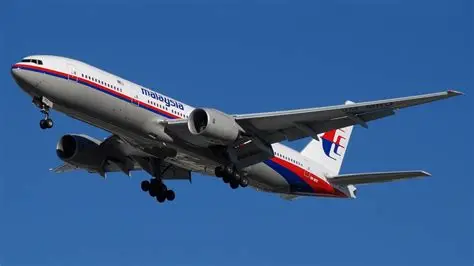
MH370 Mystery: Why the Search Continues a Decade Later
More than ten years after Malaysia Airlines Flight MH370 disappeared, the mystery still grips the world. Despite one of the largest and most expensive search operations in aviation history, the aircraft—and the 239 people on board—remain missing.
Yet the story has not ended. Independent researchers, aviation experts, and determined enthusiasts continue to chase answers. Some now believe they are closer than ever to locating the wreckage.
The Night MH370 Vanished
On March 8, 2014, MH370 departed from Kuala Lumpur International Airport, heading toward Beijing Capital International Airport. Less than an hour into the flight, something unusual happened.
The aircraft stopped communicating with air traffic control and disappeared from civilian radar.
Key Timeline:
- 12:41 a.m.: Flight takes off from Kuala Lumpur
- Shortly after: Final routine communication from cockpit
- Within 40 minutes: Aircraft vanishes from radar
- Later analysis: Plane continued flying for several hours
This sudden disappearance triggered global concern and launched an unprecedented search effort.
A Search Without Answers
The search for MH370 stretched across vast areas of the Indian Ocean. Led by the Australian Transport Safety Bureau, the operation lasted more than four years.
Search Effort Overview:
| Factor | Details |
|---|---|
| Duration | 2014–2018 |
| Area covered | Millions of square kilometres |
| Cost | Hundreds of millions of dollars |
| Outcome | No confirmed wreckage |
Despite extensive underwater scans and satellite analysis, investigators failed to locate the main debris field.
What We Know About the Flight Path
Data collected after the disappearance revealed a surprising twist. The aircraft did not crash immediately. Instead, it continued flying for nearly seven hours after losing contact.
Satellite signals suggested the plane traveled south into the remote Indian Ocean.
This path, known as the “7th arc,” became the primary focus of official search efforts. However, not everyone agrees with this conclusion.
Independent Investigators Offer New Theories
Over the years, independent researchers have stepped in with fresh ideas and advanced methods.
Key Figures Still Searching:
- Richard Godfrey
- Vincent Lyne
Both have spent years analyzing data and believe they have identified the aircraft’s final location.
Richard Godfrey’s Signal Tracking Theory
Godfrey uses a unique method based on radio signals known as WSPR (Weak Signal Propagation Reporter). These signals, transmitted globally by amateur radio operators, can be disrupted by aircraft movement.
By analyzing signal disturbances from the night MH370 disappeared, Godfrey mapped a potential flight path.
His Conclusion:
- Location: About 1,500 km west of Perth, Australia
- Accuracy range: Within a 30 km radius
- Claim: One targeted search could locate the wreckage
He argues that combining multiple data sources—satellite, radar, and signal tracking—creates a consistent and reliable picture.
Vincent Lyne’s Deep Ocean Theory
Lyne offers a different perspective. He believes the plane lies in a deep ocean trench roughly 6,000 meters below the surface.
His Key Points:
- Location aligns with Penang longitude
- Suggests intentional navigation by the pilot
- Identifies cloud anomalies linked to the flight path
Lyne argues that the aircraft did not follow the widely accepted “7th arc” model. Instead, he believes the pilot deliberately chose a remote and hard-to-detect location.
What Caused the Disappearance?
The biggest unanswered question remains: why did MH370 vanish?
Several theories have emerged over the years.
Main Possibilities:
- Hijacking: External takeover of the aircraft
- Mechanical failure: Sudden technical malfunction
- Pilot involvement: Intentional diversion of the flight
Attention has often focused on Captain Zaharie Ahmad Shah. Investigators discovered flight simulator data at his home that mirrored part of the aircraft’s suspected route.
However, no definitive conclusion has been reached.
The Human Element Behind the Mystery
Beyond technical data and theories, the disappearance of MH370 is a deeply human tragedy. Families of the passengers continue to seek closure.
The emotional weight of the mystery drives ongoing efforts to find answers.
Why Finding the Wreckage Matters:
- Provides closure to families
- Confirms what happened during the flight
- Improves aviation safety
- Identifies those responsible, if applicable
Without physical evidence, many questions remain unresolved.
Challenges in Finding MH370
Locating the aircraft is incredibly difficult due to several factors.
Major Obstacles:
- Extreme ocean depth (3,000–6,000 meters)
- Harsh underwater conditions
- Vast search area
- Limited confirmed data points
The Indian Ocean’s remote location adds another layer of complexity, making each search mission costly and technically demanding.
Why the Mystery Persists
Despite years of investigation, the case remains unsolved because of conflicting data and limited evidence.
Key Reasons:
- No confirmed crash site
- Multiple competing theories
- Incomplete tracking data
- Environmental challenges
Even advanced technology has not been enough to solve the puzzle.
Hope for Future Discoveries
Many experts believe the mystery can still be solved. Advances in ocean mapping, artificial intelligence, and data analysis could improve search accuracy.
There is also growing support for launching new targeted search missions based on updated theories.
Key Takeaways
- MH370 disappeared in March 2014 with 239 people onboard
- Official searches failed to locate the wreckage
- Independent researchers propose new locations
- The cause of the disappearance remains unknown
- Finding the aircraft is critical for answers and closure
Conclusion
The mystery of MH370 continues to challenge investigators, researchers, and families alike. It is a story shaped by uncertainty, determination, and the relentless pursuit of truth.
Like a complex recipe missing its final ingredient, the case remains incomplete. Each theory adds flavor, but only one discovery—the wreckage—can bring clarity.
Until then, the search goes on.