Lionel Messi Career Explained: From Barcelona to Inter Miami and Argentina Glory
The Lionel Messi career is one of football’s most extraordinary journeys.
It began in Rosario, Argentina, continued through Barcelona’s youth system and eventually produced historic achievements across Spain, France, the United States and international football.
Messi became Barcelona’s all-time leading scorer.
He won a record eight Ballon d’Or awards.
He lifted the UEFA Champions League with Barcelona.
He became a league champion in Spain and France.
He helped transform Inter Miami.
And after years of international disappointment, he finally captained Argentina to the 2022 FIFA World Cup.
The Lionel Messi career also now has a completed international chapter.
Messi announced his retirement from Argentina duty on August 31, 2026, ending more than two decades with the senior national team. Reuters reported his final Argentina record as 125 goals in 207 appearances.
His club career continues with Inter Miami, where his contract runs through the end of the 2028 MLS season.
That makes the story unusual.
Much of the Lionel Messi career is already fixed history.
But its final club chapter is still being written.
For the broad entity overview, see The News Ink’s Lionel Messi Explained.
For the live scoring breakdown, use Lionel Messi Career Goals.
Lionel Messi Career at a Glance
| Category | Record |
|---|---|
| Born | June 24, 1987 |
| Birthplace | Rosario, Argentina |
| Barcelona youth arrival | Age 13 |
| Barcelona official debut | October 16, 2004 |
| Barcelona appearances | 778 |
| Barcelona goals | 672 |
| PSG appearances | 74 |
| PSG goals | 32 |
| Joined Inter Miami | 2023 |
| Current Inter Miami contract | Through 2028 |
| Argentina senior debut | 2005 |
| Final Argentina appearances | 207 |
| Final Argentina goals | 125 |
| FIFA World Cup titles | 1 |
| Ballon d’Or awards | 8 |
| Champions League goals | 129 |
| International retirement | August 31, 2026 |
Barcelona officially credits Messi with 778 appearances, 672 goals, 305 assists and 35 trophies during his first-team career.
Those numbers form the largest chapter of the Lionel Messi career, but the story began years before the first-team records.
Lionel Messi Career Begins in Rosario
Lionel Andrés Messi Cuccittini was born in Rosario on June 24, 1987.
Football became central to his childhood.
He played for Newell’s Old Boys before his family made the decision that would transform his future.
Messi moved to Barcelona while still young and entered the club’s development system.
FC Barcelona records that he arrived at the club at 13 years old before progressing through the academy and reserve structure.
Moving from Argentina to Spain at that age was significant.
The future superstar was not moving between established professional clubs.
He was still developing physically, technically and emotionally.
Barcelona became the environment in which the first major phase of the Lionel Messi career was built.
From La Masia to Barcelona B
Messi progressed rapidly through Barcelona’s youth ranks.
By March 2004, at only 16, he made his Barcelona B debut against Mataró.
Barcelona’s own historical account notes that he played the full 90 minutes in a 1–0 reserve-team victory.
Even before that, Messi had appeared for the first team in a friendly against Porto in November 2003.
The next step was official senior football.
It arrived in October 2004.
Lionel Messi Career Reaches Barcelona’s First Team
Messi made his official Barcelona debut on October 16, 2004.
Barcelona faced Espanyol.
Frank Rijkaard introduced the 17-year-old as a substitute for Deco in the 82nd minute.
Barcelona won 1–0.
At the time, Messi wore the No. 30 shirt.
The occasion was modest compared with what followed, but historically it became one of the defining dates of the Lionel Messi career.
A player who would eventually make 778 official Barcelona appearances had played his first.
Messi Scores His First Official Barcelona Goal
The first official goal arrived on May 1, 2005 against Albacete.
Messi entered as a late substitute.
Ronaldinho supplied the pass.
Messi lifted the ball over the goalkeeper.
Barcelona’s official retrospective confirms that the 17-year-old scored his first senior competitive goal that night after another effort had initially been disallowed for offside.
That finish became goal No. 1 of 672 official Barcelona goals.
The scale of what followed would have been almost impossible to predict.
Ronaldinho Helps Bridge Two Barcelona Eras
When Messi entered the Barcelona senior team, Ronaldinho was the club’s biggest attacking star.
That mattered.
Messi did not initially need to carry the entire attack.
He developed inside a side already containing elite footballers.
As the years passed, however, the balance changed.
Ronaldinho eventually left Barcelona.
Messi became increasingly central.
By the beginning of the Pep Guardiola era, the Lionel Messi career had moved from elite prospect to global superstar.
Pep Guardiola Changes the Lionel Messi Career
Pep Guardiola became Barcelona manager in 2008.
His arrival coincided with one of the most important tactical transformations of Messi’s career.
Messi had already played extensively from wide attacking positions.
Under Guardiola, he became increasingly influential centrally.
The famous false-nine role created a difficult tactical problem for opponents.
If center-backs followed Messi into deeper positions, Barcelona could attack the space they vacated.
If they remained deep, Messi could receive possession between midfield and defense.
With Xavi, Andrés Iniesta and Sergio Busquets controlling midfield, Barcelona created an environment ideally suited to Messi’s technical abilities.
This period turned the Lionel Messi career from extraordinary potential into sustained historic production.
Barcelona Wins the 2009 Treble
The 2008–09 season produced the first great championship peak.
Barcelona won:
- La Liga
- Copa del Rey
- UEFA Champions League
Messi scored in the Champions League final against Manchester United.
Xavi delivered a cross.
Messi headed the ball beyond Edwin van der Sar.
Barcelona won 2–0.
UEFA’s contemporary coverage described Messi as central to Barcelona’s European triumph.
The year established a pattern that would define much of the Lionel Messi career:
major trophies combined with extraordinary individual performance.
Lionel Messi Wins His First Ballon d’Or
In 2009, Messi won the Ballon d’Or for the first time.
It would not be the last.
His winning years eventually became:
2009
2010
2011
2012
2015
2019
2021
2023
Eight victories remain the historical record.
Inter Miami’s official record of his eighth win confirms the complete list and notes that Messi became the first active MLS player to receive the award.
The Ballon d’Or became one of the defining individual measures of the Lionel Messi career.
The dedicated Ballon d’Or cluster should eventually explain each victory separately rather than expanding them all here.
Lionel Messi and Cristiano Ronaldo Define an Era
Messi’s rise overlapped with Cristiano Ronaldo’s.
That transformed world football.
Between 2008 and 2017, every Ballon d’Or was won by either Ronaldo or Messi.
Their rivalry played out through:
Barcelona vs Real Madrid,
La Liga,
Champions League football,
individual awards,
goals,
records
and eventually career legacy debates.
The two players were very different.
Messi was generally associated with close control, dribbling, playmaking and left-footed attacking combinations.
Ronaldo developed into an extraordinary scorer with elite aerial ability, physical longevity and unprecedented Champions League production.
The comparison deserves its own search intent.
Read The News Ink’s Cristiano Ronaldo vs Lionel Messi rather than duplicating the debate here.
The 2011 Barcelona Team
The 2010–11 season strengthened the argument that Guardiola’s Barcelona was one of the greatest club teams ever assembled.
Barcelona won another Champions League.
The final again came against Manchester United.
Messi scored as Barcelona won 3–1 at Wembley.
UEFA lists Messi as having appeared in three winning Champions League finals: 2009, 2011 and 2015.
Barcelona officially credits him with four Champions League titles overall because he was also part of the 2005–06 title-winning squad.
That distinction is useful when discussing the Lionel Messi career accurately.
Lionel Messi Scores 73 Goals in 2011–12
The 2011–12 season produced Messi’s greatest club scoring output.
He scored 73 official goals for Barcelona.
Fifty came in La Liga.
That remains the record for most goals in one Spanish top-flight season.
The following calendar-year statistic became even more famous.
91 Goals in 2012
Messi scored 91 goals for club and country during calendar year 2012.
The figure combined Barcelona and Argentina.
It remains one of the most extraordinary scoring achievements associated with the Lionel Messi career.
Barcelona’s official profile continues to recognize the 91-goal calendar year among Messi’s major records.
For a statistical rather than chronological treatment, see The News Ink’s Lionel Messi Records.
The MSN Era Begins
Another major Barcelona phase began when Neymar and Luis Suárez joined Messi.
The attacking trio became known as MSN.
Each player offered something different.
Messi could move between scoring and playmaking.
Suárez provided central movement, physicality and finishing.
Neymar brought speed, dribbling and creativity from the left.
The combination peaked in 2014–15.
Lionel Messi Career Reaches a Second Treble
Barcelona won another treble in 2015:
La Liga
Copa del Rey
Champions League.
Messi’s Champions League performances included one of his most remembered individual moments against Bayern Munich, when he beat Jérôme Boateng before lifting the ball over Manuel Neuer.
Barcelona then defeated Juventus in the final.
The victory gave Messi another European championship and reinforced his place among the defining players of the Champions League era.
UEFA credits Messi with a final European record of 129 Champions League goals in 163 appearances, including 120 goals for Barcelona.
The Later Barcelona Years
Barcelona continued winning domestic trophies after 2015.
Messi remained extraordinarily productive.
But the European story became more difficult.
The club suffered painful Champions League eliminations against opponents including Roma and Liverpool.
This period matters because the Lionel Messi career was not an uninterrupted sequence of perfect seasons.
Barcelona’s ageing squad, recruitment problems and growing financial difficulties created increasing instability.
Messi remained the central player.
The environment around him became less stable.
Eventually the relationship reached an unexpected ending.
Why Lionel Messi Left Barcelona
Messi’s Barcelona departure was not simply a football decision.
In August 2021, Barcelona announced that Messi would not remain at the club despite both sides having reached an agreement and wanting a new contract.
The club said financial and structural obstacles combined with La Liga registration regulations prevented the deal from being completed.
President Joan Laporta later said both Messi and Barcelona wanted the relationship to continue, but the club could not meet the league’s financial requirements without accepting arrangements it considered damaging.
The Barcelona chapter of the Lionel Messi career therefore ended with:
778 official appearances
672 goals
305 assists
and
35 trophies.
For the dedicated scoring breakdown, see Lionel Messi Career Goals.
Lionel Messi Career Moves to Paris Saint-Germain
Messi joined Paris Saint-Germain in August 2021.
The move created one of the most famous attacking groups in world football:
Lionel Messi,
Neymar
and
Kylian Mbappé.
Messi’s role changed.
The scoring volume was lower than during his Barcelona peak.
His creative responsibilities remained substantial.
PSG’s official farewell records his final Paris numbers as:
74 appearances
32 goals
35 assists.
Lionel Messi at PSG
The Paris period lasted two seasons.
PSG won:
two Ligue 1 championships
and
one Trophée des Champions.
Individually, Messi remained highly productive.
But PSG did not win the Champions League.
That matters because European success was one of the main objectives of the star-filled squad.
The Lionel Messi career in Paris should therefore be described as domestically successful but less transformative than Barcelona.
The most important football achievement of his PSG years actually happened with Argentina.
Argentina Was Once the Most Complicated Part of the Lionel Messi Career
Messi made his senior Argentina debut in 2005.
International football did not immediately produce the same success as Barcelona.
Argentina reached the 2014 World Cup final but lost to Germany.
Messi then suffered Copa América final defeats in 2015 and 2016.
The 2016 defeat against Chile was particularly damaging.
Messi announced that he was stepping away from international football.
He later returned.
That decision eventually transformed the entire international section of the Lionel Messi career.
Lionel Messi Wins the 2021 Copa América
Argentina faced Brazil in the 2021 Copa América final at the Maracanã.
Ángel Di María scored the only goal.
Argentina won 1–0.
After nearly 15 years of trying with the senior national team, Messi finally won a major international title.
FIFA notes that Argentina’s victory also ended a 28-year major-trophy drought.
The moment fundamentally changed the narrative around Messi and Argentina.
Until then, criticism often focused on what he had not won internationally.
That question was disappearing.
The 2022 Finalissima
Argentina followed the Copa América by defeating Italy 3–0 in the 2022 Finalissima at Wembley.
The team entered the Qatar World Cup as continental champion and with much greater stability than earlier Messi-era Argentina sides.
FIFA describes the 2021 Copa América as an important foundation for the team that eventually became world champion.
Then came the tournament that changed the Lionel Messi career permanently.
Lionel Messi Wins the 2022 FIFA World Cup
Argentina’s World Cup began with a shock defeat to Saudi Arabia.
Messi and his teammates recovered.
A crucial Messi goal against Mexico changed the momentum.
Argentina advanced.
Messi then scored against Australia.
He scored against the Netherlands.
He scored against Croatia.
Argentina reached the final against France.
The match became one of the most dramatic World Cup finals ever played.
Messi scored twice.
Kylian Mbappé scored three.
The game finished 3–3 after extra time.
Argentina won on penalties.
Messi had finally won the World Cup.
FIFA records his Qatar 2022 tournament with seven goals, three assists and the Golden Ball.
The championship became the defining international achievement of the Lionel Messi career.
Messi Wins Another Copa América in 2024
Argentina’s success continued.
Messi helped the national team win another Copa América in 2024.
By this point, the international narrative had been completely reversed.
Before 2021:
lost finals,
criticism,
retirement doubts.
After 2021:
Copa América champion,
Finalissima winner,
World Cup champion,
Copa América champion again.
The transformation is one of the most important themes in any serious account of the Lionel Messi career.
Lionel Messi Career Moves to Inter Miami
Messi left PSG in 2023.
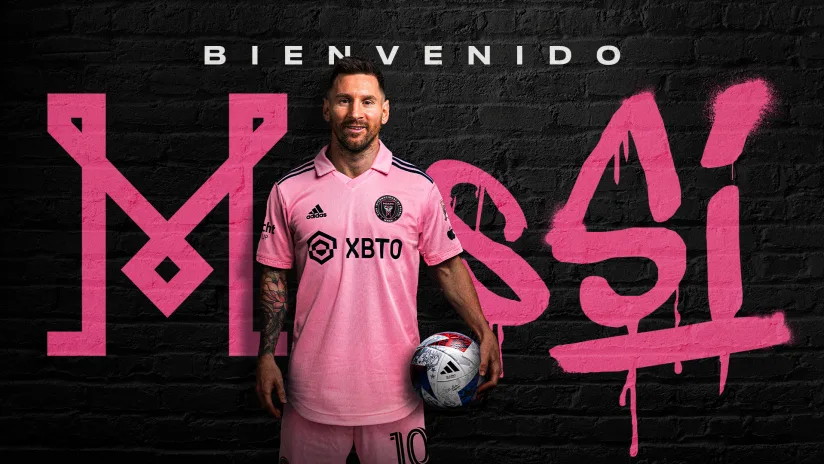
Inter Miami officially announced his signing on July 15.
His original contract ran through the 2025 MLS season.
The move represented another major change.
Messi was leaving elite European club football after nearly two decades.
He was joining Major League Soccer at 36.
Some expected a gradual wind-down.
His debut suggested something more dramatic.
A Free-Kick Winner on His Inter Miami Debut
Messi made his Inter Miami debut against Cruz Azul in the 2023 Leagues Cup.
The score was 1–1 late in stoppage time.
Inter Miami won a free kick.
Messi scored.
The 94th-minute goal gave Miami a 2–1 victory.
It was almost cinematic.
His first match.
His first Miami goal.
A stoppage-time free kick.
The Inter Miami chapter of the Lionel Messi career had begun.
Messi Wins the 2023 Leagues Cup
Success followed immediately.
Messi helped Inter Miami win the 2023 Leagues Cup, the first trophy in club history.
That achievement was also part of the background to his record eighth Ballon d’Or victory later that year.
The move also increased international interest in Inter Miami and MLS.
Messi was no longer merely joining an established successful team.
He was helping construct a new era around a relatively young club.
Lionel Messi at Inter Miami Becomes More Than a Farewell Tour
The 2025 season removed much of the idea that Messi’s move was purely ceremonial.
Inter Miami’s season review credits him with:
43 goals
31 assists
and
74 goal contributions in 49 appearances across all competitions.
He won the 2025 MLS Golden Boot with:
29 goals in 28 regular-season matches.
He also became the first player in MLS history to win consecutive league MVP awards.
Most importantly, Inter Miami won its first MLS Cup.
Messi earned MLS Cup MVP honours after providing two assists in the final.
The late-stage Lionel Messi career therefore continued producing both individual and team success.
Messi Extends His Inter Miami Contract
In October 2025, Inter Miami announced a contract extension through the end of the 2028 MLS season.
That agreement potentially keeps Messi playing well beyond his 40th birthday.
It also means the final club totals cannot yet be treated as fixed.
For this reason, the chronological career article should avoid turning into a constantly changing goal tracker.
The live numbers belong in Lionel Messi Career Goals.
Lionel Messi Career Remains Productive at 39
Messi continued producing major performances in 2026.
On August 29, he scored four goals and provided an assist as Inter Miami defeated CF Montréal 7–1.
Reuters reported that the performance took him to 18 MLS goals for the 2026 regular season at that point.
That performance came shortly after Messi had completed another World Cup campaign.
At 39, the Lionel Messi career still included match-winning club performances.
The 2026 World Cup Becomes Messi’s Final International Tournament
Messi returned for a sixth FIFA World Cup in 2026.
Argentina reached the final again.
This time, there was no perfect ending.
Spain defeated Argentina.
Messi finished the tournament with eight goals and concluded his World Cup career with 21 goals overall, according to post-tournament Reuters reporting.
The World Cup also extended the longevity side of the Lionel Messi career.
He had appeared in World Cups from 2006 through 2026.
Twenty years separated his first and last tournaments.
Lionel Messi Retires From International Football
On August 31, 2026, Messi announced his retirement from Argentina.
The final senior totals were:
207 appearances
and
125 goals.
Reuters described the decision as the end of a 20-year international career that had evolved from repeated frustration into Copa América and World Cup triumph.
The international section of the Lionel Messi career is therefore complete.
Club football is not.
Lionel Messi Career by Club
| Club | Period | Appearances | Goals | Major Story |
|---|---|---|---|---|
| Barcelona | 2004–2021 | 778 | 672 | Historic peak and record-breaking era |
| Paris Saint-Germain | 2021–2023 | 74 | 32 | Domestic success in France |
| Inter Miami | 2023–present | Active | Active | MLS transformation and late-career success |
Barcelona and PSG totals are now fixed.
Inter Miami continues changing.
Lionel Messi Career With Argentina
| Category | Final Record |
|---|---|
| Senior debut | 2005 |
| Senior appearances | 207 |
| Goals | 125 |
| Copa América titles | 2021, 2024 |
| World Cup titles | 2022 |
| Finalissima titles | 2022 |
| World Cup finals reached | 2014, 2022, 2026 |
| International retirement | 2026 |
The sequence demonstrates how dramatically the Argentina chapter evolved.
Early disappointment became late-career dominance.
How Lionel Messi’s Playing Style Changed
The Lionel Messi career can also be divided tactically.
Early Barcelona Messi
A fast, explosive attacker.
He operated mainly from wide positions.
Dribbling and acceleration were central.
Guardiola-Era Messi
A false nine and complete attacking hub.
He could score, create and manipulate defensive positioning.
Later Barcelona Messi
Increasingly responsible for playmaking.
He dropped deeper and dictated more attacks.
PSG Messi
More selective movement.
Greater creative responsibility alongside Mbappé and Neymar.
Inter Miami Messi
A highly economical attacker and playmaker.
He chooses moments rather than constantly pressing or sprinting.
This evolution is essential to understanding his longevity.
Lionel Messi Was Never Only a Goalscorer
The sheer size of Messi’s goal total can obscure another part of the Lionel Messi career.
He is also one of football’s greatest creators.
Barcelona credits him with 305 assists during his first-team career.
Inter Miami’s 2025 review says his assist in the Eastern Conference final took him to 405 career assists under the club’s statistical methodology.
The exact assist total can vary between databases because historical assist definitions are less standardized than goal statistics.
The broader point is clear.
Messi combined elite scoring with elite chance creation.
That combination separates his career from that of a traditional center-forward.
Eight Ballon d’Or Awards Across the Lionel Messi Career
Messi’s eight Ballon d’Or wins represent another way to measure his longevity.
The first came in 2009.
The eighth came in 2023.
Fourteen years separated them.
Very few players remain serious candidates for the world’s leading individual award across such a long span.
His eight victories are also three more than Cristiano Ronaldo’s five.
That distinction belongs primarily in the future dedicated Lionel Messi Ballon d’Or article rather than being expanded further here.
Why Barcelona Remains the Defining Club
Despite PSG and Inter Miami success, Barcelona remains the central club of the Lionel Messi career.
The reasons are obvious:
672 goals
778 appearances
35 trophies
10 La Liga titles
4 Champions League titles under Barcelona’s club-honours count
and most of his individual peak years.
Messi did not simply play for Barcelona.
His career became inseparable from one of the club’s greatest historical eras.
Was PSG a Failure?
Calling the PSG period a complete failure is inaccurate.
Messi won two Ligue 1 titles.
He scored 32 goals.
He produced 35 assists.
But PSG did not win the Champions League.
That means the period was successful domestically but failed to achieve the European breakthrough expected from a squad containing Messi, Neymar and Mbappé.
That balanced description is stronger than either extreme.
Why Inter Miami Matters to Messi’s Legacy
Inter Miami adds something different.
Barcelona was the peak.
PSG was a shorter European transition.
Inter Miami became a late-career reinvention.
Messi helped the club win its first Leagues Cup.
Then its first MLS Cup.
He won Golden Boot and MVP honours.
He remained productive at 39.
The Inter Miami stage therefore strengthens the longevity side of the Lionel Messi career rather than trying to compete with Barcelona in historical importance.
Lionel Messi Career Timeline
| Year | Major Career Event |
|---|---|
| 1987 | Born in Rosario |
| 2000 | Moves into Barcelona development system |
| 2003 | First-team friendly appearance |
| 2004 | Barcelona B and official first-team debuts |
| 2005 | Scores first official Barcelona goal |
| 2005 | Argentina senior debut |
| 2009 | Wins treble and first Ballon d’Or |
| 2011 | Wins another Champions League |
| 2012 | Scores 91 goals in calendar year |
| 2014 | Reaches World Cup final |
| 2015 | Wins second Barcelona treble |
| 2016 | Briefly retires from Argentina |
| 2021 | Wins Copa América |
| 2021 | Leaves Barcelona |
| 2021 | Joins PSG |
| 2022 | Wins Finalissima |
| 2022 | Wins FIFA World Cup |
| 2023 | Leaves PSG and joins Inter Miami |
| 2023 | Wins Leagues Cup |
| 2023 | Wins eighth Ballon d’Or |
| 2024 | Wins Copa América again |
| 2025 | Wins MLS Golden Boot and MLS Cup |
| 2025 | Extends Miami contract through 2028 |
| 2026 | Reaches another World Cup final |
| 2026 | Retires from Argentina |
| 2028 | Current Inter Miami contract runs through season |
Frequently Asked Questions About Lionel Messi Career
When did the Lionel Messi career begin?
The Lionel Messi career at senior first-team level began with Barcelona. He made his official competitive debut against Espanyol on October 16, 2004 at age 17.
How many goals did Messi score for Barcelona?
Messi scored 672 official goals in 778 appearances for Barcelona.
How many goals did Messi score for PSG?
Paris Saint-Germain officially credits Messi with 32 goals in 74 appearances, alongside 35 assists.
When did Lionel Messi join Inter Miami?
Messi officially signed for Inter Miami in July 2023. His debut came against Cruz Azul, when he scored a stoppage-time free-kick winner.
How many Ballon d’Or awards has Messi won?
Messi has won a record eight Ballon d’Or awards: 2009, 2010, 2011, 2012, 2015, 2019, 2021 and 2023.
Did Lionel Messi win the World Cup?
Yes. Messi captained Argentina to the 2022 FIFA World Cup, scoring seven goals and winning the Golden Ball.
How many international goals did Messi score?
Messi retired from Argentina duty in 2026 with 125 goals in 207 appearances.
Why did Messi leave Barcelona?
Barcelona said the new contract could not be registered because of financial and structural obstacles connected to La Liga regulations, despite both player and club wanting to continue together.
How many Champions League goals did Messi score?
UEFA credits Messi with 129 goals in 163 Champions League appearances, including 120 for Barcelona and nine for PSG.
Has Lionel Messi retired completely?
No. Messi retired from international football in August 2026 but remains an active Inter Miami player under contract through the end of the 2028 MLS season.
What is the most important achievement of the Lionel Messi career?
There is no objective single answer. His Barcelona records, eight Ballon d’Or awards and Champions League success are historic, but the 2022 World Cup is widely considered the achievement that completed his international legacy.
Conclusion: Lionel Messi Career Became a Story of Reinvention and Completion
The Lionel Messi career began with possibility.
A child from Rosario moved to Barcelona.
A teenager entered the club’s development system.
A 17-year-old made his official debut against Espanyol.
Months later came the first senior goal against Albacete.
Then everything accelerated.
Messi became a starter.
A champion.
A scorer.
A creator.
A Ballon d’Or winner.
Under Pep Guardiola, the Lionel Messi career reached a tactical and statistical level that changed how attacking players were evaluated.
Messi could begin from the right.
He could operate as a false nine.
He could drop into midfield.
He could create the final pass.
And he could still finish seasons with numbers associated with elite center-forwards.
Seventy-three Barcelona goals in one season.
Ninety-one goals for club and country in one calendar year.
Eventually:
672 Barcelona goals.
778 appearances.
305 assists.
35 trophies.
The first Barcelona phase produced the 2009 treble.
Another Champions League followed in 2011.
The MSN era produced another treble in 2015.
But the final Barcelona years were more difficult.
European eliminations increased.
The club’s finances deteriorated.
In 2021, the relationship ended despite Messi and Barcelona wanting another contract.
That moment forced the Lionel Messi career into unfamiliar territory.
Paris Saint-Germain came next.
Messi did not reproduce his Barcelona scoring peak in France.
But he still finished with 32 goals and 35 assists in 74 games and won two Ligue 1 titles.
At the same time, the international career was finally changing.
For years, Argentina had been the incomplete part of Messi’s story.
There was the 2014 World Cup final defeat.
Copa América losses.
The 2016 retirement announcement.
The comparisons with Diego Maradona.
Then came 2021.
Argentina defeated Brazil.
Messi lifted the Copa América.
The pressure changed.
In 2022, Argentina won the Finalissima.
Then came Qatar.
Seven Messi goals.
Three assists.
A final against France.
Two goals in that final.
A penalty shootout.
And finally the World Cup.
That moment transformed the Lionel Messi career more than any late statistical record could.
Messi no longer had a major missing international trophy.
He had won the competition every Argentine player dreams of winning.
The Argentina story did not stop there.
Another Copa América followed in 2024.
Then came one final World Cup run in 2026.
Argentina reached another final but lost to Spain.
The ending was not perfect.
A few weeks later, Messi retired from international football with:
207 appearances
and
125 goals.
Those numbers are now fixed.
The club career continues.
Inter Miami was once viewed as the destination where Messi would simply finish playing.
Instead, the move created another competitive chapter.
A free-kick winner on debut.
Leagues Cup.
MLS Golden Boot.
Back-to-back MVP honours.
MLS Cup.
Four goals in one match at age 39.
And a contract through 2028.
The most important lesson from the Lionel Messi career may therefore be adaptation.
The young Messi was explosive.
He dribbled constantly.
He attacked defenders at speed.
The middle-career Messi became a complete scoring and playmaking system.
The older Messi became increasingly economical.
Less unnecessary movement.
More passing.
More control.
More selective acceleration.
More reliance on vision.
The body changed.
The influence remained.
That evolution is why the Lionel Messi career cannot be explained properly by listing goals alone.
The goals matter.
The records matter.
The eight Ballon d’Or awards matter.
The trophies matter.
But the complete career is about how all those elements evolved across different stages.
Rosario created the beginning.
Barcelona created the legend.
Paris provided the transition.
Inter Miami extended the career.
Argentina completed it.
And as of September 2026, one final chapter remains open.
Messi is finished with Argentina.
He is not finished with football.
For the broad overview, read Lionel Messi Explained.
For the live scoring total, continue with Lionel Messi Career Goals.
For his record book, read Lionel Messi Records.
For the shared rivalry page, see Cristiano Ronaldo vs Lionel Messi.
Authoritative Reading
FC Barcelona: Lionel Messi official career profile
FC Barcelona: Why Messi left in 2021
Paris Saint-Germain: Messi’s final PSG statistics
FIFA: Lionel Messi’s Argentina career
UEFA: Lionel Messi Champions League statistics
Inter Miami: Messi contract extension through 2028
Follow The News Ink
Stay connected with The News Ink for football, sports, technology and breaking-news coverage:
X
Pinterest
Medium
Quora
TikTok
Instagram
Substack
Threads
Bluesky
Mastodon