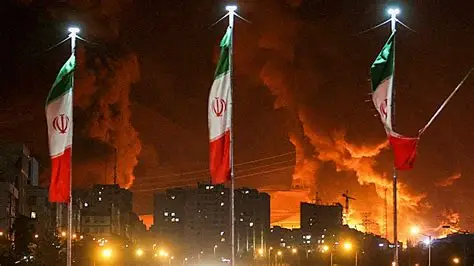
Residents in Tehran say daily life has become tense and uncertain as military strikes continue across the country.
The attacks began on 28 February when the United States and Israel launched air strikes targeting military and political sites in Iran.
People in the capital now report constant explosions, heavy security presence, and severe internet disruptions.
Civilians Caught in the Conflict
According to the US-based Human Rights Activists News Agency, more than 1,100 civilians have died since the attacks began.
Iranian officials said over 160 people, including children, were killed when a girls’ school was hit in the city of Minab.
The White House stated that the United States does not target civilians and is investigating the incident.
Daily Life Marked by Fear
Residents describe an atmosphere of fear and uncertainty. Salar, a Tehran resident whose name has been changed, said the scale of the attacks feels overwhelming.
“Each day feels like a month,” he said. “The number of explosions and the destruction are unbelievable.”
One recent air strike shook his home so violently that he left his windows open to prevent them from shattering.
Checkpoints and Empty Streets
Security forces have increased their presence throughout the capital. Residents say checkpoints appear across the city.
A student living in Tehran said authorities seem nervous after the death of Ali Khamenei during the first wave of strikes.
“Most people stay indoors and only go out for essential supplies,” he said.
Another resident described the city as “empty,” with many shops closed and some cash machines not working. However, supermarkets and bakeries remain open.
Rising Prices and Supply Shortages
The conflict has also pushed up the prices of basic food items.
Residents say eggs and potatoes have become much more expensive. Long queues have also formed for petrol and bread across the city.
Internet Blackouts and Warnings
Access to information has become difficult as authorities impose internet blackouts. Foreign media organisations rarely receive visas to report from inside Iran.
Some residents say security forces have also sent warning messages to their phones.
Salar said authorities threatened severe consequences if people protested against the government. One message warned that protesters would be treated as collaborators with Israel.
Growing Uncertainty for the Future
While many Iranians fear for their families’ safety, others believe the political situation could change.
For now, most residents remain indoors as strikes continue and security forces patrol the streets of the capital.