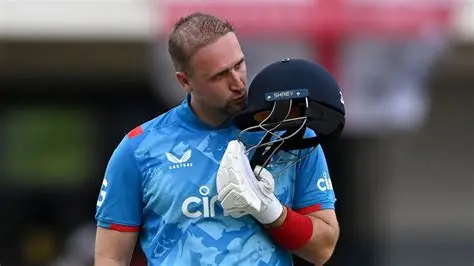
Liam Livingstone: England Fallout, Central Contract Loss and His 2026 Comeback
Liam Livingstone has spent much of 2026 outside the England team, but the debate around his international future has only intensified. The explosive all-rounder, a T20 World Cup winner with exactly 100 England appearances across formats, publicly criticised the way he was handled after being dropped from the national setup and losing his central contract.
His comments in March were unusually direct. Liam Livingstone said communication from head coach Brendon McCullum and managing director Rob Key had been minimal after England moved on from him following the 2025 Champions Trophy. He described that tournament as the “worst experience” of his cricket career and said he felt players outside the immediate England group received far less support than those inside it.
Months later, the story has not disappeared. He has rebuilt his domestic and franchise schedule, produced notable performances for Lancashire and taken on leadership responsibility with London Spirit. Yet, as of September 2026, Liam Livingstone still has not returned to England’s white-ball squads.
That makes this more than a story about one selection decision. It is also a test of how England manages experienced players when they fall out of favour and whether strong domestic performances can reopen a door that currently appears difficult to force.
Why Liam Livingstone Fell Out of the England Team
Liam Livingstone last played for England during the 2025 ICC Champions Trophy, a tournament that quickly became one of the lowest points of the team’s recent white-ball cycle.
England lost all three group matches and were eliminated before the knockout stage. Livingstone scored 33 runs across his three innings, with a highest score of 14, and took three wickets with his spin. Those numbers were disappointing for a player whose value had been built around explosive middle-order hitting, flexibility against spin and the ability to bowl both leg-spin and off-spin.
He later told ESPN that the Champions Trophy had been the “worst experience” he had had playing cricket. He said he asked for help while struggling but felt the feedback he received did not give him the technical or tactical support he wanted.
When England announced its home white-ball squads to face West Indies in May 2025, Liam Livingstone was left out. The ICC’s report on those squads confirmed that Will Jacks returned to both ODI and T20I plans while Livingstone missed out.
From that point, his relationship with England’s management became the central issue.
A Phone Call That Lasted Less Than a Minute
According to Liam Livingstone, Brendon McCullum called him in May 2025 to say England wanted to try another player.
Livingstone said the conversation did not last a minute. He asked why he had been dropped but felt he received a short answer rather than a detailed discussion about what he needed to do to return. Harry Brook sent him a message, but there was little wider contact from the setup, according to his account.
That distinction matters. Selection decisions are unavoidable in elite sport. Players lose form, teams change direction and coaches make judgments that disappoint experienced internationals. The more significant question is whether a player understands the decision and knows what performances or improvements could earn another opportunity.
Liam Livingstone believed that clarity was missing.
His account was also reported by the BBC, which noted that he had received only two brief phone calls from England’s senior leadership after his omission, one involving McCullum and another involving Key.
For a player who had been part of England’s 2022 T20 World Cup-winning squad and had captained the ODI side in late 2024, the sudden reduction in communication clearly left an impression.
The Breakdown With Rob Key
The more serious criticism was directed at Rob Key.
Liam Livingstone said Key initially indicated that they would speak during the summer. Livingstone later tried to contact him but said the conversation did not develop. The pair eventually spoke again in late September, shortly before his existing central contract expired.
That call confirmed that the deal would not be renewed.
The official ECB central contract list for 2025-26 subsequently showed 30 contracted players but did not include Liam Livingstone.
That was a significant change in status. He had been on a one-year central contract in the previous cycle. By the start of the new contract period, players such as Will Jacks and Sam Curran remained inside the centrally contracted group while Livingstone was outside it.
His criticism focused heavily on how that transition was handled. In his version of events, the problem was not merely that England no longer viewed him as a first-choice player. It was that communication effectively disappeared once he moved beyond the immediate squad.
England has disputed the idea that the door is permanently closed. Reports at the time said all players would continue to be considered if performances justified selection.
“If You’re In, You’re In”
The most striking part of Liam Livingstone’s interview was his description of how the England environment felt from the outside.
He argued that players inside the setup were strongly supported, but once outside the group there was a sharp drop in communication and care.
That was a severe criticism because England’s modern team culture under McCullum has often been presented in very different terms: relaxed, empowering and designed to remove fear from players.
Livingstone did not necessarily dispute that atmosphere for those already selected. His argument was that the experience could be very different after a player was dropped.
A national team has to focus on its current squad, but England also draws from a much wider group of county and franchise players who may move in and out of selection. How those players understand their status can affect motivation, trust and the perceived openness of the pathway back.
Liam Livingstone’s comments therefore became part of a wider discussion about selection transparency, not simply a complaint about losing his place.
Why Losing the Central Contract Mattered
England central contracts are a formal sign that the ECB expects a player to have an important role in the national setup during the contract period.
The system also helps England manage availability and workloads in an era when leading players can earn significant money in franchise competitions around the world.
The ECB’s 2025-26 announcement gave two-year deals to a core group and one-year contracts to another set of players expected to feature regularly.
Liam Livingstone’s absence therefore reflected more than a temporary omission from one series. It showed that England’s selectors did not see him as part of their contracted core for that cycle.
That did not make him ineligible. It did, however, make his route back less straightforward.
Will Jacks Took the Opportunity
One reason the England door has been difficult to reopen is that the team did not leave Livingstone’s old role vacant.
Will Jacks became one of the standout performers of the 2026 T20 World Cup. According to the ICC Team of the Tournament, Jacks scored 226 runs at a strike rate of 176.56 and took nine wickets across eight matches.
He also won four Player of the Match awards, equalling the tournament record.
The News Ink covered how Will Jacks helped England move toward the T20 World Cup semi-finals, and his all-round impact became one of the defining positives of England’s campaign.
From a selection perspective, that matters enormously. Liam Livingstone was competing against a player who took on a similar all-round role and then performed at a major global tournament.
England eventually lost a close semi-final to India, a match The News Ink covered in its report on India’s seven-run win over England.
Livingstone said afterward that he did not miss being involved in that World Cup run. The comment underlined how far his relationship with the national setup had deteriorated.
England’s Difficult Winter Added More Scrutiny
The criticism arrived during a difficult period for England’s leadership.
The Test side had lost the 2025-26 Ashes 4-1 in Australia. The defeat prompted a review and increased scrutiny of McCullum, Key and the team’s wider culture.
Both men remained in their positions after the post-Ashes review, although the result and England’s preparation for the tour generated substantial criticism.
The significance for Liam Livingstone’s story is not that his omission caused England’s broader problems. It did not. His white-ball dispute and the Ashes failure were separate issues.
But the timing meant his complaints landed while questions were already being asked about accountability, preparation, communication and the boundaries of England’s relaxed culture.
Within the selected squad, players frequently spoke positively about unity and freedom. The News Ink documented that message in its coverage of Harry Brook’s emphasis on team unity during the T20 World Cup.
Livingstone’s account showed how differently the same regime could be experienced from outside the group.
Exactly 100 England Matches
Liam Livingstone has exactly 100 international appearances for England across all three formats: 60 T20Is, 39 ODIs and one Test.
His sole Test came against Pakistan in Rawalpindi in December 2022. A knee injury suffered during the match limited his involvement and he has never played another Test.
His white-ball career has been much more substantial.
He was part of England’s victorious 2022 T20 World Cup squad, developed a reputation as one of international cricket’s biggest hitters and gave the team unusual bowling flexibility because he could switch between leg-spin and off-spin.
He also captained England’s ODI side in the Caribbean in 2024 and scored a century as captain.
That history is why his absence feels different from the disappearance of a fringe player after a handful of matches. Liam Livingstone had been a significant part of England’s white-ball planning for several years.
Yet there has been no formal retirement and no farewell. His international career remains unresolved rather than officially finished.
Franchise Cricket Offered Another Path
Losing a central contract no longer has the same financial meaning it might have had in an earlier era.
Liam Livingstone remains a valuable franchise cricketer. The ECB confirmed that Sunrisers Hyderabad signed him for approximately £1 million at the 2026 IPL auction.
The move reinforced an important point about the modern game: being outside the England team does not mean being outside elite cricket.
A player with his six-hitting ability, fielding and two-way spin can still command substantial interest in short-format leagues.
He was also directly signed by London Spirit for the 2026 Hundred season and captained the men’s team. The Hundred’s official player profile lists him as London Spirit captain and notes his long-standing reputation as one of the competition’s most powerful hitters.
For Liam Livingstone, those competitions offered regular cricket and clearer roles while his international future remained uncertain.
Lancashire Became Central to the Rebuild
The most important part of his response came back in county cricket.
Lancashire gave him regular opportunities, and his performances during the 2026 summer showed that the England omission had not ended his ability to influence matches.
During June, Livingstone produced consecutive scores of 81, 85 not out and 74. He also returned to red-ball cricket after a long absence and took 5-55 against Kent.
Lancashire Cricket reported that he scored 351 runs across formats during June at an average above 50 while taking 13 wickets. Those performances earned him a nomination for the PCA Player of the Month.
Lancashire also committed to him with a new three-year T20 agreement running through the end of the 2028 Vitality Blast.
The significance goes beyond numbers. Liam Livingstone had said that moving away from the England environment helped him enjoy cricket again. His domestic performances provided evidence that the reset was producing competitive results as well as emotional relief.
Why Strong Form Has Not Produced an England Recall
Strong county performances do not automatically guarantee international selection.
England’s selectors have to balance current form, role definition, age profile, long-term tournament planning and the performance of players already in possession of a place.
The rise of Will Jacks is especially relevant. England also has Sam Curran, Jacob Bethell, Jamie Overton and other players who offer different combinations of power hitting, seam or spin.
What is more telling is that Liam Livingstone’s absence has continued despite his domestic revival.
England named a 17-player T20I squad for the July series against India without him. Then, on September 4, the ICC confirmed England’s squads for the home white-ball series against Sri Lanka, and he was again absent.
That latest selection came with Sam Curran and Phil Salt unavailable through injury and Jacob Bethell recovering from knee surgery. England selected other options, including a first T20I call-up for Aneurin Donald.
It would be wrong to claim those selections prove Livingstone will never return. They do show that, as of September 2026, he remains outside England’s immediate white-ball plans.
Is the England Door Really Closed?
Officially, no.
England has maintained that players outside the squad can force their way back through performances, and Liam Livingstone has not retired from international cricket.
But there is a difference between a door being technically open and a recall being likely.
He said in March that he struggled to see a route back under the existing leadership. Since then, England has continued selecting other all-rounders and has gone through several white-ball squads without recalling him.
For his international career to restart, his performances would have to become difficult to ignore, England’s preferred options could lose form or availability, or the team’s tactical requirements could shift back toward his particular combination of power and spin.
None of those possibilities is unrealistic. None is guaranteed.
The Bigger Issue Is Player Management
It would be easy to reduce this story to a dispute between Liam Livingstone, McCullum and Key.
The more useful question is broader.
Elite teams must make ruthless selection decisions. A national side cannot promise every experienced player a permanent role, and coaches cannot maintain the same level of daily contact with dozens of cricketers outside the squad.
But communication still matters, especially when an established international is removed from plans after years inside the system.
Players need to know whether they are being rested, replaced, challenged to improve a specific area or effectively moved on. Ambiguity can be more damaging than a clear rejection because it leaves no measurable route back.
Livingstone’s criticism was powerful because it was not primarily that England dropped him. It was that he felt the relationship effectively ended once he was dropped.
England’s challenge is to demonstrate that its pathway remains open even to players who are temporarily out of favour.
What Comes Next for Liam Livingstone?
For now, Liam Livingstone’s career has split into two very different stories.
The England chapter is uncertain. He remains a 100-cap international and a World Cup winner, but he has not represented his country since the 2025 Champions Trophy and was still missing from the latest white-ball squads announced in September 2026.
The domestic and franchise chapter is much more active.
He has a multi-year T20 commitment with Lancashire, remains a major Hundred figure and continues to attract franchise opportunities. His strong domestic form has also shown that he can still dominate short-format cricket and contribute meaningfully with the ball.
That gives him a successful professional path even without an England contract.
The more intriguing question is whether England will eventually decide it still needs him.
Frequently Asked Questions
Why was Liam Livingstone dropped by England?
Liam Livingstone was left out after a poor period that included England’s 2025 Champions Trophy campaign. He later said England told him it wanted to try another player. England has not said he is permanently excluded from selection.
When did he last play for England?
His most recent England appearances came during the 2025 Champions Trophy. He has not played international cricket for England since that tournament.
Did Liam Livingstone lose his England central contract?
Yes. His previous contract expired in September 2025 and was not renewed. He was absent from the ECB’s official 2025-26 central contract list.
How many times has Liam Livingstone played for England?
He has exactly 100 England appearances across formats: 60 T20Is, 39 ODIs and one Test.
Did he play in the 2026 T20 World Cup?
No. He was not selected. England reached the semi-finals, where India defeated them by seven runs.
Who took over his England all-rounder role?
There is no exact one-for-one replacement, but Will Jacks has become one of England’s most important spin-bowling all-rounders and was outstanding at the 2026 T20 World Cup.
Which teams did Liam Livingstone play for in 2026?
His major commitments included Sunrisers Hyderabad in the IPL, Lancashire in English domestic cricket and London Spirit in The Hundred.
Liam Livingstone’s England Story Is Still Unresolved
Liam Livingstone’s criticism of England management was unusually blunt, but the facts around his career make the dispute worth examining beyond the headlines.
He went from a centrally contracted World Cup-winning all-rounder to a player outside the England setup in a relatively short period. He said the most difficult part was not simply losing his place but the lack of meaningful communication that followed.
England has every right to select other players. Will Jacks, in particular, justified his opportunity with an exceptional T20 World Cup. Livingstone also had a poor Champions Trophy and cannot argue that form played no role in his omission.
At the same time, his 2026 domestic performances have shown that Liam Livingstone remains capable of producing high-impact cricket. His continued absence from England squads makes the question increasingly clear: is he still genuinely part of the selection pool, or has the national team quietly moved on?
There is no definitive answer yet.
Until he retires from international cricket or England recalls him, his 100th cap will remain an unusual milestone: not an official ending, but the point at which one of England’s most explosive white-ball careers entered an uncertain pause.
For more England cricket coverage and major sports stories, follow The News Ink on X.