India Women Beat Australia: Why a Historic T20I Series Win Still Matters
India women beat Australia 2-1 in a landmark T20I series that showed how quickly the gap at the top of women’s cricket can narrow when skill, confidence and tactical clarity meet in the same week. The decisive 17-run victory at Adelaide Oval on 21 February 2026 was not just another bilateral result. It ended Australia’s long home dominance in women’s T20I series and gave India one of their strongest white-ball statements away from home.
The achievement needs context. Australia later responded by sweeping the ODI series 3-0 and winning the one-off Test by 10 wickets in Perth. That means India did not control the entire multi-format tour. However, the T20I result remains significant because it came in Australian conditions, against an elite opponent and at a time when India’s younger bowlers and established batters combined effectively.
India women beat Australia because they did several things well at once. Smriti Mandhana and Jemimah Rodrigues built a record second-wicket partnership in Adelaide. Shreyanka Patil struck early with off-spin. Shree Charani added left-arm control and wicket-taking pressure. Harmanpreet Kaur’s side defended a strong total against a team that rarely gives opponents repeated chances on home soil.
Editor’s update — June 2026: This article has been expanded after the completion of the full Australia-India women’s tour. India won the T20I series 2-1, while Australia later won the ODI series 3-0 and the one-off Test by 10 wickets.
How India Women Beat Australia in the Adelaide Decider
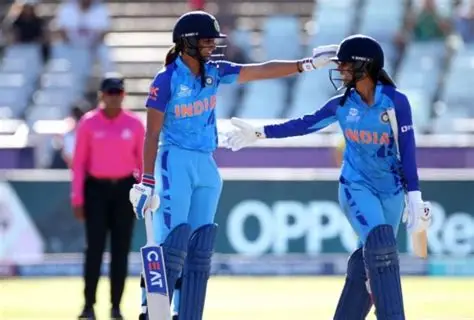
India women beat Australia in the third T20I by playing the most complete match of the series. India chose to bat first at Adelaide Oval and reached 176-6. Mandhana scored 82 from 55 balls, while Rodrigues made 57 from 45. Their 121-run second-wicket stand became the highest partnership for India against Australia in women’s T20Is, according to ESPNcricinfo’s match report.
That partnership mattered because it gave India a total with pressure attached. Against Australia, a score is rarely safe simply because it looks competitive. It must also force the chase into unfamiliar patterns. Mandhana and Rodrigues did exactly that. Mandhana provided the stronger tempo, while Rodrigues ensured that India did not lose shape after the early wicket.
Australia’s chase began badly. Shreyanka Patil dismissed Georgia Voll and Ellyse Perry early, leaving the hosts 32-3. Ash Gardner responded with 57 from 45 balls, but Australia could not turn her innings into a successful chase. India restricted Australia to 159-9 and won by 17 runs. Cricket Australia described the result as Australia’s first T20I series defeat on home soil since November 2017.
Adelaide Decider at a Glance
| Detail | Result |
|---|---|
| Match | Australia women vs India women, 3rd T20I |
| Venue | Adelaide Oval |
| Date | 21 February 2026 |
| India total | 176-6 |
| Australia total | 159-9 |
| Result | India won by 17 runs |
| Series result | India won 2-1 |
| Key India batting | Smriti Mandhana 82, Jemimah Rodrigues 57 |
| Key India bowling | Shreyanka Patil 3-22, Shree Charani 3-28 |
| Australia response | Ash Gardner 57 |
For readers who want to understand T20 tactics, powerplay pressure and run-chase situations more clearly, The News Ink’s cricket guide explains the basics of modern cricket formats in simple terms.
Why Mandhana and Rodrigues Changed the Match
India women beat Australia because the batting platform was strong enough to withstand the quality of the opposition. Mandhana’s innings gave India authority. She attacked scoring areas without allowing the innings to become reckless. Rodrigues’ role was equally important because she kept the partnership moving and avoided the middle-over stagnation that can cost teams in T20 cricket.
Their 121-run stand was more than a statistical highlight. It allowed India to control the rhythm of the innings after the early loss of Shafali Verma. Australia’s bowlers had to respond to two different batting tempos: Mandhana’s scoring pressure and Rodrigues’ control. That combination made it harder for Australia to settle into a defensive plan.
India women beat Australia by creating a match situation in which Australia’s chase had to be near-perfect. On many days, Gardner might have pulled Australia back into the contest. In Adelaide, India had enough runs and enough bowling variety to absorb her counterattack.
The performance also underlined the continued importance of Mandhana. She has long been one of India’s most recognisable batters, but series-defining innings away from home carry special weight. Rodrigues, meanwhile, reinforced her value as a player who can build an innings without losing urgency.
Shreyanka Patil and Shree Charani Turned Runs Into Pressure
The score of 176-6 gave India a strong chance, but India women beat Australia because the bowlers converted scoreboard pressure into wickets. Patil’s spell was central to that success. Her dismissal of Voll removed one of Australia’s in-form players. Her wicket of Perry gave India an even bigger opening.
Spin often becomes decisive in T20 cricket because it changes pace and forces batters to manufacture power. Patil’s off-spin and Charani’s left-arm angle gave India variety. Charani finished with 3-28 and helped keep Australia from building a stable chase around Gardner.
This matters for India’s long-term planning. Major wins away from home often depend on more than star batters. India women beat Australia because emerging bowlers held their nerve in conditions where Australia usually control the tempo.
The result also strengthened the argument that India’s future will depend on depth. A side cannot expect Mandhana, Harmanpreet and Rodrigues to win every match through batting alone. If Patil, Charani and other younger bowlers continue developing, India’s white-ball balance becomes much more dangerous.
The Series Was Competitive From the First Ball
India women beat Australia 2-1 because they handled different match situations across the series. The first T20I in Sydney was rain-affected, but India had already built a strong position. Australia were bowled out for 133 in 18 overs, with Arundhati Reddy taking 4-22. India reached 50-1 in the sixth over before rain ended the chase, and they won by 21 runs under the DLS method.
Australia answered in Canberra. Georgia Voll made a career-best 88, Beth Mooney added 46 and the hosts reached 163-5. India began brightly but lost momentum after the powerplay and were eventually beaten by 19 runs. The Guardian’s live report noted that Australia levelled the series 1-1, setting up a decider in Adelaide.
The pattern made the final result more impressive. India had to win after Australia had already reset the series. They also had to handle a hostile away environment and the knowledge that Australia rarely lose these contests at home.
T20I Series Summary
| Match | Venue | Result | Defining performance |
|---|---|---|---|
| 1st T20I | Sydney | India won by 21 runs, DLS | Arundhati Reddy 4-22 |
| 2nd T20I | Canberra | Australia won by 19 runs | Georgia Voll 88 |
| 3rd T20I | Adelaide | India won by 17 runs | Mandhana 82, Rodrigues 57, Patil 3-22 |
India women beat Australia because they recovered quickly from the Canberra defeat and produced their best overall performance in the match that mattered most.
Why This Was Australia’s Most Serious T20I Home Setback Since 2017
Australia’s women have set the standard in international cricket for more than a decade. They have won World Cups, built deep squads and often made high-pressure matches look routine. That is why India’s T20I series win carried weight.
Cricket Australia described the result as Australia’s first T20I series defeat on home soil since November 2017. It also came early in Sophie Molineux’s captaincy period, with Alyssa Healy leading Australia in the ODI and Test legs later in the tour. Australia remained a powerful team, but the T20I result showed that they could be placed under sustained pressure.
India women beat Australia by challenging that sense of inevitability. They did not need a one-off upset. They won two of three games, each in a different way. The first came through bowling discipline and DLS control. The third came through a strong batting total and spin pressure.
This is why the phrase “shock” in the existing headline still works. Australia were not an ordinary opponent losing an ordinary home series. They were the benchmark, and India defeated them in a format where momentum can shift quickly.
Australia Hit Back in the ODI Series
The updated story cannot stop at the T20I trophy. Australia responded strongly in the next part of the multi-format tour. The hosts won the three-match ODI series 3-0.
In the first ODI at Allan Border Field, Australia chased 215 with six wickets in hand. Beth Mooney made 76, Alyssa Healy scored 50 and Australia completed the chase with 17.4 overs remaining. India had earlier been bowled out for 214 despite Mandhana’s 58 and Kashvee Gautam’s late 43.
Australia then took the second ODI by five wickets and completed the sweep in the third. The final ODI became especially significant because Healy made 158 from 98 balls in her farewell ODI, while Mooney scored 106. Australia posted 409-7 and won by 185 runs. The Guardian’s report described Australia’s dominance and noted that Alana King took 4-33 as India’s chase faded.
That ODI response changed the tour narrative. India women beat Australia in the T20I leg, but Australia showed why they remain one of the most complete sides in the world across formats.
The Perth Test Restored Australia’s Control
The one-off pink-ball Test at the WACA completed Australia’s recovery. Australia won by 10 wickets, with Annabel Sutherland again central to the result. ESPNcricinfo’s scorecard records Australia’s 10-wicket win in Perth from 6–8 March.
India were dismissed for 198 in the first innings. Sutherland took 4-46, while debutant Lucy Hamilton claimed 3-31. Australia then made 323, with Sutherland scoring 129 and Ellyse Perry adding 76. India struggled in their second innings under pressure, and Australia completed victory comfortably.
The Test mattered because it showed the difference between a breakthrough and a full tour takeover. India women beat Australia in the T20I series, but the longer formats still exposed areas for improvement: batting durability, seam-bowling control, adaptation to pink-ball conditions and the ability to rebuild after early wickets.
For India, that does not reduce the importance of the T20I win. It makes the lesson sharper. A side aiming to challenge Australia consistently must repeat the T20I level across formats.
What the Tour Says About India’s White-Ball Growth
India women beat Australia in a series that rewarded their white-ball strengths. Mandhana and Rodrigues gave India top-order stability. Patil and Charani showed wicket-taking ability. Arundhati Reddy’s four-wicket performance in Sydney added another bowling option. Harmanpreet Kaur had a side capable of responding to pressure after a defeat.
That is the encouraging part of the tour. India did not win because Australia had one bad evening. India won because enough players delivered across the three T20Is.
The challenge is consistency. India’s ODI batting did not produce enough totals that troubled Australia. The Test collapse under lights showed that red-ball and pink-ball skills require a different level of patience and technical control.
Still, the T20I series should not be dismissed because Australia later dominated. India women beat Australia in a format that will matter in global tournaments, franchise cricket and future bilateral series. The psychological value is real: India have proof that they can win a short-format series in Australia.
Why This Matters for Women’s Cricket
The result also matters beyond one rivalry. Women’s cricket benefits when more teams can challenge Australia regularly. Australia’s excellence has raised standards, but repeated dominance can make tournaments feel predictable. India’s T20I victory added competitive balance.
The timing is important. Women’s cricket is expanding through larger tournaments, better domestic structures and growing franchise opportunities. The News Ink’s article on sports tournaments in 2026 explains how major events shape attention across the sporting calendar. For women’s cricket, bilateral series like this one also matter because they reveal depth, preparation and readiness for global competition.
India women beat Australia at a time when younger players on both sides were being tested. Australia looked at new leadership in the T20I leg. India found promising bowling contributions. Those developments matter for future World Cups and long-term squad planning.
The series also gave rising players a bigger platform. For more context on how young athletes can change a sport’s direction, The News Ink’s feature on rising sports stars explores why emerging talent often becomes the difference between short-term success and sustained growth.
What India Must Build on Next
India’s T20I success provides momentum, but it also creates responsibility. A historic result becomes more valuable when the lessons are carried forward.
India should build on five areas:
- Top-order partnerships: Mandhana and Rodrigues showed how controlled aggression can shape a T20I.
- Spin variety: Patil and Charani offered different angles and wicket-taking threat.
- Death-over discipline: Defending against Australia requires calm under pressure.
- Format-specific preparation: T20I success did not automatically translate into ODI and Test control.
- Younger-player development: India need depth that can travel and perform away from home.
India women beat Australia because several pieces came together. The next step is making that level repeatable.
What Australia Will Take From the Defeat
Australia’s response was immediate and convincing. The ODI sweep and Test win proved that the home side remained outstanding. However, the T20I defeat still offered warnings.
Australia’s top order was vulnerable in the Adelaide chase. Spin created problems. Gardner’s counterattack was not enough because support around her was limited. In a global tournament, one poor chase can end a campaign.
Australia will not panic because of one T20I series defeat. Their depth remains exceptional. But India women beat Australia by exposing that even the best teams can be pushed when early wickets and scoreboard pressure combine.
A Historic Win, Not a Complete Tour Victory
The fairest way to assess the tour is to hold two truths together.
First, India women beat Australia in a historic T20I series. They did so away from home, against a dominant opponent and with key performances from both senior and emerging players. That result deserves serious recognition.
Second, Australia controlled the rest of the tour. The hosts swept the ODIs and won the Test. They finished the multi-format contest stronger and reminded India of the standards required across formats.
That balance makes the story more interesting, not less. India’s T20I victory was not a final destination. It was evidence of progress. The next challenge is turning a brilliant short-format result into wider consistency.
Why Adelaide Will Be Remembered
Adelaide will be remembered because India women beat Australia when the series was on the line. Mandhana and Rodrigues gave India runs. Patil and Charani gave India control. Gardner made Australia believe, but India held firm.
For years, beating Australia in Australia has been one of the hardest tasks in women’s cricket. India did it across a T20I series, not just a single match. That is why the result matters even after the later ODI and Test defeats.
India women beat Australia in a way that showed growth, courage and tactical clarity. The full tour still belonged to Australia, but the T20I trophy gave India a performance to build from and a memory that will travel with the squad.
For more sports updates and analysis, follow The News Ink on Instagram.