



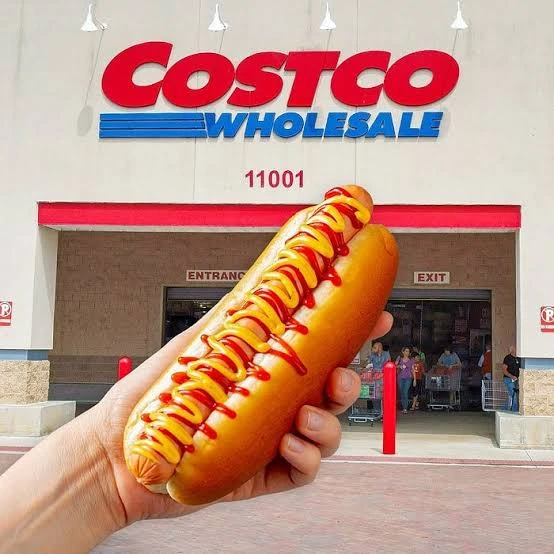
How Does Costco Make Money Selling a $1.50 Hot Dog Combo?
Walk into a Costco warehouse and you can buy a television, a giant bag of rice, a sofa or a year’s supply of household essentials. But one of its most recognizable products costs just $1.50: a quarter-pound all-beef hot dog with a drink.
The price has barely moved in a world where almost everything else has become more expensive. Costco introduced the $1.50 hot dog-and-soda offer in 1985 and has protected it for more than four decades. The Costco hot dog has become so famous that people sometimes wonder whether the company is losing money with every order.
The explanation is more interesting than a simple marketing giveaway. Costco makes money through merchandise sales and recurring membership fees. Its enormous buying power, limited assortment, efficient warehouses and private-label production allow it to operate on unusually thin merchandise margins. The Costco hot dog reinforces that entire strategy by giving members a highly visible example of consistent value.
Costco does not need the $1.50 combo to generate a large profit by itself. It needs the entire membership-and-warehouse business to be profitable. That does not prove the meal is sold at a loss. A former Costco chief financial officer specifically described it as close to breaking even rather than a conventional loss leader.
According to Costco’s 2026 annual filing, the retailer generated $303.2 billion in total revenue, including $5.9 billion from membership fees, during the fiscal year ended August 30, 2026. Those numbers explain why protecting the Costco hot dog price can make business sense on a scale far beyond one food court order.
How Much Does the Costco Hot Dog Combo Cost?
The familiar U.S. food court deal includes a quarter-pound all-beef hot dog and a drink for $1.50 before any applicable tax. The traditional fountain drink comes with free refills at participating locations. Specific food court menus and international prices vary by market.
Costco’s own historical company timeline records the introduction of its first hot dog cart and the $1.50 hot dog-and-soda price in 1985. That is why descriptions of the Costco hot dog as an unchanged-price favorite are not merely advertising folklore.
A new choice appeared at some U.S. locations in 2026. According to Axios, customers at selected food courts could choose a bottle of Kirkland Signature water instead of fountain soda while retaining the $1.50 combo price. This did not mean that every warehouse had adopted the option.
The remarkable feature is not that Costco never changes ingredients, suppliers or menu details. It is that the headline price of the Costco hot dog combination has stayed fixed through decades of changing wages, food costs and consumer expectations.
Why Has Costco Kept the $1.50 Price Since 1985?
Most restaurants respond to higher costs by raising menu prices. Costco has followed a different approach for this particular item: change the production economics before changing the advertised price.
Former chief financial officer Richard Galanti described that thinking in a 2026 interview reported by the Journal of Accountancy. He explained that selling low-priced goods at enormous volume, with a limited selection and tight expense control, is central to Costco’s strategy.
The Costco hot dog matters because customers notice it. Shoppers may not remember the price of every detergent, cereal or appliance in the warehouse, but a meal that remains $1.50 is easy to compare with what similar food costs elsewhere.
The price functions as a public promise about Costco’s value positioning. Raising it might earn a little more revenue per meal, but it could weaken a memorable symbol of what members believe they are paying for.
The point is not that prices can remain frozen forever without consequences. The company has changed sourcing, production and drink arrangements to help preserve the offer. Understanding those decisions shows how the Costco hot dog fits the wider business.
7 Reasons Costco Can Afford Its Famous $1.50 Combo
1. Membership Fees Bring in Billions Before Shopping Begins
Unlike an ordinary supermarket, Costco charges customers an annual fee to become members. In the United States, a Gold Star membership costs $65 and an Executive membership costs $130 a year, according to Costco’s current membership guidance.
The company says these fees help offset operating costs and support lower merchandise prices. Members are not paying specifically for the Costco hot dog. They are paying for access to warehouse shopping and eligible membership benefits, of which the food court is one recognizable example.
In fiscal 2026, membership fees brought Costco $5.907 billion. The company reported 84.1 million paid memberships and a worldwide renewal rate of 89.8%, according to its audited annual report.
Those fees are economically valuable because they recur, although it is misleading to say that all fee revenue is pure profit. Operating the membership system and serving customers still involves costs.
It is also incorrect to claim Costco makes no money from selling goods. Its merchandise operations generate substantial gross profit. The Costco hot dog is part of a system in which membership revenue and merchandise economics reinforce one another.
Our Costco business model guide examines that relationship in detail.
2. Costco Makes Its Own Hot Dogs to Control Costs
One reason the Costco hot dog can remain inexpensive is vertical integration. Instead of buying all of its hot dogs from an outside branded supplier, Costco developed its own large-scale production.
This change followed years of rising costs and pressure to protect the price. Speaking to Retail Dive in 2024, Galanti explained that the company built its hot dog plant to save even a few cents per item by producing at very high volume.
In 2026, Galanti said Costco’s facilities in California and Illinois together were producing roughly 400 million hot dogs annually, according to the Journal of Accountancy. That is production across the business, not the number of food court combos sold.
When a company manufactures its own product, it can have greater control over ingredients, purchasing arrangements, production scheduling and the costs of supplying its warehouses. The Costco hot dog is a practical example of how bringing selected operations in-house can protect a retail price.
Owning factories does not make meat, labor or electricity free. It can, however, remove some supplier markups and make large-scale efficiencies easier to manage.
3. Huge Sales Volumes Spread Costs Across Millions of Meals
A food court serving only a few dozen meals each day has very different economics from a company selling hundreds of millions of combinations across its network.
Costco reported 245.1 million hot dog-and-soda combos sold worldwide in fiscal 2025 in the presentation for its 2026 annual shareholders meeting.
That figure is extraordinary. But it should not be used to calculate exact global revenue simply by multiplying every order by the U.S. $1.50 price. Food court prices vary internationally, and the company has not provided a complete public breakdown of all global combo revenue and costs.
The value of scale is straightforward. A modest reduction in the cost of each Costco hot dog becomes significant when repeated millions of times. Suppliers, packaging providers and distribution networks can operate more efficiently with predictable, large orders.
High volume also helps spread certain fixed expenses across many transactions. The Costco hot dog is cheap partly because it is produced and sold at a scale unavailable to a typical independent snack stand.
4. Costco Runs Low-Cost Warehouses Rather Than Elaborate Stores
The $1.50 meal sits inside a business designed around operational efficiency. Costco warehouses emphasize industrial shelving, bulk packages, functional layouts and relatively limited product selection.
In its 2026 SEC filing, Costco explains that high sales volume, rapid inventory turnover, efficient distribution and reduced merchandise handling allow it to operate at significantly lower gross margins than many conventional retailers.
The Costco hot dog food court benefits from that broader environment. The space serves members who already visit the property for other reasons, and the menu is much simpler than that of a full-service restaurant. The cost of operating the food court is still real, but its business purpose is not identical to that of a standalone restaurant trying to earn all its returns from meals.
A warehouse also buys enormous quantities of other products, giving it a scale of business that an independent hot dog vendor cannot easily reproduce.
Our article about supermarket profit margins explains why large retailers often focus on the economics of the whole shopping basket rather than maximizing margin on every item.
5. Drinks and Suppliers Can Be Adjusted Without Raising the Combo Price
The drink portion of the Costco hot dog offer has changed over time. Costco moved from Coca-Cola to Pepsi products in 2013 and returned to Coca-Cola in 2025. Such supplier decisions allow a retailer to reconsider its commercial arrangements without changing the central meal price.
The 2026 bottled-water option at selected food courts provides another example. It lets shoppers choose water while preserving the familiar $1.50 price. Analysts cited by Axios suggested that the option might also improve Costco’s cost economics, although its actual impact on per-combo profit was not publicly disclosed.
The Costco hot dog itself has also evolved through changes in sourcing and private-label production. What remains consistent is the customer’s easily recognized value proposition.
This distinction matters: keeping the price the same does not require keeping every cost, supplier or process the same. Operational changes behind the scenes help make the visible Costco hot dog promise possible.
6. The Deal Reinforces Membership Loyalty and Repeat Visits
The Costco hot dog is not just a snack. It is a visible example of a company’s commitment to value. A member who repeatedly sees the $1.50 offer may feel more confident that their annual membership is worthwhile.
That confidence can help support a broader pattern: members return to the warehouse, purchase groceries and household goods, use other services and renew their subscriptions. Costco’s fiscal 2026 renewal rates—92.3% in the U.S. and Canada and 89.8% worldwide—show that large numbers of members maintain that relationship.
But it would be inaccurate to say Costco has proven that each hot dog causes a particular amount of additional warehouse spending. Public filings do not establish a direct causal conversion rate from a Costco hot dog purchase to another product sale or membership renewal.
The more defensible argument is that the combo helps reinforce a value reputation that supports Costco’s entire business model. That effect may be commercially important even if the food court earns little on the individual meal.
7. Costco Measures Value Across the Whole Business
The final reason is the most important. Retailers do not need every product to deliver an identical margin. A product can be strategically valuable because it encourages visits, builds trust or complements other purchases.
Costco’s fiscal 2026 results show $297.2 billion in net merchandise sales and $9.23 billion in net income across the company. Its merchandise gross margin for the year was approximately 11.1%.
These are company-wide numbers, not Costco hot dog margins. They demonstrate that Costco’s profitability rests on hundreds of billions of dollars in retail activity, not on maximizing the price of one iconic food court item.
A small extra profit on each Costco hot dog may be less valuable to the company than preserving a price that is instantly recognizable to shoppers. That is a strategic judgment, not proof that the product is sold below cost.
Does Costco Lose Money on Every $1.50 Hot Dog?
This is the biggest misconception surrounding the Costco hot dog. Many articles describe it as a loss leader, meaning a product deliberately sold below cost to encourage customers to buy other items.
The strategy is common in retail, but Costco’s precise per-combo economics are not publicly disclosed. The company does not publish an audited financial statement showing the meat, bun, cup, labor, overhead and distribution expenses attached to every Costco hot dog order.
In a 2018 interview reported by The Spokesman-Review, former CFO Richard Galanti directly described the combo as not a loss leader and said it was close to break-even.
That is stronger evidence than an unsupported estimate claiming that Costco loses a particular number of cents on every meal. But Galanti’s comment is historical, and today’s detailed costs have not been publicly verified.
It is reasonable to say the Costco hot dog is loss-leader-like in its marketing function: it attracts attention, supports perceived value and may encourage membership loyalty. It is not reasonable to present an unverified current dollar loss as a confirmed fact.
Why Gross Profit and Total Profit Are Different
Suppose a fictional retailer sells a hot dog combo for $1.50 and pays $1.10 for the food, drink and packaging. That leaves $0.40 before other operating costs. After allocating wages, utilities, cleaning and other expenses, the final contribution could be lower or even negative.
These are hypothetical figures, not Costco’s costs. They show why the Costco hot dog cannot be evaluated using only the price of meat or a generic restaurant estimate. The result depends on which costs are included and how they are allocated.
Costco’s Business Model in Numbers: Fiscal 2026
| Financial measure | Costco fiscal 2026 |
|---|---|
| Net merchandise sales | $297.25 billion |
| Membership-fee revenue | $5.91 billion |
| Total revenue | $303.15 billion |
| Merchandise gross profit | $32.97 billion |
| Operating income | $11.69 billion |
| Net income | $9.23 billion |
| Paid memberships | 84.1 million |
| Worldwide membership renewal rate | 89.8% |
| Warehouses worldwide | 939 |
Source: Costco 2026 Form 10-K. Dollar amounts rounded.
Membership fees accounted for less than 2% of total revenue, but they remain a major contributor to the company’s economics. Merchandise also creates real gross profit, and the Costco hot dog is part of a business model that combines those two revenue sources.
To understand the significance, imagine an ordinary retailer offering a very inexpensive meal. It might need the meal itself to cover nearly all the costs associated with running that dining business. Costco can evaluate its food court as one part of a much larger retail relationship.
Why the $1.50 Costco Hot Dog Is a Powerful Marketing Strategy
Advertising usually costs money. Companies pay for television commercials, online campaigns, billboards and celebrity endorsements to persuade consumers that they offer value.
The Costco hot dog conveys a similar message through a product customers can actually buy. It makes a broad brand promise specific: here is a substantial meal whose U.S. price has not increased since 1985.
Retail analysts sometimes call this a price signal. Consumers use the prices of familiar products as clues about how expensive a store may be overall. A very visible bargain can therefore shape perceptions beyond the item itself.
This does not mean every product at Costco is necessarily cheaper than every competing retailer. The Costco hot dog tells members something about the company’s approach; it does not replace comparison shopping.
A similar distinction appears in The News Ink’s Temu pricing explainer: attractive prices can arise through different combinations of supply-chain efficiencies, competitive strategy and marketing. Costco’s distinctive ingredient is its annual membership model.
Is the Hot Dog a Reason People Renew Costco Memberships?
For some customers, the food court may be part of what makes a warehouse visit enjoyable. But a $65 membership is not economically justified by saving a dollar or two on a single hot dog purchase. Members usually evaluate a larger collection of benefits, including groceries, fuel, pharmacy services, household products and other offerings.
The Costco hot dog reinforces that wider experience. It can become a small, repeatable reminder that the store is committed to delivering value.
Costco also has an incentive to reserve member benefits for paying customers. In 2024, the company increased enforcement of food court membership requirements at some locations, according to CBS News. Exact access practices can differ by warehouse and jurisdiction.
The message is consistent with the retailer’s business: the best-known low price is primarily a benefit associated with membership, not an unlimited public giveaway.
Why Doesn’t Costco Simply Raise the Price to $2 or $3?
On paper, increasing the Costco hot dog price could look tempting. A higher selling price would increase revenue per combo if the same number of customers continued buying it.
But that is only half the calculation. A price increase would also remove an unusual and valuable piece of Costco’s reputation: a product that has remained $1.50 through more than four decades of inflation.
It is impossible to calculate exactly what that reputation is worth. Costco does not disclose a model quantifying how many memberships the hot dog preserves or how much goodwill would be lost after a price increase.
Still, former executives have repeatedly emphasized the symbolic importance of the deal. In a 2024 interview, Galanti described the combo as a foundational value item that management aimed to protect rather than raise routinely.
The Costco hot dog price works partly because customers expect it to be stable. Breaking that expectation could carry a reputational cost far greater than the extra cash collected at the counter.
How Does Inflation Affect the Costco Hot Dog?
A dollar buys less over time when the overall price level rises. That means $1.50 in 1985 had substantially more purchasing power than $1.50 does in 2026.
The Costco hot dog therefore represents a large real price reduction over the decades, even though its nominal price has remained fixed. That does not establish how much the meal costs Costco to produce today, because the company’s production and sourcing methods have changed.
Ordinary food businesses cannot assume costs will remain flat. Beef, labor, energy, transportation and packaging can all become more expensive. Costco has responded by seeking efficiencies through scale, internal production and supplier arrangements instead of automatically passing every increase into the advertised combo price.
Readers interested in the broader consequences of prices and consumer purchasing power can explore The News Ink’s Economy coverage.
What About Costco’s $4.99 Rotisserie Chicken?
The Costco hot dog is not the only highly visible value item in the warehouse. The $4.99 rotisserie chicken has also become closely associated with Costco’s pricing philosophy in the United States.
Both products help express a broader commitment to value. Costco has invested in supply arrangements and production systems to protect important price points, but the cost structures for chicken and hot dogs differ.
The point is not that Costco makes no profit on either item. Publicly available financial data do not provide a reliable per-unit income statement for each. The lesson is that selected products can carry strategic significance beyond their immediate contribution to the bottom line.
The Costco hot dog is the most memorable example because its price has been essentially unchanged for more than 40 years.
What Shoppers Should Know About the $1.50 Deal
The Costco hot dog offers a straightforward low-cost meal, but a few details are worth remembering.
The familiar $1.50 figure is the U.S. advertised price, not a promise that every warehouse worldwide charges the same amount or serves the same drink. Applicable taxes, menu options and membership-access requirements may differ. The new bottled-water option reported in 2026 was available only at some locations.
There is also a difference between inexpensive and nutritionally ideal. A quarter-pound hot dog is a processed-meat meal that can contain substantial sodium. The business strategy behind the Costco hot dog does not change the need for individuals to consider their broader dietary habits.
The key consumer benefit is transparency: customers know roughly what they can expect to pay for a recognizable food court product. Costco’s pricing strategy becomes more compelling when that predictability is combined with savings elsewhere in the warehouse.
Frequently Asked Questions About the Costco Hot Dog
Is Costco losing money on the $1.50 hot dog combo?
Costco has not released current per-combo profitability figures. A former CFO stated in 2018 that the deal was not a conventional loss leader but was close to break-even. Calling every Costco hot dog sale a confirmed loss would go beyond the available evidence.
How long has the Costco hot dog been $1.50?
Costco’s corporate historical timeline dates the introduction of its $1.50 hot dog and soda offer to 1985. The U.S. headline price has remained unchanged for more than four decades.
How many hot dogs does Costco sell each year?
Costco reported 245.1 million hot dog-and-soda combos sold worldwide during fiscal 2025. This is a combo sales count, not the total number of hot dogs manufactured or sold in multi-packs.
Does Costco manufacture its own hot dogs?
Yes. Costco invested in its own meat production. A former CFO described facilities in California and Illinois producing approximately 400 million hot dogs annually in 2026, across the business rather than just food court orders.
How does Costco make money if the hot dog is so cheap?
Costco earns revenue from merchandise sales and membership fees. The Costco hot dog helps reinforce a value reputation within a retail business generating hundreds of billions of dollars in annual sales. It does not need to be a major individual profit center.
Can you buy the Costco hot dog without a membership?
Access policies vary by location. Costco has increased enforcement of membership requirements at U.S. food courts, so shoppers should not assume they can purchase the combo without membership at every warehouse.
Did Costco change the drink in the combo?
The traditional combo includes a fountain drink. In 2026, selected U.S. locations began offering Kirkland Signature bottled water as an alternative while retaining the $1.50 price. Availability is not necessarily universal.
Could Costco raise the hot dog price in the future?
The company has repeatedly expressed its intention to protect the price, but no business can guarantee a product will remain at one price forever. The Costco hot dog remains $1.50 in the U.S. as of November 2026.
Why Costco’s $1.50 Hot Dog Still Makes Business Sense
The remarkable thing about the Costco hot dog is not that Costco discovered how to make food immune to inflation. It is that the company organized parts of its business to protect a price customers remember.
Making its own hot dogs reduced dependence on outside suppliers. Massive production volumes improved the economics of every small cost saving. Simple warehouse operations and efficient purchasing supported a low-margin retail model. Membership fees added a recurring revenue stream, while the food court helped reinforce the value of belonging to the club.
None of this requires pretending that a $1.50 meal produces an enormous direct profit. It also does not require claiming that Costco loses money on every sale. The company has not publicly provided the full per-unit figures needed to establish either conclusion today.
What the evidence does show is that the Costco hot dog serves a purpose beyond the food court. The unchanged price communicates consistency in a retail market where shoppers are accustomed to rising prices and changing promotions.
Costco can afford to prioritize the long-term value of that message because it makes money across an enormous membership-based retail business—not by maximizing the markup on one hot dog.
The $1.50 combo is therefore less a mystery about inexpensive food than a lesson in retail economics: sometimes the most valuable product is the one that persuades customers the entire store is worth returning to.
For more research-driven explainers, business coverage and global stories, follow The News Ink on X, Instagram, Threads, Medium, Substack, Bluesky, Pinterest, TikTok, Quora and Mastodon.