Harry Brook: How a Stunning 2026 Century Rescued England After a Costly Collapse
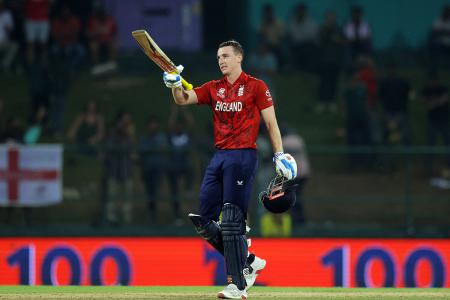
Harry Brook produced one of the defining innings of England’s 2026 T20 World Cup campaign when he scored 100 from 51 balls against Pakistan in Pallekele. England were chasing 165, but the top order had collapsed. At 58 for four, the chase was no longer routine. It had become a test of judgement, nerve and leadership.
Harry Brook passed that test with a performance that combined power and calculation. He hit 10 fours and four sixes, reached his first T20I century, and guided England to a two-wicket victory with five balls remaining. The result secured England’s place in the semi-finals with a game to spare and made Brook the first captain to score a hundred in T20 World Cup history.
The original reaction focused on Brook proving himself as a leader. The completed tournament gives that argument more depth. England later beat New Zealand in their final Super Eight match before falling seven runs short against India in a high-scoring semi-final. Brook’s century did not lead England to the trophy, but it revealed something important: he could rescue a difficult chase, read a game under pressure and lead by example when England’s experienced players failed.
Harry Brook Turned Trouble Into Control
The situation against Pakistan was dangerous. England needed 165, a target that looked manageable on paper, but Shaheen Shah Afridi changed the tone immediately. Phil Salt fell to the first ball of the chase. Jos Buttler followed in similar fashion, continuing a difficult tournament. Jacob Bethell also departed cheaply, and Tom Banton was removed first ball by Usman Tariq.
England were suddenly 58 for four. In a World Cup Super Eight chase, that kind of start can create panic. Harry Brook did not panic. He attacked early enough to stop Pakistan from building total control, but he also ran hard, rotated the strike and chose his scoring options carefully.
The official ICC report described the innings as “common sense batting” because Brook punished loose balls without turning every delivery into a high-risk shot. That balance made the innings more impressive than a simple highlights package suggests. It was not only a display of hand speed and hitting power. It was a captain understanding what the match required.
| Match detail | Confirmed information |
|---|---|
| Fixture | England vs Pakistan |
| Tournament stage | 2026 T20 World Cup Super Eight |
| Venue | Pallekele |
| Pakistan score | 164/9 |
| England score | 166/8 in 19.1 overs |
| Result | England won by two wickets |
| Brook’s score | 100 from 51 balls |
| England position under pressure | 58/4 during the chase |
Why the Innings Was More Than a Century
A hundred in T20 cricket is always significant. A hundred by a captain in a World Cup chase is rarer. A hundred from No. 3 after the top order collapses is the type of innings that changes how a player is viewed.
Harry Brook did not walk in with freedom at 80 without loss. He came in after Salt’s first-ball dismissal and watched wickets fall around him. His job was not only to score quickly. He had to prevent England from falling too far behind the required rate while also protecting the chase from another collapse.
That is what made the innings feel like leadership. Some captains lead through speeches, field settings or tactical calm. Brook led by taking responsibility for the most difficult part of the match. He did not ask the lower order to repair the innings. He gave them a platform.
England have had many different kinds of cricket leaders. Michael Vaughan was associated with man-management. Sir Andrew Strauss brought structure and planning. Sir Alastair Cook embodied endurance. Ben Stokes has often led through emotional force and match-changing acts. Harry Brook is still building his own identity, but this innings suggested his leadership may be rooted in clear cricket instincts and fearless batting.
The Promotion to No. 3 Was a Major Decision
One of the most important details was Brook’s promotion to No. 3. He later said the move came from head coach Brendon McCullum on the morning of the match and that the idea was to maximise the powerplay. That decision mattered because England’s batting order had been under pressure, and Brook wanted more responsibility.
The promotion was not a cosmetic adjustment. It changed the chase. Harry Brook faced 20 balls in the powerplay and scored freely enough to keep England alive despite the wickets. By the end of the powerplay, England were 53 for three and Brook already had 41 of those runs.
That number tells the story. England were unstable, but Brook was not waiting for safety before playing his shots. He understood that a cautious response could have left England needing too much later. He needed to attack while still surviving.
The News Ink’s verified cricket guide explains why T20 powerplays are so important. Fielding restrictions create scoring opportunities, but early wickets can quickly cancel that advantage. Brook’s innings succeeded because he used the powerplay without being reckless.
How Harry Brook Played Pakistan’s Spin Threat
Pakistan had several routes back into the game. Afridi had damaged England with the new ball. The spinners then had an opportunity to exploit pressure in the middle overs. Left-arm spin had already troubled Brook during the tournament, so Pakistan had reason to believe they could control him.
Harry Brook responded by attacking Mohammad Nawaz decisively. He took 17 from one over to weaken Pakistan’s spin plan and shift momentum. That was one of the key tactical moments of the chase. If Brook had allowed the spinners to settle, England’s lower order would have faced a much harder equation.
The innings was not mindless aggression. Brook waited for width, picked the right moments and kept running hard between boundaries. When Tom Banton fell, he did not simply swing harder. He rebuilt with Sam Curran and later with Will Jacks.
That adaptability is what England should value most. Harry Brook did not play one type of innings from start to finish. He changed tempo according to wickets, overs and bowlers. That is why his century looked like a mature captain’s innings rather than only a brilliant individual knock.
The Partnerships That Kept England Alive
A century usually belongs to one player in the scorebook, but chases are rarely won alone. Harry Brook needed support, and England found just enough of it.
Sam Curran helped steady the innings during a 45-run partnership. Will Jacks then joined Brook for a 52-run stand that pushed England close to victory. Pakistan struck late and created drama after Brook fell, but the captain had taken England to 155 for six by the time he was dismissed.
| Partnership | Why it mattered |
|---|---|
| Brook and Curran | Stopped the collapse after England lost four early wickets |
| Brook and Jacks | Took the chase away from Pakistan before late drama |
| Lower-order finish | Archer’s boundary ended the chase with two wickets left |
This is where Brook’s innings differed from a solo rescue act. He gave teammates a clear job. Curran needed to stay with him. Jacks needed to keep the chase moving. The lower order needed only a few runs at the end because Brook had already done the heavy lifting.
England still made the finish more nervous than necessary. After Brook fell, three wickets went down for six runs. That late wobble showed the value of the century even more clearly. Without it, England would almost certainly have lost control.
A Captain’s Innings During a Transition Phase
Harry Brook’s century came during a wider transition in England’s white-ball cricket. Jos Buttler remained in the side, but his form had become a major talking point. The News Ink has already analysed the question of whether England should have made a big Jos Buttler selection call before the knockouts.
That context matters. Brook was not captaining a settled team with every senior player in perfect rhythm. He was leading a side that still had outstanding talent but was also shifting responsibility toward a younger core. Bethell, Jacks, Banton and Rehan Ahmed all had important roles during the tournament. Brook’s own leadership was being tested in real time.
Against Pakistan, the pressure was immediate. Buttler failed again. Salt failed. Bethell failed. Brook had to make the innings his own. That is what leaders do when a team’s usual structure collapses.
The innings did not prove that Brook is already a finished captain. It showed that he has the central quality England need from him: the ability to shape a match with his own performance while still thinking clearly about the team’s needs.
England’s Win Over New Zealand Confirmed the Pattern
England followed the Pakistan victory by beating New Zealand by four wickets in Colombo. The result was useful because England were already through, but the match repeated several familiar themes from the Pakistan chase.
The top order failed again. England were two for two after eight balls after Salt and Buttler both fell early. Brook started positively but was dismissed as New Zealand reduced England to 58 for four. Once again, the middle and lower order had to rescue the chase. Will Jacks produced an unbeaten 32 from 18 balls and took two wickets, while Rehan Ahmed made a valuable 19 from seven balls.
That New Zealand match proved two things. First, England’s depth was real. Second, England could not keep expecting rescue acts. Harry Brook had saved them against Pakistan, but the recurring collapses at the top made the semi-final more dangerous.
The wider Super Eight group was already shaped by earlier events, including the NZ vs Pakistan T20 World Cup washout. England handled the group better than anyone else, but the warning signs remained.
The Semi-Final Showed England’s Ceiling and Flaws
England’s campaign ended against India at the Wankhede Stadium in Mumbai. India made 253 for seven after being put in to bat, with Sanju Samson scoring 89 from 42 balls. England replied with 246 for seven, falling seven runs short in one of the highest-scoring matches in T20 World Cup history.
The defeat gave a fuller picture of England under Harry Brook. The team had enormous power. Jacob Bethell’s 105 from 48 balls almost produced one of the great World Cup chases. Will Jacks again contributed. Jofra Archer hit late sixes in the final over. England were not overwhelmed.
But the flaws were clear. India scored too quickly. England’s fielding hurt them, especially when Brook dropped Samson early. The top order again failed to provide a clean platform, with Salt, Buttler and Brook all gone inside the powerplay.
The semi-final did not undo Brook’s century against Pakistan. It placed it in context. England had enough talent to compete with the eventual champions, but their route through the tournament often required recovery rather than control.
Harry Brook’s Leadership Is Still Developing
The Pakistan innings proved that Harry Brook can lead with the bat. The India semi-final showed that leadership will also require sharper decisions, better fielding standards and the ability to keep a team calm when opponents attack relentlessly.
That is not criticism for the sake of criticism. It is the reality of captaincy. Brook’s dropped catch off Samson became costly because Samson turned that chance into a match-shaping 89. In high-pressure knockouts, small errors expand quickly.
This is where Brook’s development becomes interesting. His batting brain is obvious. He reads scoring opportunities quickly. He is willing to take responsibility. He is confident enough to change position and shape a chase. The next step is turning that instinct into complete captaincy.
England do not need him to become a copy of Strauss, Stokes, Cook or Vaughan. They need him to become the best version of Harry Brook: aggressive, clear, adaptable and honest enough to learn from difficult moments.
What Made the Pakistan Century Special
Several features made Brook’s Pakistan century stand out.
First, it came in a chase. Batting first allows a player to build a total without knowing the exact pressure of the target. Brook had to manage a known equation and a collapsing innings.
Second, it came with qualification on the line. England could have reached the semi-finals later, but winning against Pakistan removed doubt. That mattered psychologically.
Third, it came after a tactical promotion. Brook did not simply continue in a familiar role. He accepted a bigger position in the order and delivered immediately.
Fourth, it came against a varied attack. Afridi’s pace, Nawaz’s left-arm spin and Usman Tariq’s mystery spin gave Pakistan different options. Brook solved enough of them to control the chase.
| Leadership quality | How Brook showed it |
|---|---|
| Responsibility | Took the No. 3 role and absorbed pressure after early wickets |
| Adaptability | Mixed boundaries with strike rotation and hard running |
| Tactical clarity | Targeted specific overs instead of attacking blindly |
| Composure | Rebuilt after repeated dismissals around him |
| Authority | Scored the first T20 World Cup hundred by a captain |
Why England Should Build Around Brook Carefully
Harry Brook is now one of England’s central white-ball players, but England should avoid overloading him. Captaincy, batting at No. 3 and being expected to rescue collapses every other match is a heavy combination.
The best teams protect their leaders by giving them strong systems. England need better starts, clearer roles and more consistency around Brook. If the opening pair fails repeatedly, Brook becomes both a firefighter and an accelerator. That is unsustainable across a full tournament.
England’s next phase should keep Brook high in the order. It should also make sure he is not the only stabilising force. Bethell’s semi-final century showed he is ready for more responsibility. Jacks has become a genuine T20 finisher. Salt remains dangerous when he gets going. Buttler’s role needs careful review.
Brook can be the leader, but England’s structure must be strong enough that he does not need a miracle every time.
What England Should Take From the Tournament
England’s 2026 T20 World Cup campaign was not a failure, but it was not complete success either. Reaching the semi-finals maintained their strong record in the format. Losing narrowly to India showed they were close. The repeated collapses showed where improvement is needed.
Harry Brook’s century against Pakistan should become a reference point for what England want: brave batting, flexible thinking and calm execution under pressure. The semi-final should become a reference point for what England must fix: fielding lapses, expensive death overs and unreliable starts.
The tournament also confirmed that England’s white-ball identity is evolving. The next version may still include Buttler, Salt, Jacks, Bethell and Brook together. It may also require harder role decisions. Brook’s leadership gives England a strong foundation, but the side around him must become more dependable.
Frequently Asked Questions
What did Harry Brook score against Pakistan?
Harry Brook scored 100 from 51 balls in England’s two-wicket win over Pakistan at the 2026 T20 World Cup.
Why was Brook’s century historic?
He became the first captain to score a hundred in T20 World Cup history.
What was England’s position during the chase?
England were 58 for four while chasing 165, making Brook’s innings crucial to the result.
Did the win send England into the semi-finals?
Yes. England’s victory over Pakistan secured their place in the T20 World Cup semi-finals with a game to spare.
How did England’s tournament end?
England lost to India by seven runs in the semi-final after India made 253 for seven and England replied with 246 for seven.
What does the innings say about Brook as captain?
The innings showed that Brook can lead through performance, adapt to match situations and take responsibility when England are under pressure.
Harry Brook Gave England a Leadership Blueprint
Harry Brook did more than score a century against Pakistan. He gave England a glimpse of what his leadership can look like at its best. It was not loud, theatrical or built around reputation. It was practical, aggressive and intelligent.
England were in trouble at 58 for four. Brook rebuilt the chase, attacked when the moment demanded it and carried the side close enough for the lower order to finish. That is leadership in its most direct cricketing form.
The semi-final defeat to India later showed that England still have problems to solve. Brook himself still has lessons to learn as captain. But his Pakistan century should not be lost inside the disappointment of the tournament ending. It was the innings that took England into the knockouts and proved that Brook can carry responsibility when the pressure is at its heaviest.
For more cricket features and sports analysis, follow The News Ink on Threads.