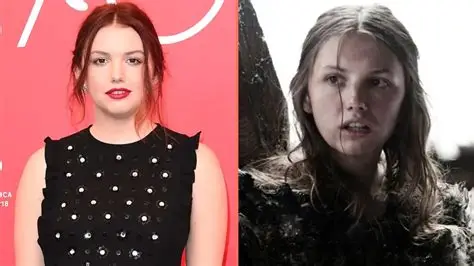
Hannah Murray wellness cult bipolar — three words that sum up one of the most extraordinary personal stories to come out of British television in years. The actress best known for playing Gilly in Game of Thrones and Cassie in Skins has broken her silence in a searingly honest new memoir, revealing how a desperate search for meaning led her into a predatory wellness organisation, a catastrophic psychotic episode, and ultimately a life-changing diagnosis of bipolar disorder.
Her memoir, titled The Make-Believe: A Memoir of Magic and Madness, is a deeply personal account of being lured into a wellness cult at the age of 27, her subsequent mental breakdown, and being sectioned. It is described as a wild ride, a searching attempt for understanding, and a call for radical empathy. fotmob
Here are five of the most shocking truths from Hannah Murray’s story.
1. Hannah Murray Left Acting and Never Looked Back
Before diving into the Hannah Murray wellness cult bipolar story, it is important to understand just how completely she has walked away from her former life. Murray no longer acts. She has retired entirely and moved to a quiet East Anglian town, far removed from the world of cameras, auditions, and red carpets.
She describes feeling a surge of total bodily relief — almost weekly — that she is no longer an actress. The relentless pressures of the industry, from being scrutinised for her weight as a teenager on Skins to negotiating which parts of her body she would contractually agree to show, had taken a severe toll. She was placed on a hamster wheel of chasing the feeling of being “chosen” — and that hunger made her vulnerable.
Reports of Hannah’s experience first emerged in 2024, when early details of the memoir revealed she had been sectioned following her involvement with a wellness cult. Hannah said she was “thrilled” to be working with her publisher, Hutchinson Heinemann. NBC Sports
2. The Wellness Cult That Promised Wisdom and Delivered Disaster
At 27, exhausted by acting and hungry for something real, Murray was drawn into a wellness organisation led by a charismatic figure she calls “Grace” in her memoir. The group promised healing, spiritual growth, and a sense of deep purpose.
Grace talked about bringing “light” into her body and how followers could activate their “spiritual DNA” using “powerful and ancient” tools. Murray found herself choosing to move past the moments that made no sense, glossing over red flags as she became increasingly drawn in. goal
After embarking on a week-long course that isolated her from her loved ones, her mental health deteriorated rapidly. As the boundaries between reality and fantasy began to blur, Hannah describes becoming increasingly drawn into the organisation’s “magical” way of thinking, which claimed to offer health and happiness. NBC Sports
The Hannah Murray wellness cult bipolar connection became tragically clear in the weeks that followed, as the high-control group’s rituals began to push her toward a complete mental health crisis.
3. The Psychotic Episode That Led to Her Sectioning
This is the most harrowing chapter of the Hannah Murray wellness cult bipolar story. Murray experienced a psychotic episode in which she felt like she was “giving birth through her skull.” Other members of the organisation surrounded her and chanted, “Be gone, evil spirit in Hannah.” fotmob
Someone eventually called for help, and authorities arrived to take Murray to the Gordon Hospital in Bloomsbury, London, where she was detained for 28 days under the Mental Health Act. fotmob
The result of that descent was severe. Murray suffered a psychotic break, was sectioned, and was later given a diagnosis of bipolar disorder. What once seemed like a path toward wellness had become a medical emergency. ITV News
In her own words, as quoted in her memoir: “I lost my mind. I lost my self. I got them back. But they are different.”
4. Her Bipolar Diagnosis and the Stigma She Wants to Break
Following her 28-day detention, Murray received a formal diagnosis of bipolar disorder — a condition that affects millions worldwide but remains deeply stigmatised, particularly in its most severe forms.
Murray said: “I hear so much, ‘We need to talk more about mental health.’ What they mean is, like, anxiety and depression. We’re all happy to talk about that. But there’s such a taboo around the idea of people who are sectioned. They are beyond the pale.” fotmob
Her honesty about the Hannah Murray wellness cult bipolar experience is a deliberate act of advocacy. She wants people to understand that psychosis and sectioning are not shameful — they are medical events that can happen to anyone, including successful, intelligent people who are simply looking for connection and meaning.
Her memoir is described as “a lyrical, powerful examination of what it means to be well” and has been praised as an utterly exceptional debut. fotmob
5. Why the Wellness Industry Made Her Vulnerable
Murray’s story is not just a personal one — it is a warning about the broader wellness industry. The global wellness market, now a multi-trillion-dollar sector, operates largely without medical oversight, and for vulnerable individuals seeking refuge from intense professional pressures, charismatic healers can offer a dangerous substitute for psychiatric care. ESPN
In The Make-Believe, Murray explains that while navigating the pressures of Hollywood, she became involved in a cult-like organisation that promised magic, secret knowledge, and increasingly complex rituals. The cult cost her thousands of pounds financially. The cost to her mental health was far greater. NBC Sports
Nine years on, Murray has processed the experience by writing everything down — sifting through texts, notes, recordings, and conversations with friends to try to understand how it all happened. The result is a memoir that is raw, compassionate, and deeply necessary.
For more on mental health and wellness industry risks, visit Mind.org.uk and NHS Mental Health Services. For further celebrity mental health stories, read our related coverage on stars who have spoken about bipolar disorder and the dark side of the wellness industry.
MORE INFO ON THE NEWS INK ENTERTAINMENT.