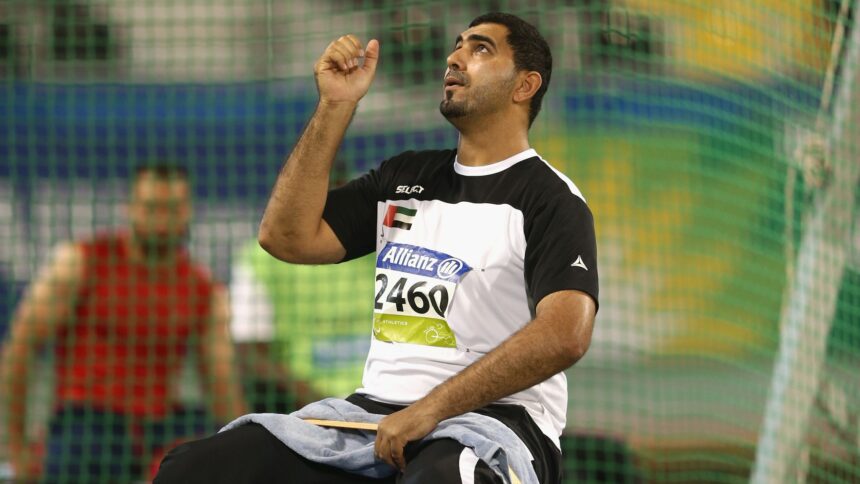
Abdullah Hayayei Death Case: 7 Critical Facts After UK Athletics Guilty Plea
Abdullah Hayayei death case developments have brought renewed attention to athlete safety after UK Athletics pleaded guilty to corporate manslaughter over the death of the United Arab Emirates Paralympian. Hayayei died in London on 11 July 2017 while preparing for the World Para Athletics Championships. He was 36 years old and a father of five.
The guilty plea, entered at the Old Bailey on 20 February 2026, is a major legal development in the Abdullah Hayayei death case. It follows a lengthy investigation into the metal throwing cage that collapsed during a training session at Newham Leisure Centre in east London.
This was not simply an equipment malfunction with no clear explanation. The Crown Prosecution Service said stabilising parts of the discus cage had been missing or unused for years. Expert engineers concluded that the missing base components were essential for resisting wind forces effectively.
The Abdullah Hayayei death case is therefore about more than a guilty plea. It is a painful reminder that safety checks, maintenance records and clearly assigned responsibilities are essential wherever athletes train or compete.
Abdullah Hayayei Death Case: Key Details at a Glance
| Detail | Information |
|---|---|
| Athlete | Abdullah Hayayei |
| Country represented | United Arab Emirates |
| Age at the time of death | 36 |
| Date of incident | 11 July 2017 |
| Location | Newham Leisure Centre, east London |
| Competition | 2017 World Para Athletics Championships |
| UK Athletics plea | Guilty to corporate manslaughter |
| Plea date | 20 February 2026 |
| Individual defendant | Keith Davies, former UK Athletics Head of Sport |
| Next major step | Sentencing expected at a two-day hearing in early June 2026 |
1. Abdullah Hayayei Was Training for a Major International Event
At the centre of the Abdullah Hayayei death case is an athlete who had travelled to London to represent his country on the world stage. Hayayei competed in the F34 classification and was preparing to take part in shot put, discus and javelin events at the World Para Athletics Championships London 2017.
The International Paralympic Committee said emergency services were called shortly after 5pm on the day of the incident. Hayayei was pronounced dead at the scene at 5:20pm.
His death occurred only days before the championships were due to begin. A moment of silence was observed in his honour during the opening ceremony at London Stadium.
2. A Throwing Cage Collapsed During the Training Session
The fatal incident occurred while Hayayei was practising the shot put at Newham Leisure Centre. During strong winds, parts of a portable metal discus cage collapsed and struck his head.
The official findings make the Abdullah Hayayei death case particularly serious. The structure was not described as a properly assembled cage that failed despite all reasonable precautions. Prosecutors said athletes had been permitted to use a five-metre portable, free-standing metal cage that was unstable and missing its stabilising base.
According to the CPS, up to 200 kilograms of connected metal could move and fall in high winds. This created an obvious and serious risk of death.
3. Investigators Found 10 Missing or Unused Connectors
One of the most important facts in the Abdullah Hayayei death case concerns the stabilising base of the discus cage. Investigators found that the metal lattice base plates were missing.
The CPS said these components included 10 ladder-like metal connectors linking the cage bases and posts. They had been missing or unused for around five years, between 2012 and 2017.
Expert engineers concluded that the base was essential because it allowed the structure to resist wind forces effectively. Without the stabilising components, the portable cage was dangerously unstable.
The Metropolitan Police described the case as a meticulous investigation requiring specialist engineering expertise. Officers examined more than 1,500 documents, took around 160 statements and spoke with more than 80 witnesses.
These findings are crucial because they explain why the Abdullah Hayayei death case cannot be reduced to a brief report about a tragic accident. The investigation identified longstanding safety-management failures.
4. UK Athletics Admitted Corporate Manslaughter
UK Athletics had previously denied the corporate manslaughter charge. However, the organisation changed its plea at the Old Bailey on 20 February 2026 and admitted the offence.
The guilty plea is the central legal development in the Abdullah Hayayei death case. UK Athletics owned the discus cage and was responsible for its safety at events, according to prosecutors.
The CPS said the risk could have been prevented by following the equipment instructions, using the stabilising base or preventing athletes from using the cage without it.
Under the Corporate Manslaughter and Corporate Homicide Act 2007, an organisation can be guilty of corporate manslaughter when the way its activities are managed or organised causes a person’s death, amounts to a gross breach of a relevant duty of care and involves a substantial element of senior-management failure.
In practical terms, the Abdullah Hayayei death case is not only about the moment when the cage collapsed. It is also about the systems and decisions that allowed unsafe equipment to remain in use.
5. Keith Davies Also Pleaded Guilty to a Safety Offence
Keith Davies, who served as UK Athletics Head of Sport, also appeared at the Old Bailey. He pleaded guilty to failing to take reasonable care for health and safety under the Health and Safety at Work etc. Act 1974.
Davies had previously denied a charge of gross negligence manslaughter. Prosecutors indicated that they would not pursue a trial and that the remaining charges would be dealt with at the conclusion of sentencing.
The CPS said Davies had been involved in purchasing the cage before the 2012 London Olympics and had led its assembly and use until July 2017.
This part of the Abdullah Hayayei death case matters because major sporting events rely on clear lines of responsibility. Safety procedures are only effective when organisations know who must inspect equipment, confirm correct assembly and stop its use when essential components are missing.
6. The Court Is Expected to Sentence the Defendants in June 2026
As of 31 May 2026, sentencing in the Abdullah Hayayei death case was expected to take place at a two-day hearing in early June. The final penalty should not be predicted before the court reaches its decision.
The Sentencing Council guidance on corporate manslaughter explains that the court considers the seriousness of the offence and the organisation’s financial circumstances when determining a fine.
The guidance also states that a publicity order should ordinarily be imposed in a corporate manslaughter case. Such an order can require an organisation to publish the fact of its conviction, details of the offence, the fine and the terms of any remedial order.
This article should be updated as soon as sentencing is confirmed. Any update should state the fine imposed on UK Athletics, the sentence given to Davies and whether the court made publicity or remedial orders.
7. Hayayei’s Sporting Career Should Remain Central to the Story
The Abdullah Hayayei death case is a legal story, but it is also the story of an international athlete whose life was cut short.
Hayayei made his Paralympic debut at Rio 2016. He finished sixth in the javelin F34 event and seventh in the shot put F34 event. He had also represented the UAE at the 2015 World Championships in Doha, finishing fifth in discus and eighth in shot put.
London 2017 would have been another important milestone in his sporting career. Instead, his teammates and the wider Paralympic community had to mourn his death shortly before competition began.
Remembering his results matters. It prevents coverage of the Abdullah Hayayei death case from treating him only as the subject of court proceedings. He was an elite competitor, a UAE representative and a father of five.
Abdullah Hayayei Death Case Timeline
| Date | Development |
|---|---|
| Before London 2012 | The discus cage was purchased before the London Olympics. |
| 2012–2017 | Prosecutors said 10 stabilising connectors were missing or unused for around five years. |
| 11 July 2017 | Hayayei died after parts of the cage collapsed during training in east London. |
| January 2025 | The CPS authorised charges against UK Athletics and Keith Davies. |
| March 2025 | UK Athletics denied the corporate manslaughter charge. |
| 20 February 2026 | UK Athletics pleaded guilty to corporate manslaughter. Davies admitted a health and safety offence. |
| Early June 2026 | A two-day sentencing hearing was expected. |
Abdullah Hayayei Death Case Raises Wider Questions About Athlete Safety
The Abdullah Hayayei death case has significance beyond athletics. Sporting bodies, venue managers and event organisers have a duty to ensure that training areas are safe before athletes enter them.
Major events are often judged by their schedules, venues and performances. Yet some of the most important work happens away from spectators. Portable structures must be assembled correctly. Equipment must be inspected. Weather conditions must be considered. Maintenance records must be kept. People with the right expertise must be empowered to stop a session when a risk is identified.
The basic lessons are clear:
- Follow the manufacturer’s assembly instructions.
- Confirm that every essential stabilising component is present.
- Inspect temporary and portable structures before use.
- Assess the effect of wind and changing weather conditions.
- Keep clear maintenance and inspection records.
- Assign safety responsibilities to named individuals.
- Stop training immediately when equipment cannot be verified as safe.
Modern sport increasingly uses sophisticated systems and equipment. Our guide to sports technology and athlete performance explores how innovation can improve competition and training. However, technology only benefits athletes when safety and oversight remain non-negotiable.
As audiences follow the major sports tournaments of 2026, the Abdullah Hayayei death case is a reminder that athlete welfare must remain central to event planning.
Why This Guilty Plea Matters
The guilty plea does not erase the loss experienced by Hayayei’s family, friends and teammates. It does, however, establish accountability after years of investigation.
The CPS said the death was avoidable and that the equipment had been left in a seriously unsafe condition. Its findings describe failures to inspect, maintain and properly manage basic safety components.
The Abdullah Hayayei death case should therefore be covered carefully. It deserves more than a short update focused only on courtroom procedure. Readers need to understand who Hayayei was, what investigators found, why UK Athletics admitted the offence and what the court will decide next.
Sentencing will be the next major development. Until then, the most important conclusion remains simple: an athlete preparing to represent his country should have been able to train safely and return home to his family.
For verified sports coverage and future updates on the Abdullah Hayayei death case, follow The News Ink on X or join our WhatsApp channel.