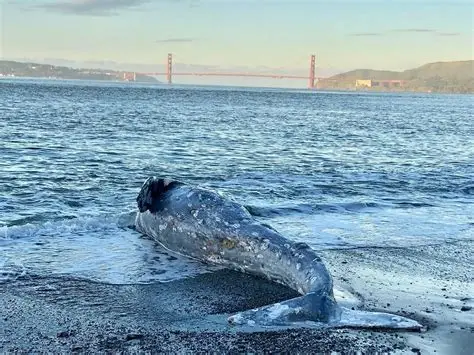
A growing number of gray whales have appeared in San Francisco Bay, drawing attention from both residents and researchers. While their presence fascinates observers, it also raises serious concerns about their health and survival.
Rising Whale Deaths Alarm Scientists
Recent data shows a sharp increase in whale deaths. In 2025 alone, 21 gray whales were found dead in and around the bay. Several more deaths have already been recorded this year.
Experts link these losses to multiple factors, including reduced food supply, environmental changes, and human activity.
Changing Migration Patterns
gray whale populations usually migrate long distances between feeding grounds in the Arctic and breeding areas near Baja California. This journey can span up to 20,000 kilometers annually.
In the past, whales rarely stopped in San Francisco Bay. However, researchers now observe them using the area more frequently, suggesting a shift in migration behavior.
Food Shortages Drive Whales Closer to Shore
Scientists believe declining prey availability in Arctic waters forces whales to search for alternative feeding grounds. Many whales entering the bay appear undernourished, lacking the energy needed to complete their migration.
This condition makes them more vulnerable to environmental stress and human-related threats.
Human Activity Increases Risks
One of the leading causes of death in the bay involves collisions with ships. The busy waters of San Francisco Bay, filled with commercial vessels and ferries, create dangerous conditions for weakened whales.
Studies indicate that a significant portion of whales entering the bay do not survive, with vessel strikes playing a major role.
Climate Change Plays a Key Role
Climate change continues to impact ocean ecosystems. Shifts in temperature and food availability affect whale migration routes and feeding patterns.
As conditions worsen, more whales may alter their traditional paths, increasing their exposure to high-risk environments like coastal bays.
Research Offers Critical Insights
Scientists view the situation as both alarming and informative. The presence of whales in the bay provides a rare opportunity to study how environmental changes affect marine life.
Understanding these patterns can help researchers develop strategies to protect whales and reduce human-related risks.