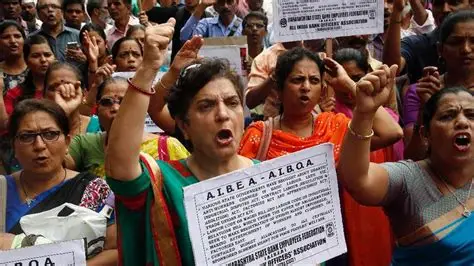
Thousands of factory workers have taken to the streets in parts of India, highlighting growing pressure within the country’s industrial system.
In Noida, a major industrial hub near Delhi, workers blocked roads to demand higher wages and better working conditions. The protests mark a rare and significant display of unrest among factory labourers.
Most protesters are non-unionised contract workers employed in small manufacturing units. These factories produce goods such as auto parts, electronics, and garments. Workers typically earn between 10,000 and 15,000 rupees per month, with wages remaining largely unchanged for years.
Many of these workers are migrants who live in crowded housing on the outskirts of the city. They often struggle to cover basic living expenses.
What began as small and mostly peaceful protests across northern India has now intensified. In some areas, demonstrations turned violent. Police responded in Noida by using tear gas to disperse crowds and detained more than 300 people.
One of the key reasons behind the unrest is wage inequality between states. In neighbouring Haryana, authorities recently approved a 35% increase in minimum wages after similar protests.
Following the escalation, the government of Uttar Pradesh announced a temporary wage increase in certain districts. Officials also promised further steps to address worker concerns.
However, many workers say the increase does not go far enough.
Factory worker Soni Singh shared his experience, explaining that his salary does not match the hours he works. He often works 12 to 14 hours a day but receives overtime pay for only a few extra hours beyond his standard shift. His monthly income remains around 13,000 rupees.
Experts believe the issue goes beyond low wages. They point to inconsistent enforcement of labour laws across regions.
In India, each state sets its own minimum wage levels. These rates vary based on location and skill level, which creates large differences in pay for similar work. Although authorities are supposed to revise wages regularly, delays often occur.
The ongoing protests reflect a deeper struggle for fair wages, improved working conditions, and stronger labour protections across India’s industrial sector.