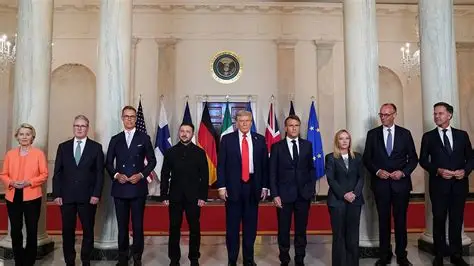
European leaders increasingly find their meetings dominated by unexpected global crises instead of planned policy discussions. During a recent summit in Cyprus, officials intended to focus on the EU’s future budget. Instead, they faced rising geopolitical tensions once again.
The ongoing energy crisis, driven by conflict involving the United States, Israel, and Iran, continues to strain global stability. At the same time, Russia’s prolonged war in Ukraine adds further pressure. Now, a new issue has surfaced—growing tension between Europe and the United States over defence cooperation.
Spain’s Prime Minister, Pedro Sánchez, addressed the situation calmly. He assured reporters that Spain continues to meet all its NATO commitments and remains a reliable ally.
Concerns grew after reports revealed a leaked message from the Pentagon. The communication suggested that the United States might consider punitive measures against allies who did not fully support its stance on Iran. Spain was reportedly mentioned as a possible target, with speculation about suspension from NATO.
However, NATO rules do not allow the expulsion of member states. Any action limiting Spain’s participation would require unanimous agreement among all members, making such a move highly unlikely.
European leaders quickly showed strong support for Spain. Rob Jetten emphasized that Spain remains a full NATO member and highlighted Europe’s continued efforts to strengthen the alliance. German officials echoed this stance, stating there is no reason to question Spain’s position within NATO.
Meanwhile, Italy’s Prime Minister, Giorgia Meloni, expressed concern about the growing divide between Washington and Madrid. Although she previously maintained close ties with Donald Trump, shifting public opinion in Europe has pushed her to adopt a more critical stance.
Meloni recently denied US requests to use Italian military bases for operations against Iran. She also publicly criticized Trump’s remarks about the Pope, calling them unacceptable. In response, Trump openly criticized her leadership, signaling a clear strain in their relationship.
The reported US message also hinted at tensions with the United Kingdom. It suggested a review of the US stance on the Falkland Islands, a sensitive issue also claimed by Argentina.
Relations between Trump and UK Prime Minister Keir Starmer have also become strained. Disagreements began after the UK initially refused US access to military bases for operations against Iran. Although Britain later allowed limited cooperation, Starmer continues to resist deeper involvement, arguing it does not serve the country’s national interest.
As global tensions rise, European leaders appear determined to maintain unity within NATO. Their response to these developments shows a clear effort to protect alliances and avoid further divisions at a time of increasing international uncertainty.