Pressure of England Shirt Reveals England’s Deeper Rugby Crisis
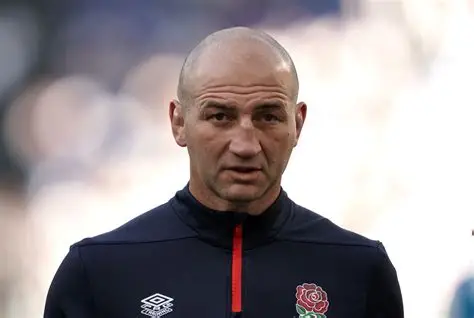
The pressure of England shirt became Steve Borthwick’s explanation for a sudden collapse that transformed England from apparent Six Nations contenders into a team fighting to avoid its worst campaign of the modern era. After defeats by Scotland, Ireland and Italy, the head coach admitted that the expectations attached to representing the country appeared to be affecting decision-making, confidence and attacking freedom.
Borthwick said the pressure of England shirt could sometimes weigh heavily on players. He insisted his coaching staff wanted England to move the ball quickly, play bravely and attack with ambition. Yet the rugby produced during the middle rounds of the 2026 Six Nations looked cautious, error-prone and increasingly dependent on contestable kicking.
The comments were made before England travelled to Paris for their final Championship match. What followed complicated the diagnosis. England produced their most adventurous attacking display of the tournament against France, scored 46 points and came within seconds of denying the hosts the title. Thomas Ramos’ late penalty still gave France a 48-46 victory, leaving England with four defeats from five matches and their worst Six Nations campaign.
Months later, the same debate remains unresolved. England lost 45-21 to South Africa at the start of the Nations Championship, extending their losing run to five Tests, before releasing some of the tension with an 11-try, 73-8 victory over Fiji. The pressure of England shirt may be real, but confidence alone cannot explain why the team repeatedly changes identity when matches become difficult.
Pressure of England Shirt Debate Began After a Dramatic Reversal
England entered the 2026 Six Nations carrying genuine momentum. Borthwick’s side had won 11 successive Tests, including a landmark victory over New Zealand, before opening the Championship with a dominant 48-7 win over Wales. That result extended the winning sequence to 12 and strengthened expectations that England could challenge for their first Six Nations title since 2020.
The confidence disappeared quickly.
Scotland won 31-20 at Murrayfield. Ireland then inflicted a record 42-21 home defeat at Twickenham. England travelled to Rome needing a response but became the first England side to lose a Test to Italy, surrendering an 18-10 advantage in a 23-18 defeat.
| Match | Result | Main concern |
|---|---|---|
| England vs Wales | England won 48-7 | Strong opening raised title expectations |
| Scotland vs England | Scotland won 31-20 | England struggled to adapt under pressure |
| England vs Ireland | Ireland won 42-21 | Record home defeat and defensive breakdown |
| Italy vs England | Italy won 23-18 | England lost a late lead against 14 players |
| France vs England | France won 48-46 | Improved attack undermined by discipline |
| South Africa vs England | South Africa won 45-21 | Physical and defensive limitations returned |
| Fiji vs England | England won 73-8 | Attacking freedom returned against weaker opposition |
The speed of that reversal explains why the pressure of England shirt argument gained attention. Players who had appeared decisive during the winning sequence began hesitating, forcing passes, losing attacking shape and making poor decisions close to the opposition line.
However, international pressure does not suddenly appear only after a defeat. The same players wore the same jersey while beating New Zealand and building the winning run. Something else had changed.
Borthwick’s Explanation Was Honest but Incomplete
Borthwick’s central point was reasonable. Representing England brings intense scrutiny. Players are judged by supporters, television analysts, former internationals and a national media that can move rapidly from optimism to crisis.
The pressure of England shirt can affect attention. A player worried about making an error may choose the safest pass rather than attack space. A scrum-half may kick automatically instead of challenging the defence. A team protecting a narrow lead may stop doing the things that created the lead.
Borthwick said his staff had worked to reduce that burden and encourage fast, brave rugby. He maintained that England’s conservative appearance did not reflect his instructions.
That defence creates another question. When a coach repeatedly tells players to attack but the team repeatedly retreats into predictable kicking, the issue may not be a lack of instruction. It may be that the tactical structure does not give players enough certainty to make ambitious decisions.
Players rarely become brave simply because a coach uses the word. They become brave when roles are clear, support runners are predictable and mistakes do not threaten immediate removal from the team.
The pressure of England shirt becomes heavier when players are unsure whether the safest decision or the most ambitious decision will satisfy the coaches.
Pressure of England Shirt or Pressure Created by the Game Plan?
The central debate is whether England’s hesitation came from the national jersey or from the tactical system surrounding it.
During the losing run, England frequently returned to a territorial, kick-first approach. Reuters reported before the France match that England had kicked from hand more often than any other side, while repeatedly failing to regain possession effectively after the opening win over Wales.
Kicking is not automatically negative. France, Ireland and South Africa all use tactical kicks. The difference is what happens around them. Effective kicking requires an organised chase, pressure on the receiver and a clear plan for the next phase.
England’s kicking often appeared to transfer possession without creating enough pressure. When the ball was retained, attacks could become slow and narrow. Opposition defences were given time to reset, leaving England dependent on individual carries or penalties.
The pressure of England shirt explanation risks confusing the symptom with the cause. Players may appear fearful because they are operating within a system that punishes risk but does not consistently reward control.
The News Ink’s earlier analysis of England’s rugby struggles examined how repeated tactical uncertainty increased the pressure on Borthwick before the Italy defeat.
Attacking Data Showed Opportunity Without Ruthlessness
England were not always failing to reach promising positions. They regularly entered the opposition 22 but struggled to convert those opportunities into points.
An Opta analysis after the Italy match found that England had conceded 19 turnovers in the opposition 22, with only France recording more. Fourteen of England’s red-zone turnovers came through handling errors, more than any other side at that stage.
After the Ireland defeat, England had made 12 visits to the opposition 22 but averaged only 1.7 points from each entry. Ireland made nine visits and averaged 4.3 points.
Those figures matter because they challenge the idea that England simply needed more confidence. The team was getting into scoring areas. The failure came in execution, decision-making and support play.
The pressure of England shirt may help explain why passes were dropped or chances forced. It does not explain why attacking patterns repeatedly left players isolated or why England appeared unable to change their approach when the same problems returned.
Good attacking systems reduce psychological pressure. Players know where teammates will be, which defender is being targeted and what option follows if the first play is stopped. England too often looked as though every player had to solve the defence individually.
Pressure of England Shirt Was Most Visible in Rome
The defeat by Italy offered the clearest example of a team becoming trapped by its own anxiety.
England led 18-10 with roughly 20 minutes remaining. Italy had been reduced to 14 players, and Borthwick’s side appeared positioned to close the match. Instead, England lost rhythm, conceded control and allowed Italy to produce a historic comeback.
The 23-18 result was Italy’s first victory over England in 33 meetings. It was not achieved by overwhelming England for 80 minutes. It came because the visitors were unable to manage a favourable situation.
The News Ink’s preview of Italy’s historic opportunity identified the danger of treating the fixture as an automatic recovery match.
The pressure of England shirt was visible in the final quarter. Passes became slower, kicking decisions became less convincing and players appeared focused on avoiding defeat rather than completing the victory.
This is where Danny Care’s confidence argument becomes relevant. The former England scrum-half said that confident players see opportunities more clearly. When confidence disappears, the same space can look dangerous.
Care also argued that England’s scrum-halves needed to threaten defences by running more often. A scrum-half who never challenges the defensive line allows defenders to move outward early, making the attack easier to predict.
Danny Care’s Point Was About Freedom, Not Recklessness
Care was not demanding that England abandon structure or run from every position. His criticism was that decision-makers must remain genuine attacking threats.
A scrum-half who carries from the base of a ruck can hold defenders close. Even one or two short runs can create space for the fly-half and midfield. Without that threat, defenders can drift toward the next receiver.
The pressure of England shirt can discourage those decisions because a failed run is more visible than a safe pass. Yet avoiding risk completely creates a different danger: the attack becomes easy to read.
England’s most successful periods under Borthwick have generally come when players combine tactical discipline with instinct. The winning run through 2025 included more offloading, faster support and greater willingness to attack transition opportunities.
Those qualities disappeared during the middle of the Six Nations. Care’s argument therefore supported Borthwick’s desire for brave rugby while questioning whether the system genuinely permitted it.
The same tension appears across elite sport. The News Ink’s report on Mikel Arteta and pressure explored how coaches must demand courage without creating a fear of mistakes.
France Showed What England Could Become
The match in Paris produced the strongest evidence for Borthwick’s claim that England still possessed an attacking identity.
England scored 46 points at the Stade de France. They moved the ball with pace, created tries through multiple phases and repeatedly exposed the eventual champions. France required a last-minute Ramos penalty to win 48-46 and secure the title.
Borthwick described the performance as a blueprint. Captain Maro Itoje said it demonstrated how England wanted to play in the future.
The pressure of England shirt seemed lighter because England entered the match with little left to protect. Their title hopes had gone, expectations were low and France were expected to win comfortably. England could attack as outsiders rather than defend a reputation as favourites.
That freedom helped produce their best attacking rugby of the tournament.
However, the performance also revealed familiar problems. Discipline again proved costly, and England could not manage the closing moments. The attack improved dramatically, but the result remained a defeat.
The pressure of England shirt may therefore operate differently depending on expectations. England appeared freer when almost nobody expected them to win than when they were trying to protect a lead against Italy.
The task for Borthwick is to create that freedom before a crisis, not only after one.
A Worst-Ever Six Nations Could Not Be Reframed as Progress
The Paris performance gave England encouragement, but it could not erase the table.
England finished fifth after losing four matches in one Six Nations campaign for the first time. Their only victory came against Wales, and the four defeats included Italy’s first win in the fixture and Ireland’s record success at Twickenham.
The pressure of England shirt argument should not become a shield against accountability. International coaches are responsible for helping players manage expectations. If the jersey is repeatedly affecting performance, the coaching team must change preparation, communication or selection.
Borthwick cannot remove public attention. He can simplify roles. He can create clearer attacking principles. He can reward initiative. He can maintain selection consistency and ensure players understand how mistakes will be handled.
The News Ink’s coverage of England dressing-room culture shows that confidence is often linked to the environment leaders create, not simply the personality of individual players.
Pressure of England Shirt Returned Against South Africa
The Nations Championship offered an opportunity to test whether the Paris performance had truly established a new direction.
Instead, England lost 45-21 to South Africa at Ellis Park. The defeat extended their losing sequence to five Tests and again exposed problems with physicality, defence and maintaining attacking momentum against an elite opponent.
The pressure of England shirt was no longer connected only to the Six Nations. It followed the team into the summer because the underlying questions remained.
South Africa provided a much harder physical examination than Fiji. England struggled to control collisions and defensive transitions, while the Springboks’ power repeatedly forced them onto the back foot.
A team playing behind retreating carries and slow possession will almost always look less confident. That does not mean the players lack courage. It means the tactical conditions make ambitious rugby difficult.
This distinction is important. Psychology and performance cannot always be separated. Physical dominance creates confidence. Clear possession creates confidence. A strong set piece creates confidence. Repeatedly losing those battles makes the jersey feel heavier.
Fiji Victory Showed What Happens When the Shackles Come Off
England finally ended the losing run with a dominant 73-8 victory over Fiji in Liverpool.
Borthwick’s side scored 11 tries. Henry Pollock produced a second-half hat-trick, Fin Smith controlled the match at fly-half and several young players brought energy to an attack that looked far less cautious.
England captain Jamie George described the performance as having many different attacking options. Smith acknowledged that the previous period had been difficult and said England had released the shackles.
The pressure of England shirt appeared less visible because England gained early control and continued attacking rather than protecting the score.
Fiji’s red card before half-time made the contest easier, and one overwhelming victory against 14 players cannot prove that England’s deeper problems are solved. But the match demonstrated the value of speed, support and variety.
Pollock’s performance also created a selection debate before the next match against Argentina. Former internationals including Care and Chris Ashton argued that his pace and confidence deserved a starting place.
Young players can sometimes reduce the pressure of England shirt because they have not yet absorbed years of caution or criticism. Pollock plays with visible enjoyment. The challenge is preserving that quality rather than coaching it out of him.
Borthwick Must Decide What England’s Identity Is
England’s tactical identity has changed repeatedly during Borthwick’s tenure.
At the 2023 Rugby World Cup, a pragmatic kicking and defensive game helped England reach the semi-finals. That approach was logical for a coach appointed shortly before the tournament.
Since then, Borthwick has spoken increasingly about speed, bravery and attacking ambition. Yet when pressure increases, England often return to the territorial model that brought short-term success in 2023.
The pressure of England shirt may be intensified by this conflict. Players are told to attack but know that the coach’s strongest instinct is control. They are encouraged to play quickly but selected within structures designed to minimise errors.
Both styles can work. The problem comes when players are uncertain which one applies during the decisive moments of a match.
France have built an identifiable combination of power, counter-attack and individual freedom. Ireland’s structure gives players multiple passing options. South Africa’s physical and territorial approach is clear to everyone in the team.
England often appear caught between identities.
The pressure of England shirt will remain difficult to manage until the tactical message becomes consistent enough that players can respond instinctively.
Confidence Must Be Built Through Selection and Clarity
Confidence is not a motivational speech delivered before kick-off. It develops through repeated evidence.
A player becomes confident when he knows his role. A combination becomes confident when it is given time together. A team becomes confident when the same decisions produce positive outcomes in training and matches.
Frequent selection changes can undermine that process. England made nine changes before facing Italy after the Ireland defeat, then largely retained that side for France.
Some changes were understandable, but major alterations can make a team more cautious because relationships are unfamiliar.
The pressure of England shirt becomes harder to carry when players feel they may lose their place after one poor performance. That fear can reduce experimentation, offloading and attacking instinct.
Borthwick needs competition for places, but he also needs continuity in the spine of the team: scrum-half, fly-half, midfield, full-back and leadership group.
The 2027 World Cup Clock Is Moving
England’s ultimate target is the 2027 Rugby World Cup in Australia. The team now has limited Test opportunities remaining before that tournament, making every match more important for selection and tactical development.
The Nations Championship fixtures against South Africa, Fiji and Argentina were designed to test England against contrasting opponents. The South Africa defeat showed the physical gap. The Fiji victory showed England’s attacking potential. Argentina provides a more balanced examination of whether the team can combine those qualities.
The pressure of England shirt will only increase as the World Cup approaches. Borthwick cannot expect the national expectation to disappear.
He must instead build a system strong enough to function inside it.
That means reducing unnecessary complexity, improving discipline, increasing red-zone efficiency and allowing creative players to make decisions without fearing that one mistake will end their opportunity.
The coaching question is no longer whether pressure exists. It is whether England are being prepared to use it productively.
The Bottom Line
The pressure of England shirt is a genuine part of international rugby. Steve Borthwick was right to acknowledge that players can become hesitant when expectations rise and results begin to deteriorate.
But the pressure of England shirt cannot fully explain England’s historic defeat by Italy, record home loss to Ireland, repeated red-zone errors or return to predictable kicking. Those problems also reflect tactical uncertainty, discipline, selection and a lack of consistency in how England want to play.
The 48-46 loss to France showed that the team can attack with freedom against elite opposition. The 45-21 defeat by South Africa showed that the improvement was not yet secure. The 73-8 win over Fiji demonstrated what England can produce when possession is fast and players act without hesitation.
Borthwick’s challenge is to make that freedom repeatable.
The pressure of England shirt will not become lighter before the 2027 World Cup. Public expectations will rise, opponents will become stronger and every defeat will receive greater scrutiny.
England therefore need more than confidence. They need an identity players understand under stress, a tactical structure that rewards initiative and a coaching environment that allows bravery to survive mistakes.
Until those foundations are established, the pressure of England shirt will continue to look like both an explanation and an excuse.
For more Six Nations and international rugby analysis, follow The News Ink on X or read our coverage of England’s coaching pressure and Scotland’s Six Nations resurgence.