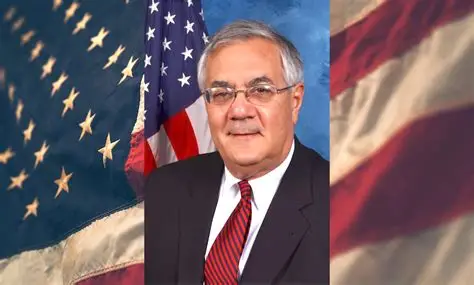
The Barney Frank death 2026 news arrived on Tuesday night, bringing to a close one of the most consequential careers in modern American political history. The former Democratic congressman from Massachusetts — one of the first openly gay members of Congress, a tireless advocate for LGBT rights, and the principal architect of the sweeping financial reforms that reshaped American banking after the 2008 financial crisis — died aged 86. Frank had been in hospice care at his home in Maine since April, and those close to him had known the end was near.
Frank served in the House of Representatives for 32 years, from 1981 to 2013, representing southern Massachusetts through some of the most turbulent and transformative periods in recent American history. He leaves behind a legislative legacy that includes the Dodd-Frank Wall Street Reform and Consumer Protection Act — one of the most significant pieces of financial legislation in American history — and a personal legacy as a trailblazer for LGBT rights whose visibility and courage changed what was possible for generations of Americans who came after him.
“He was, above all else, a wonderful brother. I was lucky to be his sister,” Frank’s sister Doris Breay said in a statement.
Barney Frank Death 2026: A Life Defined by Courage and Conviction
The Barney Frank death 2026 tributes that began flowing immediately on Tuesday night centred on a consistent theme — that Frank was a man who said what he thought, fought for what he believed, and never confused personal comfort with political principle.
His former campaign manager Jim Segel captured both the personal and the political in a single statement. “He certainly left a mark, and he was a leader on civil rights, on gay rights, on leading other marginalized communities, and then he helped the country get through the 2008 financial crisis, which was the most significant recession, depression, almost since 1930.”
Segel also spoke to Frank’s state of mind in his final weeks. “He notified everybody that he was in hospice, so it was just a matter of time. He was certainly at peace with himself.” That peace — a man who had spent decades fighting for others finally at rest with his own place in history — is a portrait of someone who knew what his life had meant and was at ease with that knowledge.
Frank himself spoke from hospice in interviews conducted over his final month — characteristically refusing to retreat into comfortable silence even as his health failed. His assessment of the current political moment was vintage Barney Frank — direct, honest, and refusing false comfort.
“I’m filled with disgust at the current state, but optimism that it’s going to get better,” he said in one of his final interviews.
Key aspects of Barney Frank’s character and legacy:
- Renowned for his directness — he said what he thought without diplomatic softening
- Served 32 years in the House representing southern Massachusetts
- One of the first openly gay members of Congress — a trailblazer whose visibility changed political norms
- The first member of Congress to marry a same-sex partner
- Principal architect of the Dodd-Frank Act — one of the most significant financial reforms in US history
- A vocal and consistent champion for LGBT rights throughout his congressional career
- Remained engaged and outspoken through his final weeks in hospice
- Described as being at peace with himself and his legacy by those closest to him
Barney Frank Death 2026: LGBT Pioneer and Trailblazer
The Barney Frank death 2026 moment marks the loss of one of the most significant figures in the history of American LGBT rights — a man whose very presence in Congress, and his refusal to hide who he was, changed the political and cultural landscape for LGBT Americans across four decades.
Frank came out as gay in 1987 — a decision made while serving as a member of Congress that required courage of an order that is difficult to fully appreciate from the distance of 2026. In 1987, being openly gay in public life carried enormous personal and professional risk. The AIDS crisis was devastating communities, public attitudes toward homosexuality remained broadly hostile in many parts of the country, and the political consequences of coming out were entirely unpredictable.
Frank came out anyway. He did so not with fanfare or calculation, but with the directness that defined everything he did. And in doing so, he gave visibility and legitimacy to LGBT Americans in the most powerful legislative body in the world.
Barney Frank’s LGBT rights legacy:
- One of the first openly gay members of Congress — came out publicly in 1987 while serving
- The first member of Congress to enter a same-sex marriage — married Jim Ready in 2012
- Vocal advocate for ending the military’s “Don’t Ask, Don’t Tell” policy that prevented gay and lesbian service members from serving openly
- Fought for — though ultimately failed to pass — legislation that would have banned workplace discrimination against LGBT workers
- His visibility as an openly gay congressman changed public attitudes over decades of service
- His famous 2011 quote captures his philosophy: “Prejudice is based on ignorance. And the best way to counterbalance it is with a living example, with reality.”
- His same-sex marriage in 2012 — while still serving in Congress — was itself a historic milestone
That 2011 quote to the Boston Globe deserves to be read slowly and carefully. Frank did not argue for LGBT rights primarily through legal or philosophical frameworks. He argued through presence — through the simple but revolutionary act of being a living example that contradicted the prejudices people held. His thirty-two years in Congress were themselves the argument.
Barney Frank Death 2026: The Dodd-Frank Legacy
The Barney Frank death 2026 also marks the passing of one of the most consequential financial legislators in modern American history. The Dodd-Frank Wall Street Reform and Consumer Protection Act — named for Frank and fellow Democrat Senator Chris Dodd of Connecticut — represents Frank’s most enduring legislative achievement and one of the most significant overhauls of American banking regulation since the New Deal era.
The legislation emerged from the catastrophic 2008 financial crisis — the worst economic shock the United States had experienced since the Great Depression of the 1930s. The subprime mortgage crisis, the collapse of major financial institutions, and the global economic recession that followed exposed catastrophic failures in the regulatory frameworks governing American banking and financial markets.
Frank — as chairman of the House Financial Services Committee — became the central figure in the legislative response. He shepherded the Dodd-Frank Act through a deeply divided Congress, creating new regulatory bodies, imposing stricter restrictions on banks, establishing the Consumer Financial Protection Bureau, and attempting to ensure that the conditions that allowed the 2008 crisis to develop could not recur.
The Dodd-Frank Act — key provisions and context:
- Signed into law by President Barack Obama in 2010
- Created new regulatory bodies to oversee financial markets and institutions
- Tightened restrictions on banks — particularly those deemed “too big to fail”
- Established the Consumer Financial Protection Bureau — a new agency protecting consumers from predatory financial practices
- Named for Frank and Senator Chris Dodd of Connecticut — reflecting their joint authorship
- Represented the most significant overhaul of banking regulation since the New Deal
- Addressed the subprime mortgage crisis failures that triggered the 2008 Great Recession
- Donald Trump partially preserved while also loosening some restrictions in 2018 — described as the biggest rollback of bank rules that decade
Jim Segel’s assessment that Frank “helped the country get through the 2008 financial crisis, which was the most significant recession, depression, almost since 1930” is not hyperbole. The Dodd-Frank Act was the legislative architecture through which America attempted to prevent a repeat of the conditions that caused the worst economic crisis in nearly a century.
Barney Frank Death 2026: Don’t Ask, Don’t Tell and the Fight for Military Equality
The Barney Frank death 2026 tributes also recalled his sustained and ultimately successful advocacy for ending the military’s “Don’t Ask, Don’t Tell” policy — the Clinton-era compromise that allowed gay and lesbian service members to serve in the US military only if they concealed their sexual orientation.
Frank was a consistent and vocal critic of the policy throughout its existence — arguing that it was both discriminatory and damaging to military readiness by forcing the dismissal of qualified service members solely on the basis of their sexual orientation. His advocacy was part of a broader legislative and cultural campaign that ultimately succeeded when President Obama signed the Don’t Ask, Don’t Tell Repeal Act in December 2010.
Frank’s military equality advocacy:
- Consistent vocal opponent of Don’t Ask, Don’t Tell throughout its existence
- Argued the policy was discriminatory and harmful to military effectiveness
- His advocacy formed part of the broader campaign for repeal
- The policy was repealed in December 2010 — signed by President Obama
- Frank also fought for — though failed to pass — legislation banning workplace discrimination against LGBT workers
- His failures as well as his successes reflect the genuine difficulty of legislative change on civil rights issues
The legislation banning workplace discrimination against LGBT workers — which Frank championed but could not pass during his congressional career — was a cause he kept fighting for until the end of his service. Its ultimate partial achievement through Supreme Court interpretation rather than legislation reflects how long some of Frank’s fights took to reach resolution.
Barney Frank Death 2026: The Man Behind the Legislation
The Barney Frank death 2026 tributes paint a picture of a man whose public abrasiveness and political sharpness coexisted with deep personal warmth and genuine care for the people around him. Frank was famously direct — some said combative — in his public dealings. He did not suffer fools, he did not pretend to agree when he disagreed, and he did not soften his assessments to make audiences comfortable.
But those who knew him personally describe a different dimension alongside the public persona. His sister Doris Breay’s tribute — “He was, above all else, a wonderful brother. I was lucky to be his sister” — captures something essential about the private man behind the public figure.
Frank’s willingness to give interviews from hospice — commenting on politics, his life’s work, and the current state of American democracy even as his health failed — reflects a man who remained engaged with the world and committed to his convictions until the very end. His final assessment — disgust at the current state, but optimism that it would get better — was quintessentially Frank. Honest about the bad. Refusing to abandon hope about the good.
Final Word on Barney Frank Death 2026
The Barney Frank death 2026 closes a chapter in American political history that will not be forgotten. Barney Frank served for 32 years. He came out as gay when doing so was an act of genuine courage. He married his same-sex partner while still in Congress. He reformed Wall Street after the worst financial crisis in a generation. He fought for the rights of LGBT Americans, military service members, and workers with consistency and conviction across four decades.
He was not always comfortable to be around. He was not always diplomatic. He was frequently combative, often blunt, and permanently unwilling to pretend that things were better than they were.
He was also — by any serious measure — one of the most consequential members of Congress of his generation. And he died at peace with himself in Maine, knowing that the living example he had been for thirty-two years had changed things — for LGBT Americans, for financial regulation, for the simple and radical idea that prejudice is based on ignorance, and reality is its best counterweight.
Rest in peace, Barney Frank. You left your mark.