Artemis 2 Moon Impact Flashes Give Scientists New Insight Into Lunar Hazards
The historic Artemis 2 mission delivered more than breathtaking views of the moon. During the crew’s flyby around the lunar far side, astronauts witnessed several rare Artemis 2 moon impact flashes, giving scientists valuable new information about meteoroid activity and future lunar exploration risks.
The flashes appeared as quick bursts of light across the moon’s surface when small meteoroids slammed into the lunar terrain at extremely high speeds. Scientists believe the observations could improve understanding of lunar impacts, help protect future astronauts, and support NASA’s long-term plans for a permanent moon base.
The mission marked the first time humans had traveled around the moon since the Apollo era, making the discoveries even more significant for space researchers worldwide.
Artemis 2 Astronauts Witness Lunar Impact Flashes
As Artemis 2 astronauts traveled around the moon’s far side last month, they carefully watched the lunar surface for unusual activity.
Their attention paid off.
Crew members reported seeing multiple bright flashes created by meteoroids striking the moon. These sudden bursts of light happen when fast-moving space rocks collide with the lunar surface and instantly vaporize upon impact.
Scientists describe the events as lunar impact flashes.
Unlike Earth, the moon has no thick atmosphere to burn up incoming meteoroids before they hit the ground. As a result, even small space rocks can crash directly into the lunar surface and produce visible explosions.
Why Scientists Are Excited About the Discovery
Researchers say these observations are especially valuable because humans spotted the flashes directly with their eyes.
Capturing lunar impacts using cameras remains extremely difficult.
Most impact flashes happen very quickly and can appear faint depending on the angle, lighting conditions, and camera sensitivity. Human observers aboard Artemis 2 provided something technology still struggles to deliver consistently.
Why Human Observation Matters
Astronaut observations can help scientists:
- Identify precise flash locations
- Estimate impact intensity
- Study lunar surface reactions
- Improve impact monitoring systems
- Support future moon habitat safety planning
The astronauts reportedly saw the flashes while flying over the moon’s far side, an area that remains difficult to observe from Earth.
Artemis 2 Marks a Historic Return to the Moon
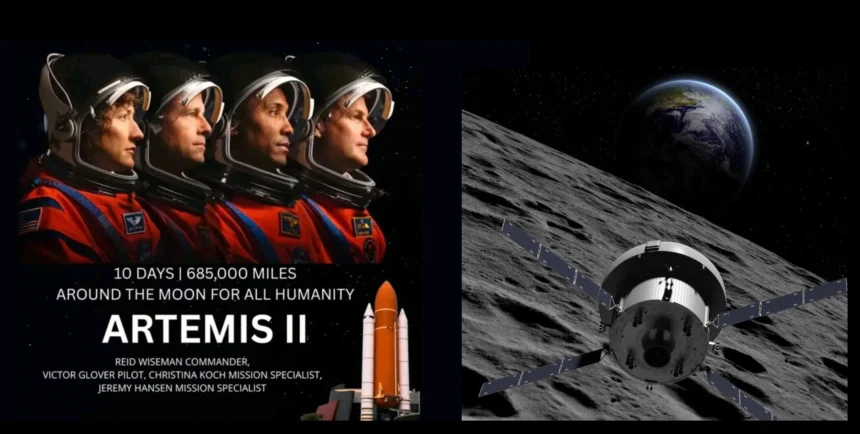
The Artemis 2 mission launched from Florida on April 1 and completed its lunar flyby several days later.
The journey became the first crewed moon mission since Apollo 17 in 1972.
The mission’s four astronauts traveled around the moon aboard the Orion spacecraft, capturing stunning images while testing systems needed for future lunar landings.
Historic Milestones of Artemis 2
The mission achieved several major goals:
- First crewed lunar mission in more than 50 years
- First humans to view parts of the moon’s far side in decades
- Successful deep-space crew operations
- Detailed lunar observation campaign
- Valuable scientific data collection
NASA views Artemis 2 as a critical step toward returning astronauts to the lunar surface later this decade.
Citizen Scientists Also Joined the Search
While Artemis 2 astronauts monitored the moon from space, citizen scientists on Earth also searched for impact flashes.
Their observations formed part of a new public research initiative focused on lunar meteoroid impacts.
The project encourages amateur skywatchers and astronomy enthusiasts to help scientists detect flashes visible from Earth-based telescopes.
Goals of the Impact Flash Program
Researchers hope to:
- Track impact frequency
- Measure crater formation
- Analyze shockwave behavior
- Study lunar surface activity
- Improve future lunar safety systems
Scientists say combining astronaut observations with Earth-based monitoring creates a more complete picture of lunar impacts.
Why Lunar Impacts Matter for Future Moon Missions
Understanding meteoroid activity is essential for long-term lunar exploration.
Future astronauts living or working on the moon could face risks from high-speed space debris. Even small meteoroids can damage equipment, spacecraft, or habitats because they travel at enormous velocities.
The Artemis program aims to establish a sustained human presence near the moon’s south pole, making safety research increasingly important.
Potential Risks of Lunar Meteoroid Impacts
Lunar impacts could affect:
- Space habitats
- Communication systems
- Power equipment
- Lunar vehicles
- Astronaut safety
Scientists use impact flash data to estimate how frequently dangerous collisions occur.
Moon Base Planning Depends on Impact Research
NASA’s long-term lunar plans include the development of Artemis Base Camp near the moon’s south pole.
Researchers believe the region offers several advantages, including lower impact risks compared to equatorial areas.
Still, scientists must carefully study the lunar environment before humans can safely live there for extended periods.
Challenges of Building a Moon Base
Future moon settlements must withstand:
- Extreme temperatures
- Radiation exposure
- Lunar dust
- Seismic activity
- Meteoroid strikes
Engineers continue designing shielding systems capable of protecting astronauts from these harsh conditions.
Lunar Impact Flashes Reveal More Than Explosions
Scientists say lunar flashes provide important clues about the moon itself.
Each impact sends shockwaves through the lunar surface, helping researchers study the moon’s interior structure and geological composition.
The data may also help scientists better understand how craters form across rocky worlds throughout the solar system.
What Researchers Learn From Lunar Impacts
Impact observations help scientists study:
- Crater formation
- Surface composition
- Moonquake activity
- Impact frequencies
- Meteoroid origins
Researchers can also compare lunar impacts with similar events on Mars, Mercury, and other planetary bodies.
The Far Side of the Moon Remains Mysterious
The Artemis 2 mission gave astronauts rare views of the moon’s far side, which remains largely hidden from Earth.
Unlike the familiar near side visible from Earth, the far side contains rugged terrain, deep craters, and fewer dark volcanic plains.
Scientists continue studying this region because it preserves ancient geological features that could reveal more about the moon’s history.
Key Features of the Far Side
The lunar far side contains:
- Massive impact basins
- Dense crater fields
- Ancient surface formations
- Unique geological structures
Human observations during Artemis 2 provided fresh perspectives on these remote regions.
Scientists Continue Monitoring Elusive Lunar Flashes
Researchers emphasize that lunar impact flashes remain challenging to detect consistently.
Many flashes last only fractions of a second. Weather conditions, telescope limitations, and viewing angles can all reduce visibility from Earth.
Human observations from orbit provide a rare opportunity to capture these events more effectively.
Scientists hope future missions will include more advanced impact monitoring tools capable of automatically recording these flashes in greater detail.
Artemis Program Builds Momentum
The success of Artemis 2 continues building excitement for future missions.
NASA plans to use lessons learned from the mission to prepare for Artemis 3, which aims to return astronauts to the lunar surface for the first time in decades.
The broader Artemis program seeks to establish sustainable lunar exploration while preparing humans for eventual missions to Mars.
Artemis Program Goals
NASA aims to:
- Return humans to the moon
- Build long-term lunar infrastructure
- Advance deep-space exploration
- Prepare for Mars missions
- Develop new space technologies
The impact flash observations add another layer of scientific value to the program’s achievements.
Key Takeaways From the Artemis 2 Discovery
Important Highlights
- Artemis 2 astronauts observed multiple lunar impact flashes
- The flashes likely occurred on the moon’s far side
- Human observation provided valuable scientific data
- Researchers aim to improve lunar hazard monitoring
- Findings support future moon base planning
Why It Matters
The observations could help scientists:
- Better understand meteoroid risks
- Improve astronaut safety systems
- Study lunar geology
- Plan sustainable moon missions
- Enhance future impact detection technology
A New Era of Lunar Exploration Begins
The Artemis 2 mission has already become one of the most important space exploration achievements in recent years.
Beyond the historic lunar flyby, the astronauts’ observations of rare moon impact flashes offer scientists new opportunities to study the dangers and dynamics of the lunar environment.
As NASA pushes forward with plans for permanent lunar exploration, every new discovery helps shape humanity’s future beyond Earth.