



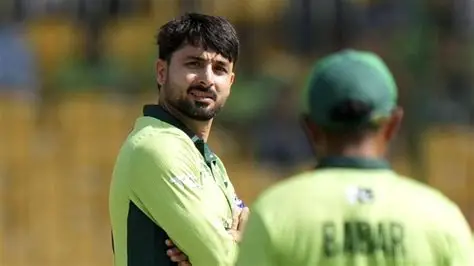
Abrar Ahmed Signing: How a £190,000 Deal Challenged Pakistan Player Fears in The Hundred
The Abrar Ahmed signing by SunRisers Leeds became one of the most closely watched moments of The Hundred’s new ownership era. On 12 March 2026, the Pakistan leg-spinner was bought for £190,000 by a team owned by Sun TV Network, the group behind Indian Premier League side Sunrisers Hyderabad. The bid mattered for more than cricket: it came after reports that IPL-linked Hundred teams might avoid Pakistan players because of the political and sporting divide between India and Pakistan.
Five months later, the story can be judged with more perspective. Abrar did not merely appear on an auction list. He joined SunRisers Leeds, played during the 2026 competition and was part of a squad that reached the men’s Eliminator before losing to eventual champions Manchester Super Giants. That makes the Abrar Ahmed signing important both as a recruitment decision and as a test of how The Hundred’s new global ownership model would operate in practice.
The original concern was never simply whether one Pakistani player would receive a contract. It was whether ownership links to the IPL could narrow opportunities for Pakistan cricketers in a competition governed by the England and Wales Cricket Board. The Abrar Ahmed signing did not settle every long-term question, but it provided a concrete counterexample to fears of an automatic nationality-based exclusion.
Why the Abrar Ahmed signing attracted so much attention
The issue had been building before the auction. In February 2026, BBC Sport reported concerns over Pakistan-player selection involving four Hundred teams with owners linked to IPL franchises: Manchester Super Giants, MI London, Southern Brave and SunRisers Leeds.
That possibility carried obvious significance. Pakistan players have not appeared in the IPL since 2009, and IPL ownership groups now operate franchises in several overseas competitions. If the same informal selection pattern spread into English cricket, Pakistan players could find parts of the global franchise market closed to them even when the competition itself had no nationality restriction.
The ECB and all eight Hundred franchises responded with a joint statement. They said selection should be based on “cricketing performance, availability, and the needs of each team” and made clear that players must not be excluded because of nationality. The complete joint player-selection statement set out the competition’s position before the auction.
Against that background, the Abrar Ahmed signing became a highly visible test case. SunRisers Leeds was not merely one of the four teams mentioned in the earlier reports; it was the only Hundred team bought outright by its new strategic investor. The ECB’s completed Hundred partnership details confirmed that Sun TV Network Limited held 100% of the former Northern Superchargers franchise, which was rebranded as SunRisers Leeds for 2026.
The £190,000 bidding battle
Abrar entered the 2026 men’s auction with a reserve price of £75,000. The final price rose far beyond that level as SunRisers Leeds and Trent Rockets competed for him, with SunRisers eventually securing the spinner for £190,000.
That meant the Abrar Ahmed signing cost roughly two and a half times his reserve price. It also showed that SunRisers were willing to use a substantial part of their auction budget on a Pakistan international rather than treating him as a low-cost squad option.
SunRisers head coach Daniel Vettori explained after the auction that the franchise had wanted a high-quality spinner. Adil Rashid had been an early priority, but once Southern Brave secured the England leg-spinner, SunRisers moved through their overseas spin options. Abrar’s variations and unfamiliarity to many domestic batters strengthened his appeal.
The key point was the cricket logic. Vettori said there had been no instruction telling the coaching staff not to sign Pakistan players. The Abrar Ahmed signing therefore became evidence that, at least in this case, an IPL-linked ownership group allowed its Hundred recruitment team to make a selection based on squad needs.
Abrar’s auction numbers at a glance
| Detail | Confirmed figure |
|---|---|
| Auction date | 12 March 2026 |
| Team | SunRisers Leeds |
| Role | Overseas spinner |
| Reserve price | £75,000 |
| Winning bid | £190,000 |
| Main competing bidder | Trent Rockets |
| SunRisers Leeds ownership | Sun TV Network Limited, 100% |
| 2026 team finish | Lost in the men’s Eliminator |
The Abrar Ahmed signing was therefore not a token move. It was one of the more expensive overseas purchases of the day and a major commitment to a specialist spinner.
Pakistan players had entered the auction under unusual scrutiny
The story began with a much larger registration pool. Sixty-seven Pakistan players initially registered across the men’s and women’s auctions. As the lists were reduced, only a smaller group remained for the live sales. BBC Sport reported 14 Pakistan men on the final list before Shaheen Shah Afridi later withdrew, leaving 13 in the men’s auction.
For the Abrar Ahmed signing to be understood properly, the wider Pakistan outcome also matters. Usman Tariq joined Birmingham Phoenix for £140,000, while Abrar went to SunRisers Leeds for £190,000. Several established Pakistan names, including Haris Rauf and Shadab Khan, went unsold. Saim Ayub was also not bought when his name came up.
That distinction matters. An unsold player is not automatically evidence of discrimination. Auctions are shaped by team balance, overseas-player limits, budgets, availability, role scarcity and the order in which players appear. The concern before the auction was different: whether some teams had decided in advance that nationality itself would make Pakistan players ineligible.
The Abrar Ahmed signing weakened the strongest version of that concern because a fully Sun Group-owned team actively bid for and employed a Pakistan international. It did not prove that every franchise evaluated every Pakistani player equally, and it would be too broad to make that claim from one deal. But it showed that nationality was not an absolute barrier across all IPL-linked Hundred ownership.
Usman Tariq provided another important Pakistan deal
Abrar was not the only Pakistani player to earn a contract. Birmingham Phoenix purchased Usman Tariq for £140,000. The spinner had entered the auction after increasing his profile in Pakistan cricket and was another specialist slow bowler capable of filling a defined tactical role.
The News Ink had already tracked the wider build-up through its coverage of Pakistan players registering for The Hundred auction and the earlier report that Hundred coaches denied being told to avoid Pakistan players. Those reports provide useful context for why the Abrar Ahmed signing became more significant than a normal franchise transaction.
For readers following Pakistan cricket more broadly, The News Ink’s cricket guide explains the formats, tactics and competitive structures behind modern cricket, while its report on Usman Tariq’s bowling action adds background on the other Pakistan spinner selected in the auction.
James Coles was the auction’s biggest financial winner
Although the Abrar Ahmed signing dominated the debate around nationality and franchise ownership, James Coles received the highest bid of the men’s auction. London Spirit paid £390,000 for the then-21-year-old Sussex all-rounder after a five-team bidding contest.
Coles had already built a reputation as one of English cricket’s most promising all-rounders. He became Sussex’s youngest first-class debutant in 2020, appearing at 16 years and 157 days. His value rose further after a strong domestic season and an impressive winter with Sunrisers Eastern Cape in South Africa. Sussex later detailed the extraordinary £390,000 price in its official report on its Hundred selections.
The £390,000 price was a dramatic increase from the £31,000 he earned in The Hundred the previous year. Mathematically, that is about 12.6 times his previous salary, so describing it as roughly a 13-fold rise is reasonable when rounded.
Coles’ subsequent progress also made the investment look less speculative than it initially appeared. By June 2026, he had earned his first England T20I call-up after producing major performances for Sussex. The auction therefore captured a broader theme of the new Hundred model: teams were prepared to spend aggressively not only on established international stars but also on young domestic players with multi-format value.
Root, Rashid and Cox showed how much prices had risen
Other major deals reinforced that shift. Southern Brave bought Adil Rashid for £250,000, Welsh Fire signed Joe Root for £240,000 and also acquired Jordan Cox for £300,000. Those amounts reflected a dramatically larger player market than in earlier editions of The Hundred.
The reason was structural. Under the official 2026 Hundred auction rules, the men’s salary pot increased by 45% to £2.05 million per team. The women’s salary pot doubled to £880,000 per team. Across eight franchises, that equated to total maximum team salary pots of £16.4 million for the men and £7.04 million for the women before considering how pre-auction deductions and individual roster mechanisms affected the money available at the live auction.
The Abrar Ahmed signing therefore occurred inside a competition that was deliberately becoming more expensive and more globally competitive. A £190,000 contract was significant, but it also reflected the new economics of the tournament rather than an isolated spending spree.
Private investment changed The Hundred before the 2026 season
The Hundred’s ownership transformation is essential to understanding the controversy. The ECB completed strategic partnerships for all eight teams during 2025, with the combined valuations exceeding £975 million. More than £500 million was set to flow into English and Welsh cricket, including a dedicated £50 million commitment to the grassroots game.
The ownership structures were not identical. Sun TV Network acquired 100% of Northern Superchargers, creating SunRisers Leeds. RPSG Group took 70% of Manchester Originals, which became Manchester Super Giants. Reliance Industries obtained 49% of Oval Invincibles, later MI London. GMR Group took 49% of Southern Brave.
Those four groups have links to IPL ownership. The other Hundred investors came from different backgrounds, including Knighthead at Birmingham Phoenix, Tech Titans at London Spirit, Cain and Ares at Trent Rockets and Washington Freedom at Welsh Fire.
This is why the Abrar Ahmed signing carried governance implications. The ECB retained ownership of the central competition and control over important regulations, while private investors gained substantial operational influence over individual teams. The question was whether English competition rules and equality standards would remain decisive as international franchise networks became more powerful.
The ECB’s position was clear
The governing body’s response before the auction left little room for ambiguity. The ECB and the eight teams jointly stated that The Hundred should be inclusive and open to all, and that nationality could not be used as a reason to exclude a player.
The Abrar Ahmed signing also mattered because that standard is more important than any single auction result. The deal was notable because it aligned the action of one franchise with the principle the competition had publicly set.
At the same time, it is important not to overstate the meaning of the deal. One signing cannot answer every question about how franchise ownership will affect global player movement. Pakistan players still face a fragmented landscape in which access can differ sharply between competitions. The IPL remains closed to Pakistan cricketers, while IPL-linked ownership has expanded far beyond India.
The most credible interpretation is therefore narrower: the Abrar Ahmed signing showed that an IPL-linked owner could select a Pakistani player in The Hundred when the competition’s rules, team needs and recruitment decisions allowed it.
What happened when Abrar actually played in The Hundred
By August, the Abrar Ahmed signing had moved beyond auction optics. Abrar represented SunRisers Leeds during the 2026 men’s competition as the team reached the playoff stage.
His personal tournament was more modest than the attention around his purchase. Records maintained by the Association of Cricket Statisticians and Historians list Abrar with four wickets from 125 balls in the 2026 Hundred. That return does not place him among the competition’s leading bowlers, but selection value in franchise cricket is rarely judged only by one aggregate figure. Match-ups, conditions, team combinations and the ability to offer a different style of spin all influence how a player is used.
SunRisers Leeds still produced a competitive season. They reached the Eliminator at the Kia Oval on 14 August, where Manchester Super Giants beat SunRisers by 20 runs. Manchester then defeated Trent Rockets by five wickets at Lord’s on 16 August to become the 2026 men’s champions, an outcome recorded in The Hundred’s official list of past winners.
That post-season context changes how the Abrar Ahmed signing should now be described. It is no longer a story about what might happen. Abrar was contracted, represented the Indian-owned franchise during the tournament and remained part of a squad that advanced to the knockout stage.
Why the deal matters beyond one player
Franchise cricket increasingly operates through networks rather than isolated clubs. Ownership groups run teams across the IPL, SA20, Major League Cricket, ILT20 and other competitions. That can create efficiencies in scouting, sponsorship and player development, but it can also raise questions about how policies or political sensitivities in one market influence decisions in another.
The Hundred is particularly important because the ECB still governs the competition. Team investors may have significant commercial and sporting influence, but the tournament remains part of English domestic cricket and is subject to the ECB’s regulatory framework.
The Abrar Ahmed signing became a useful case study in that balance. SunRisers Leeds could draw on the experience of an international franchise group, yet the team operated in a competition whose governing body publicly insisted that nationality-based exclusion was unacceptable.
For players, the Abrar Ahmed signing made that distinction especially significant. A global franchise network can open opportunities if talent is shared across teams, but it can become restrictive if eligibility is informally shaped by political considerations unrelated to performance. The long-term credibility of The Hundred’s investment model will depend on whether competitive recruitment remains open and transparent.
A stronger test will come over several seasons
It would be premature to treat the Abrar Ahmed signing as proof that the issue has disappeared. The real test is not whether one high-profile Pakistan spinner received one contract in 2026. It is whether players from Pakistan continue to be considered normally in future auctions, replacements and direct-signing windows when their performances and availability justify selection.
That means future patterns will matter more than isolated headlines. How many Pakistani players are shortlisted? Which teams bid? Do IPL-linked Hundred sides continue to sign them? Are players released or replaced for transparent cricket reasons? Do selection decisions match the ECB’s stated anti-discrimination principles?
Those are fair questions for journalists, supporters and the governing body to keep asking without assuming wrongdoing where evidence does not support it.
The Abrar Ahmed signing should therefore be seen as an encouraging data point rather than a final verdict.
The bigger lesson from The Hundred’s 2026 auction
The Abrar Ahmed signing formed part of an inaugural auction that demonstrated how quickly English franchise cricket is changing. Bigger salary pots created dramatic bids. International owners brought global franchise connections. Young players such as James Coles could command life-changing contracts, while established stars including Root and Rashid still attracted major fees.
Inside that transformation, the Abrar Ahmed signing stood apart because it touched a question that money alone could not resolve: whether access to a British competition could be shaped by a geopolitical divide elsewhere.
SunRisers Leeds’ £190,000 bid showed that the feared blanket outcome did not materialise. Abrar played in the competition. Usman Tariq also earned a deal with Birmingham Phoenix. The ECB had already placed an explicit marker down that nationality must not determine eligibility.
The Abrar Ahmed signing supports a balanced conclusion. It eased immediate fears that every IPL-linked Hundred team would automatically shut Pakistan players out, but continued scrutiny remains reasonable as cross-border franchise ownership expands.
For The Hundred, the standard should remain simple: teams should choose players for cricket reasons, within transparent competition rules, regardless of passport. If that principle survives the tournament’s increasingly global ownership structure, the 2026 auction may be remembered not only for record prices but also for establishing an important boundary.
For more cricket coverage and explainers, readers can follow The News Ink on X for updates from across the sport.