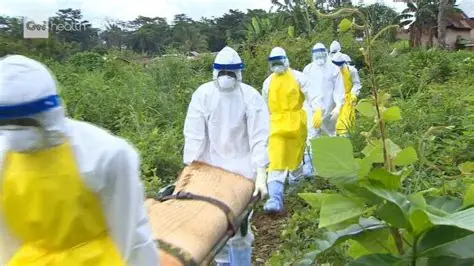
DR Congo Ebola Outbreak Kills 65 as Health Officials Warn of Wider Spread
DR Congo Ebola Outbreak Declared in Eastern Ituri Province
The latest DR Congo Ebola outbreak has raised serious concern across Africa after health authorities confirmed at least 65 deaths linked to the deadly virus in eastern Democratic Republic of Congo.
Africa’s leading public health agency officially declared the outbreak after hundreds of suspected and confirmed cases emerged in Ituri province, a region already struggling with instability and armed conflict.
According to health officials, around 246 cases have been reported so far, with the majority concentrated in the gold-mining towns of Mongwalu and Rwampara.
Emergency response teams are now working urgently to contain the spread before infections move further across the region and into neighboring countries.
Ebola Cases Continue Rising in Eastern DR Congo
The worsening DR Congo Ebola outbreak has rapidly increased pressure on healthcare systems in eastern parts of the country.
Health authorities confirmed that laboratory testing detected the Ebola virus in multiple patient samples analyzed in Kinshasa, the national capital.
Officials stated that:
- 246 total cases have been reported
- 65 people have died
- Several cases remain under investigation
- Additional suspected infections appeared in Bunia
- Testing continues to identify the virus strain
The outbreak has already become one of the most serious public health emergencies currently facing Central Africa.
Medical teams continue tracing contacts, isolating suspected patients, and monitoring communities where infections may spread further.
Mining Towns Become Major Concern During Outbreak
One of the biggest dangers surrounding the DR Congo Ebola outbreak involves the location of the infections.
Many reported cases emerged in active gold-mining towns where large groups of workers regularly move between communities and across borders.
Health experts warn that mining activity increases transmission risks because:
- Workers travel frequently
- Crowded living conditions exist
- Healthcare access remains limited
- Border crossings happen regularly
- Population movement is difficult to track
Authorities fear the virus could spread quickly through transportation routes connecting eastern Congo with Uganda and South Sudan.
The outbreak’s urban presence in Bunia and Rwampara also increases the danger of wider community transmission.
Africa CDC Launches Emergency Coordination Efforts
The growing DR Congo Ebola outbreak has prompted urgent regional coordination among African health agencies.
Africa Centres for Disease Control and Prevention announced emergency meetings involving:
- DR Congo officials
- Uganda authorities
- South Sudan representatives
- International health organizations
- Cross-border surveillance teams
Officials aim to strengthen:
- Emergency response systems
- Border monitoring
- Medical preparedness
- Laboratory testing
- Public awareness campaigns
Africa CDC Director Dr Jean Kaseya warned that large-scale population movement in the region makes international cooperation essential.
Health agencies now focus heavily on preventing the virus from spreading into neighboring countries.
Ebola Remains One of World’s Deadliest Viruses
The current DR Congo Ebola outbreak once again highlights the deadly nature of the Ebola virus.
Ebola was first discovered in 1976 in what is now Democratic Republic of Congo and is believed to have originated from bats.
The virus spreads through:
- Direct contact with bodily fluids
- Contact with infected individuals
- Exposure through broken skin
- Contaminated surfaces or materials
Early symptoms often include:
- Fever
- Fatigue
- Muscle pain
- Headaches
- Sore throat
As the illness progresses, patients may develop:
- Vomiting
- Diarrhea
- Internal bleeding
- Organ failure
- Severe weakness
According to global health experts, Ebola remains one of the world’s most dangerous infectious diseases.
No Guaranteed Cure Exists for Ebola
The ongoing DR Congo Ebola outbreak also reminds the world that Ebola continues carrying extremely high fatality risks.
Although vaccines and experimental treatments have improved survival rates in recent years, there is still no universally proven cure for the virus.
The World Health Organization estimates Ebola’s average fatality rate at approximately 50%, although some outbreaks recorded even higher death rates.
Doctors say early medical treatment, isolation, hydration, and supportive care can improve survival chances significantly.
However, healthcare systems in affected regions often face major limitations, including:
- Staff shortages
- Lack of medical supplies
- Poor infrastructure
- Security challenges
- Limited laboratory capacity
These problems make outbreak control far more difficult.
Conflict in Ituri Complicates Health Response
The latest DR Congo Ebola outbreak is unfolding in one of the country’s most unstable regions.
Ituri province has remained under military administration since 2021 due to ongoing violence involving multiple armed groups.
Authorities introduced military rule in an attempt to restore security after years of attacks, displacement, and instability.
Armed groups operating in the region include the Allied Democratic Forces (ADF), which has links to extremist networks.
The conflict creates additional challenges for health workers because:
- Some areas remain difficult to access
- Population displacement continues
- Medical teams face security risks
- Community trust may remain low
Humanitarian organizations warn that insecurity could slow efforts to contain the outbreak.
DR Congo Faces Another Major Ebola Crisis
The current DR Congo Ebola outbreak marks the country’s 17th recorded Ebola outbreak since the virus was first identified nearly 50 years ago.
DR Congo has repeatedly battled Ebola because of:
- Dense forests
- Wildlife exposure
- Weak healthcare systems
- Limited infrastructure
- Frequent population movement
The country’s deadliest Ebola outbreak occurred between 2018 and 2020, when nearly 2,300 people died.
More recently, another outbreak in Kasai province last year killed 45 people.
Health officials now hope faster detection and improved surveillance can help reduce casualties during the current emergency.
Regional Spread Remains Major Fear
One of the biggest concerns surrounding the DR Congo Ebola outbreak involves the possibility of regional spread.
Eastern Congo borders several countries with active trade and migration routes, increasing the risk of cross-border transmission.
Health agencies now prioritize:
- Border screening
- Travel monitoring
- Community education
- Isolation procedures
- Emergency vaccination efforts
Officials stress that rapid international coordination will remain essential over the coming weeks.
The outbreak’s proximity to major transportation corridors makes containment especially urgent.
Key Facts About the DR Congo Ebola Outbreak
Here are the most important updates so far:
- 246 Ebola cases have been reported
- At least 65 people have died
- The outbreak is centered in Ituri province
- Mining towns face high transmission risks
- Additional suspected cases appeared in Bunia
- Regional health agencies launched emergency coordination
- Cross-border spread remains a major concern
Conclusion
The latest DR Congo Ebola outbreak has once again placed Central Africa on high alert as health officials race to prevent further deaths and wider regional transmission.
With hundreds of suspected infections, growing pressure on healthcare systems, and difficult security conditions in eastern Congo, authorities face a major public health challenge.
International cooperation, rapid medical response, and stronger surveillance efforts will likely determine how successfully the outbreak can be contained in the weeks ahead.
For now, health agencies continue urging communities to follow safety guidance while emergency teams work to stop the virus from spreading further.